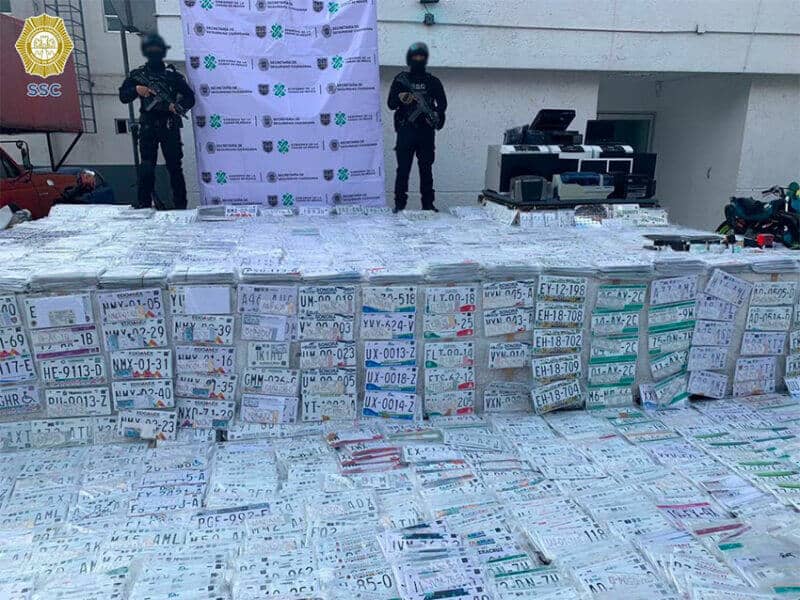
Five thousand black market phony license plates made for states across the country were seized during four simultaneous raids in Mexico City on Friday.
In one case, plates were found in a small two-story building in Coyoacán where five members of a crime gang printed the plates, which were then sold for 3,000-6,500 pesos (about US $150-$327).
According to investigators, the criminal group contacted customers on social media and offered a delivery time of three days. They were being made particularly for other criminal organizations, said city police.
A police commander who led the investigation, but did not provide his name for security reasons, described the group’s factory-like operation. “They distributed license plates to all parts of the country … The building … was sectioned into three parts, one where they cut the material to make the license plates. They had another area where they painted and covered the plate with plastic so that they looked like the original colors,” he said.
He said the group dominated the black market for license plates due to its production capacity and was discovered through intelligence work.
Authorities found eight printers, seven computers and 200 driving permits for motorcycles and cars at the property. They also recovered 43 bags of marijuana, 87 doses of cocaine and a vehicle that had been reported stolen.
Plates were also seized in two other locations in Coyoacán and one in Tlalpan.

With reports from El Universal