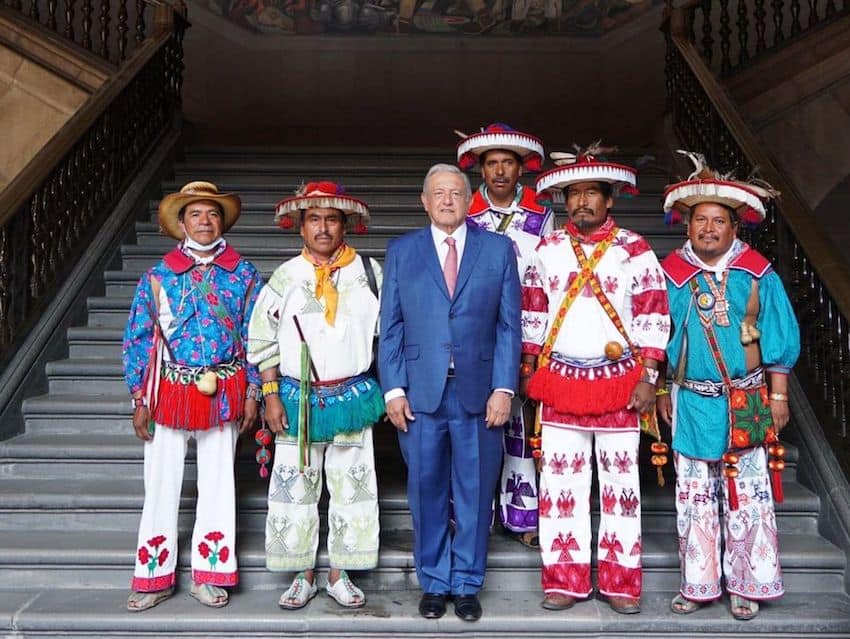
In honor of the International Day of the World’s Indigenous Peoples on Wednesday, Mexican President López Obrador signed a decree to protect a number of Indigenous sacred sites and pilgrimage routes around Mexico.
The sites of Isla del Rey in San Blas; Isla de Alacrán in Chapala; Cerro Gordo in San Bernardino de Milpillas, Durango; Wirikuta in Real de Catorce, San Luis Potosí; and Santa Catarina in Jalisco have now been afforded new protections against unwanted development.
Also protected by the decree are pilgrimage routes of the Wixárika (Huichol), Cora and Tepehuano peoples, as well as of the Mexicanero people of Jalisco, Nayarit, Durango and San Luis Potosí.
AMLO said that the decree is partially the result of a visit he made to the community of Santa Catarina, Jalisco, last September. The president also spent much of 2022 visiting Indigenous communities around Mexico to discuss security plans in native communities. Such communities are targeted in several states by criminal groups for aggression, kidnapping and murder. Several Indigenous community leaders have been killed, apparently for fighting against development or criminal incursion on their lands.
In the past, the federal government has done little to combat the problem, especially in areas where powerful, highly armed cartels dominate.
The sites included in AMLO’s decree are places that strengthen cohesion among Indigenous peoples, especially now that many such communities have scattered populations across Mexico and even into the United States.
“My government has made the decision to recognize and protect the cultures and spiritual values of the peoples that are the heart of Mexico,” the president said at his morning press conference. “I have instructed all public servants to comply with this decree and stop all attacks [and] invasions of their lands and sacred places.”

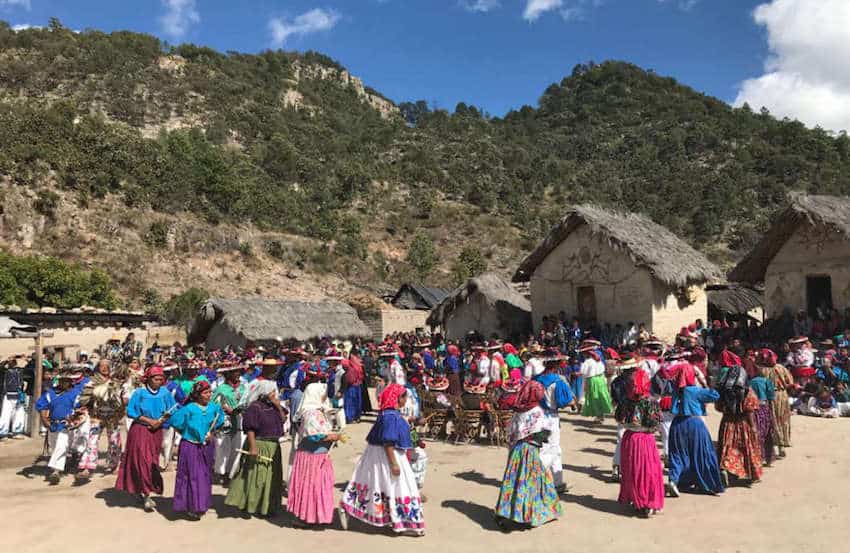
To publicize the needs of native peoples around the world, Aug. 9 is commemorated as the International Day of Indigenous Peoples by the United Nations, established in 1982. In Mexico, many activities will take place over the next five days.
Isla del Rey has a long ancestral history for the Wixárika people, who for centuries have made offerings there to the sea goddess Aramara.
The Wixárika consider Isla de Alacrán, located in neighboring Jalisco, to be the place where Earth and the underworld meet through the waters of Lake Chapala.
At Cerro Gordo, the Tepehuan community of San Bernardino of Milpillas, Durango make offerings and conduct rainmaking ceremonies with the participation of council elders, medicine men and civil authorities.
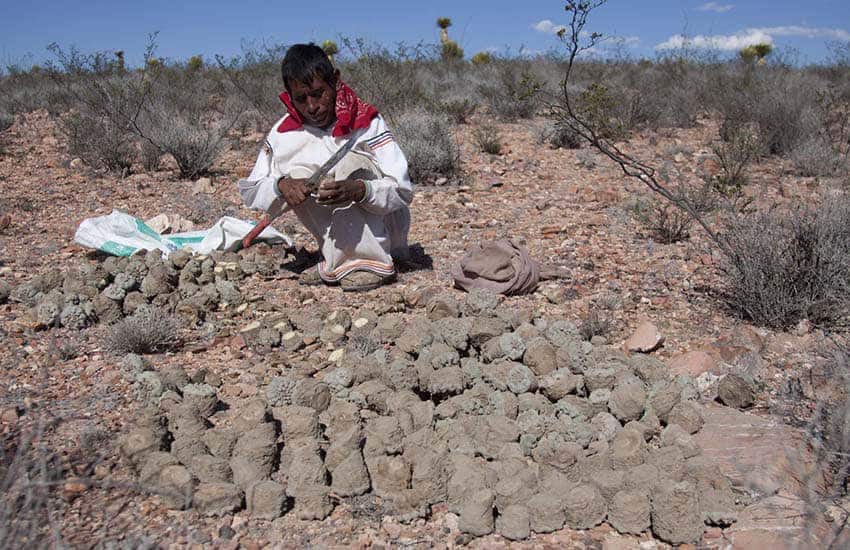
San Luis Potosí’s Wirikuta, another sacred site of the Wixárika, is filled with open landscapes where peyote grows wild. The Wixárika make a pilgrimage there every year to collect the hallucinogenic plant for ceremonies and daily use.
Santa Catarina is a community of more than 130 people who live in traditional Indigenous homes and where some people speak only their native language (not Spanish).
With reports from El Universal and Aristegui Noticias