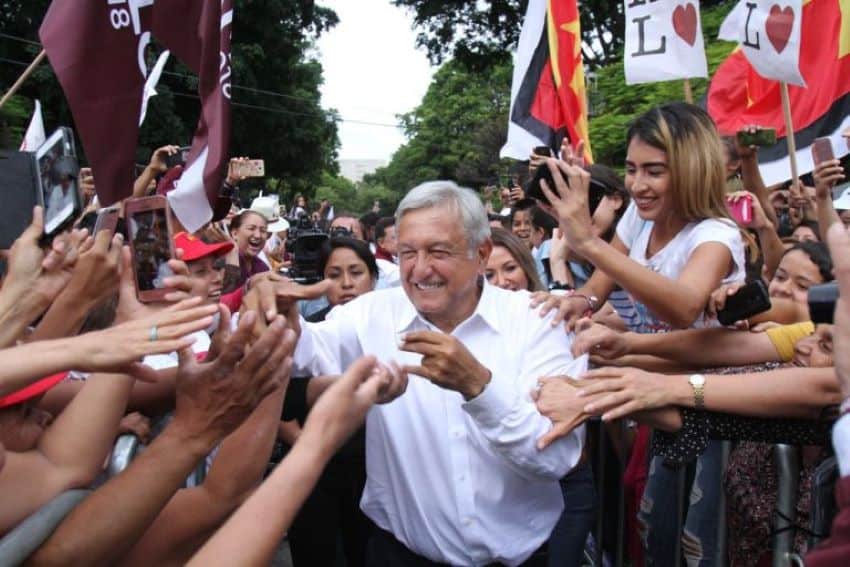
Despite record levels of violence, President López Obrador maintained high levels of support in his first year in government thanks to a divided opposition, masterful public relations and his common touch, according to a 2019 United States diplomatic cable.
Signed by then-ambassador Christopher Landau and sent to the U.S. Department of State in December, the cable said López Obrador faced a range of challenges, including soaring homicide numbers, in his first year in office yet maintained a high approval rating.
AMLO, as the president is widely known, hadn’t lost his Teflon, said the recently declassified cable, a copy of which was obtained by the newspaper Reforma.
The term “teflon president” — which was first used to describe former U.S. president Ronald Reagan — refers to a leader who manages to remain popular despite scandal or general dissatisfaction with the government or state of affairs in a country. Like a Teflon pan, nothing unwanted sticks.
Three months before the coronavirus arrived in Mexico, the diplomatic cable said, the president was ending 2019 with an overwhelming lists of challenges yet explained that he had benefited from divided opposition parties — which suffered humiliating defeats at the 2018 elections — as well as impressive PR and his way with the average Mexican.
His reputation has been enhanced despite government budget cuts, the document said, adding that López Obrador increased his popularity by visiting parts of the country that had long been abandoned.
The cable likened AMLO’s daily morning press conferences, or mañaneras, to former U.S. president Franklin D. Roosevelt’s fireside chats. It noted that López Obrador’s interactions with the press contrasted sharply with those of his predecessor, Enrique Peña Nieto, who routinely read scripted remarks at infrequent news conferences and rarely took questions from reporters.

AMLO’s campaign against inequality and corruption, his combative rhetoric against his political adversaries and his close contact with the people all helped to prop up his popularity, said the document endorsed by Landau, who left his post when the U.S. government changed in January.
Noting that the National Guard had not managed to reduce violence, the diplomatic cable said that one of the significant challenges faced by the federal government was security: there were more than 34,000 homicides in 2019, a new record. It also said the government had only achieved mixed results in the areas of corruption, human rights and regional foreign policy.
Despite the record homicide numbers in 2019 and respondents to polls citing security, corruption and poverty as their biggest concerns, the cable said that López Obrador was still easily the most popular politician in Mexico. Supporting that claim is a Reforma poll that found that AMLO had a 68% approval rating the same month the cable was dispatched.
The United States Embassy’s “Teflon president” assessment in 2019 could equally apply today.
Now, despite an official Covid-19 death toll above 200,000, widespread condemnation of the government for its management of the pandemic and an economic slump of 8.5% last year, López Obrador’s approval rating is still high — 61%, according to a recent poll conducted by the newspaper El Financiero.
Source: Reforma (sp)