The body of a 7-year-old girl was found inside a bag in southern Mexico City on Saturday, authorities said on Monday, the second shocking murder of a young female in the capital in the space of a week.
The Mexico City Attorney General’s Office (FGJ) said that the body found in the borough of Tláhuac was that of Fátima, a primary school student who was kidnapped outside her school as she waited for her mother to collect her on February 11.
Prosecutors said that the body was identified by genetic testing but didn’t state the cause of death.
FGJ spokesman Ulises Lara López said that a reward of 2 million pesos (US $108,000) is on offer for information leading to the arrest of the person or people involved in the abduction and murder of the girl. A woman who was captured by security cameras with Fátima outside her school is of particular interest to investigators, he said.
Lara said that security cameras also recorded a white vehicle in which the girl may have been traveling. The vehicle traveled to an address in the borough of Xochimilco that has been searched by police, he said, adding that the FGJ has taken statements from five people who live there.
For her part, Mayor Claudia Sheinbaum pledged on Twitter that the crime will not go unpunished.
“It’s shocking, perverse and painful that someone is capable of hurting a girl,” she wrote, adding that Mexico City authorities will work tirelessly to arrest those responsible and bring them to justice.

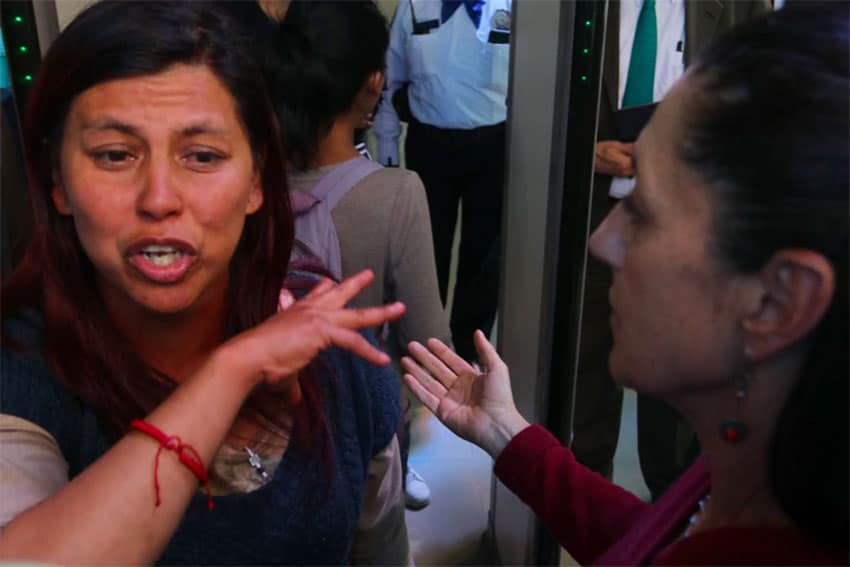
Sheinbaum personally accompanied Fátima’s mother, María Magdalena Antón, as she completed paperwork to formally file murder charges and attended a Mexico City morgue to take possession of her daughter’s body.
“Justice has to be done, for my daughter and for all women,” Antón said with notable fury ringing in her voice.
She accused a man by the name of Alan Herrera of killing not just her daughter but also her sister and brother-in-law. In addition, Antón accused the same man of kidnapping her two nephews.
She said that she didn’t know the woman seen with her daughter outside her school but charged that she was sent to abduct her by Alan Herrera.
“He was the partner of the daughter of my husband. … He passed himself off as dead but he’s more alive than I am,” Antón said. Asked by a reporter why she believes that the man killed her daughter, she only replied: “He is the culprit.”
Antón also said that investigators had made her family wait hours and travel across Mexico City to file a missing person’s report after Fátima disappeared last Tuesday.
The Associated Press reported that the girl’s aunt, Sonia López, said that her niece “could have been found alive but nobody paid attention to us.”
She also said that there had been concerns about the capacity of Fátima’s mother to take care of her daughter but Mexico City health and family welfare agencies failed to provide assistance.
The discovery of the girl’s body came a week after the murder of 25-year-old woman Ingrid Escamilla in the northern Mexico City borough of Gustavo A. Madero. Erick Francisco Robledo, 46, confessed to stabbing Escamilla to death after which he skinned her body and removed her organs.
That case triggered outrage and a protest at the National Palace and outside the Mexico City offices of a newspaper that published images of the woman’s mutilated body that were allegedly leaked by police and/or city government officials.
After news broke of Fátima’s murder on Monday, there was another outpouring of anger and condemnation on social media, with the hashtag #JusticiaParaFátima (Justice For Fátima) trending. A protest was also held at the deceased 7-year-old’s school with parents holding up placards that read “not one more [death]” and “we demand justice for Fátima.”
Speaking at his morning news conference, President López Obrador said that the girl’s death was “regrettable” and attributed it to family and social problems.
The problem must be treated at its root in order to ensure “well-being of the soul and body,” he said.
Source: EFE (sp), Infobae (sp), AP (en), Radio Fórmula (sp)