The federal government will build a 2.16-billion-peso (US $107.7 million) aqueduct to supply uncontaminated water to 50 Yaqui communities in Sonora.
According to a National Water Commission (Conagua) planning document seen by the newspaper Milenio, the government will commence construction in January 2022 and complete the project two years later.
Almost 812 million pesos will be spent on construction of the aqueduct itself, while the remainder of the money will go to the construction of two pumping stations, a water-treatment plant and other complementary infrastructure.
The objective is to deliver water that is free of arsenic, lead, magnesium, sodium and other contaminants to approximately 40,000 residents of Yaqui communities in the municipalities of Guaymas, Empalme, Cajeme, Bácum and San Ignacio Río Muerto.
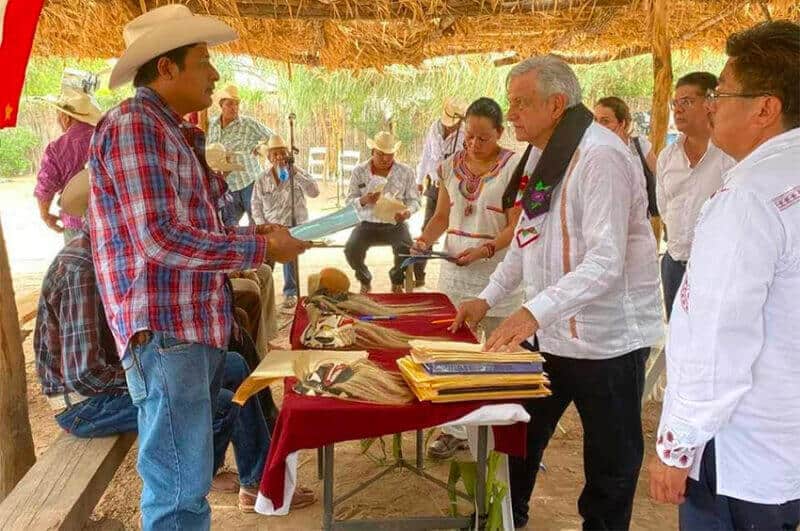
During a visit to Guaymas just over a year ago, President López Obrador pledged to deliver reliable water services to Yaqui communities whose residents have protested to demand that the government compensate them for ceding land for a range of infrastructure projects and fulfill social development commitments. Milenio suggested that he will formally announce the aqueduct project during another visit to Yaqui communities on Tuesday.
Studies show that water currently supplied to Yaqui towns is contaminated by high levels of arsenic, which is believed to cause diabetes and increases the risk of developing certain types of cancer. Diabetes is the most common chronic disease across the 50 Yaqui communities the aqueduct will serve, according to the University of Sonora.
Just over 18% of residents suffer from diabetes, one study shows, whereas the prevalence is below 1% in nearby Tepehuán communities.

The Conagua planning document says the main benefit of the aqueduct project will be the reduction of illnesses among residents. It also notes that access to clean water in sufficient quantities is a human right.
More than 6,000 residents across 24 Yaqui communities in Sonora currently don’t have access to piped water, according to Conagua, a situation that forces them to obtain it from alternative sources.
With reports from Milenio