International fashion brands such as Mango, Zimmerman and Caroline Herrera have incurred the wrath of indigenous Mexicans who have accused them of plagiarizing their designs. Now, the wife of the governor of Oaxaca is feeling the same heat.
Ivette Morán, wife of Governor Alejandro Murat and honorary president of the state’s DIF family services agency, presented indigenous-inspired garments made by her fashion brand Moravy during last week’s Mercedes-Benz Fashion week in Oaxaca city. It’s safe to say that indigenous artisans from the southern state are not among the fans of the collection.
Some took to the streets of the state capital last week to denounce the cultural appropriation of Morán’s company, which, for its part, asserts on its website that it is focused on “generating a positive impact on society, especially in indigenous communities” and that it “activates the economy of artisan families.”
The disgruntled artisans chanted and held up placards with messages such as “Ivette, cutting off [existing patterns] isn’t designing” and “Our culture doesn’t fit in your store windows,” according to a report by the EFE news agency.
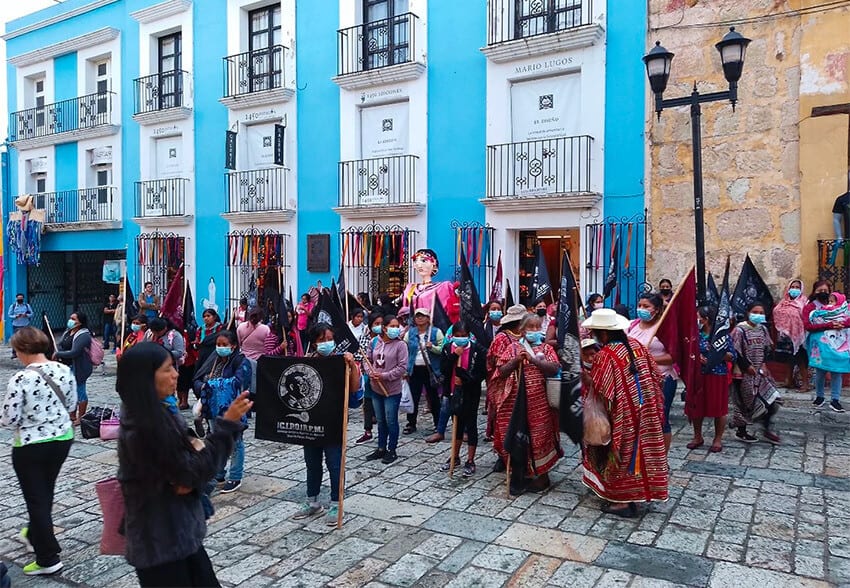
They also showed off their original designs on an improvised runway in the streets of the historic center of Oaxaca city.
“We want to tell [Morán] that she’s looting Oaxaca, that she’s engaging in unfair competition,” a representative of the artisans’ collective Texturas de Oaxaca told EFE.
The representative, who asked to remain anonymous, asserted that Morán was using public resources to promote her fashion brand, although there didn’t appear to be any concrete evidence of that. Governor Murat stressed that the state government didn’t provide any funding for the Mercedes-Benz Fashion week.

A member of another artisans’ collective called Emprendimiento Yalalteca also condemned Morán’s use of traditional indigenous designs.
“I started to embroider as a girl … and it’s not fair for a lady to come along and steal our culture. What she did with our huipiles, which she presented all mutilated and cut away, is a complete lack of respect because our clothing has history,” she said.
Morán and her Institutional Revolutionary Party governor husband also earned a rebuke from the Morena party-dominated state Congress for their use and alleged exploitation of Oaxacan culture.
The former hasn’t publicly responded to the criticism, but in an Instagram post on Saturday her company appeared to defend itself, saying that it appreciated the “magic hands of our artisans” who made the garments presented during the fashion week.
The post only attracted about 100 “likes” from almost 200,000 followers as well as negative comments such as “you destroyed the huipiles,” “you’re violating the [artisans’] ownership right” and “pirate, pirate.”
With reports from El Sol de México and Infobae