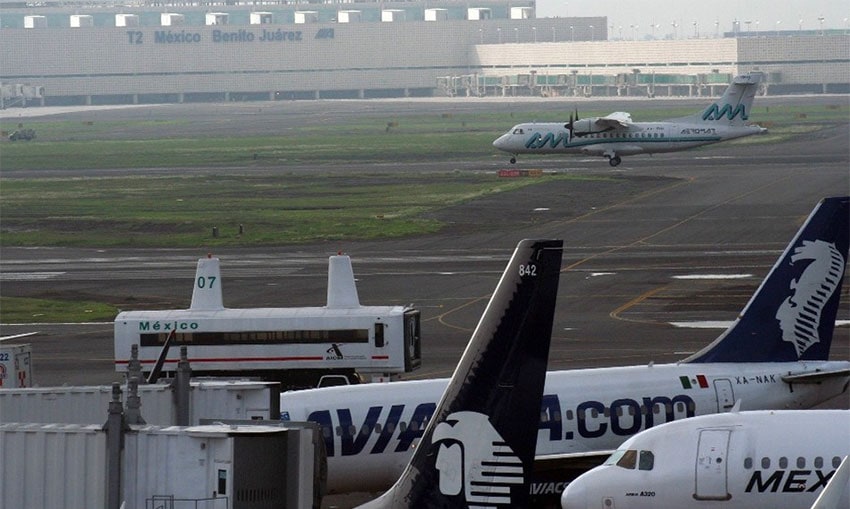
A senior airline association official has urged the federal government to share its plans for the launch of a three-pronged airport system in the Valley of Mexico, declaring that building the Santa Lucía airport without seeking the opinion of airlines would be a mistake.
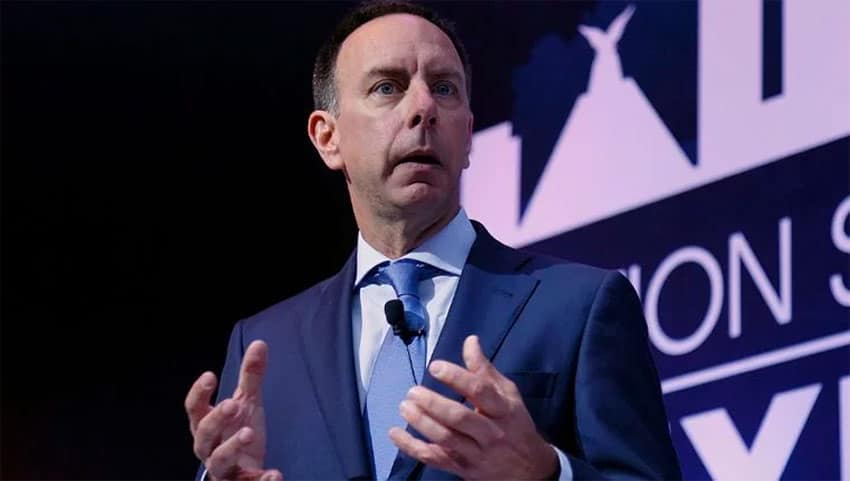
Peter Cerdá, vice president in the Americas for the International Air Transport Association (IATA), said that airlines have no knowledge of the government’s plans for the simultaneous operation of the existing Mexico City airport (AICM), the Toluca airport and the Santa Lucía airport, which is expected to open in early 2022.
Speaking in Brasilia, Brazil, at the Latin American and Caribbean Air Transport Association Leaders Forum, Cerdá said it was particularly important for the government to provide airlines with information about how the three airports will share airspace.
“It’s something that is almost not spoken about because it’s not tangible but the industry needs to know how air space will be reorganized once the three airports of the system enter into coordinated operation . . .” he said.
Cerdá said that airlines don’t have any information about planned flight paths to and from the three airports or how they will be connected to each other.
IATA director general Alexandre de Juniac said in February that operating three airports within close proximity to each other will be “complex” and “challenging” and some aviation experts have said that AICM and Santa Lucía are too close to each other to operate safely at the same time.
The government has maintained that the three airports can operate simultaneously but Cerdá said authorities still need to provide information to confirm that.

He also said that airlines need to know when the three-pronged airport system will be operating at full capacity and who will be based at each facility.
The CEOs of four major Latin American airlines – Aeroméxico, Copa, Avianca and LATAM – said in Brasilia that operating at both the AICM and Santa Lucía, as the government has proposed they do, will be complicated.
“Operating at two [airports] so close to each other doesn’t make sense,” said Aeroméxico chief Andrés Conesa, explaining that splitting operations would increase costs.
Aeroméxico will continue to operate only at the existing Mexico City airport, he said.
“If a system like this worked, Toluca would be currently attracting close to eight million passengers a year but it isn’t. It’s an airport that’s losing money every year because it doesn’t have flights,” Conesa added.
The Aeroméxico chief also said that he has seen “absolutely nothing” about how the use of airspace will be redesigned to allow the three airports to operate simultaneously.
Copa CEO Pedro Heilbron said the Panamanian carrier will also only operate at one airport and that it has to be where Aeroméxico is located because the airlines have a codeshare agreement.
“Not all passengers that arrive in Mexico City are going to Mexico City, some go to other small and large cities. If Aeroméxico is in one airport and we’re in another, [the agreement] won’t work,” he said.
Enrique Cueto of LATAM expressed doubt about the viability of the plan, observing that a similar system in the metropolitan area of Buenos Aires, Argentina, has been a “disaster” for airlines and passengers.
In response to the CEOs’ remarks, President López Obrador said on Tuesday that airlines will change their minds about operating at Santa Lucía once the government provides them with more details about the project and the three-pronged aviation plan.
“They’re within their rights [to express doubts] but they’ll change their mind when they have more information,” he said.
But Cerdá raised several questions about the viability of the government’s strategy to meet increasing demand for airline services in the greater Mexico City area.
He said the government hasn’t sought input from airlines about construction of the Santa Lucía airport and that building it without seeking their opinion “would be a mistake.”
Preparation for the construction of two new runways at the air force base site has already begun after the last of seven suspension orders against the project was revoked on October 16. The National Defense Secretariat is in charge of the project.
Cerdá also expressed doubt about the viability of the government’s plan to continue using Santa Lucía as an air force base when it opens as a commercial airport.
“We understand the importance of military operations. They have a specific mission, the defense of the country, that’s their role. The role of commercial aviation is completely different and we have to make sure that we’ll be able to carry it out with the infrastructure that we’re given,” he said.
There is no precedent of a mixed commercial and military airport in a major world city, Cerdá said.
The IATA vice president also said that 4-billion-peso (US $208.1-million) plans to modernize the AICM – a third terminal is planned – will merely put a “patch” on saturation problems.
The airport’s capacity “will always be limited,” Cerdá said, because its two runways are too close together to operate simultaneously.
Source: A21 (sp), El Financiero (sp), Milenio (sp), El Universal (sp)