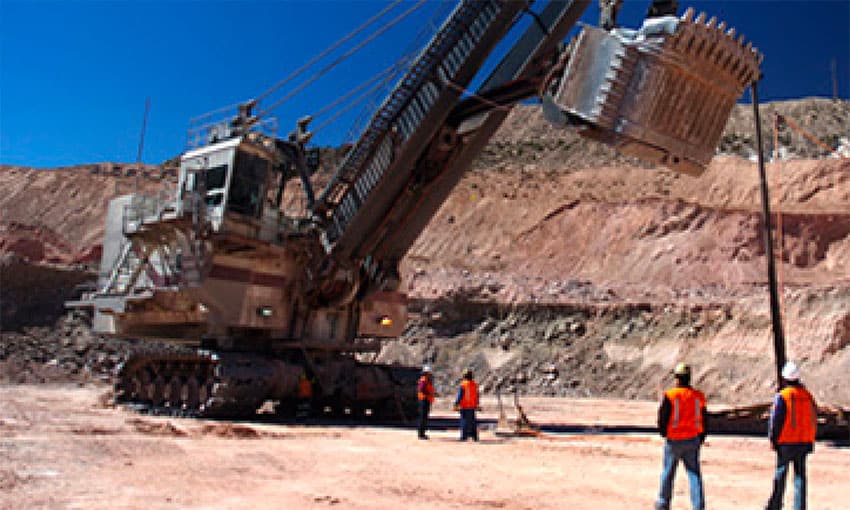
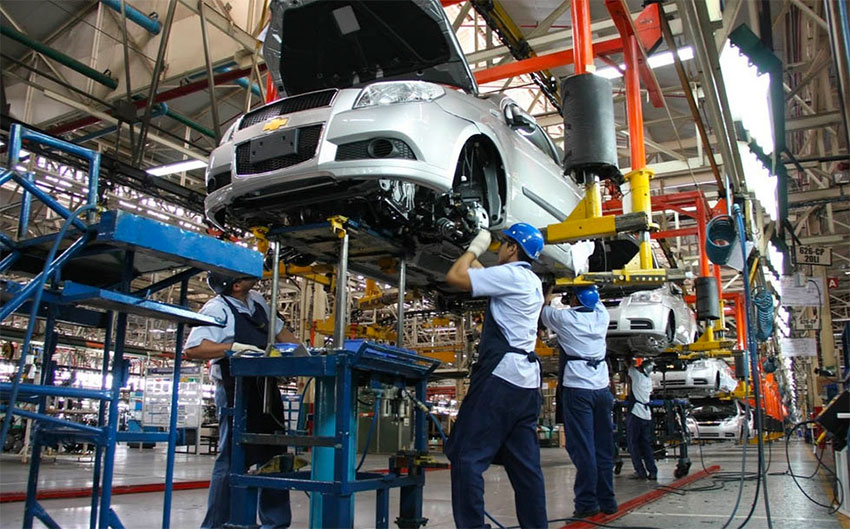
The federal government’s General Health Council (CSG) has designated automotive production, construction and mining as essential activities, paving the way for the sectors to reopen despite the ongoing coronavirus pandemic.
Manufacturers in the aerospace, rail and shipbuilding sectors will also be able to restart activities as the CSG decision applies to all companies that make transportation parts and equipment. Tuesday’s ruling will help restore North American supply chains that were interrupted by the government’s suspension of nonessential economic activities at the end of March.
Most transportation sector manufacturers as well as mining and construction companies are expected to recommence operations soon after the official publication of the CSG decision.
The Confederation of Industrial Chambers (Concamin), an umbrella group that represents a range of manufacturing sectors, welcomed the health council’s ruling.
“Construction, mining and the manufacture of transportation equipment [are] industries of great impact across the entire economy. Our proposals have been listened to,” Concamin said in a Twitter post.
The director of the Institute for Industrial Development and Economic Growth, a think tank, said the three sectors will help kickstart the ailing economy as they together contribute 10% of Mexico’s GDP.
They are part of the “heart” of the Mexican economy, said José Luis de la Cruz, adding that they have the potential to boost 100 other branches of industry.

Automotive sector representatives said that most companies that produce vehicles and parts will get back to work as soon as possible. However, the president of an automotive organization in Jalisco warned that the sector must be cautious and not rush into getting all their employees back to work.
Rubén Reséndiz Pérez of the Jalisco Automotive Cluster said that companies have to make the health of their workers a priority, suggesting that the number of employees on the factory floor could initially be cut by half to ensure that social distancing recommendations can be followed.
For his part, the president of the Mexican Chamber of the Construction Industry said that member companies are ready to resume activities but stressed that strict health controls will be put in place and that each construction site will have a supervisor to ensure they are followed.
Eduardo Ramírez said that open-air projects, such as work on highways and airports, will be the first to restart, adding that workers employed on more confined construction sites will be given training to ensure that the risk of Covid-19 spreading is reduced.
The construction chamber said that workers’ temperatures will be checked before they start work and during their shifts, that they will have access to facilities to regularly wash their hands and that they will be given personal protective equipment such as masks to reduce the risk of infection. It also said that workers will be transported to and from their workplaces in company vehicles where possible.
The CSG said on Tuesday that all companies will be required to follow official workplace health protocols.
The council also announced that restrictions on economic and educational activities will be lifted in municipalities that have not recorded any coronavirus cases and don’t border any with confirmed infections.
Source: El Economista (sp)