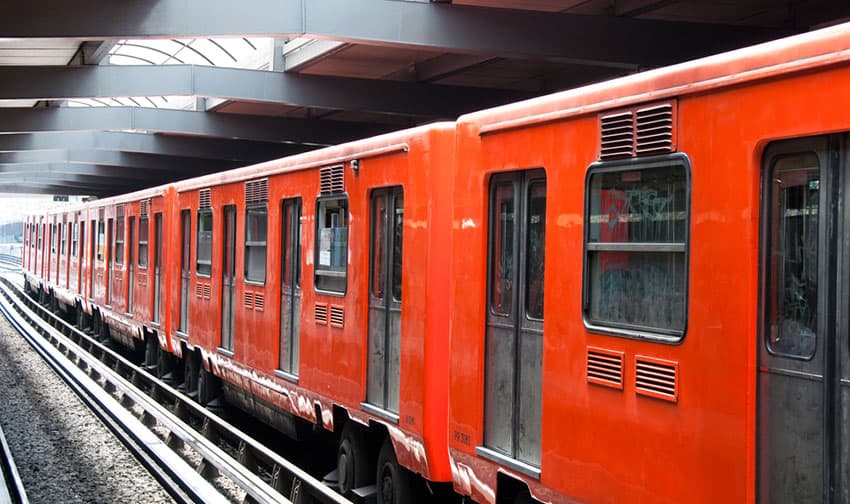
A company subcontracted to work on the elevated section of Line 12 of the Mexico City Metro – part of which collapsed last May – only installed 65% of the required bolts, an investigation into the causes of the disaster has found.
Twenty-six people were killed after two carriages of the train in which they were traveling plunged toward a busy road on May 3.
A report completed by experts commissioned by the Mexico City Attorney General’s Office (FGJ) said that J.J. Jiménez S.A. de C.V., a company subcontracted by Carso Infrastructure and Construction (CICSA), not only failed to use all the bolts it should have used but installed those it did use incorrectly and without respecting building codes.
As a result, the effectiveness of the bolts was just 20% of what it should have been, the report said.
According to the newspaper Milenio, which obtained a copy of the report, CICSA said in a submission to the FGJ that it purchased all the bolts required for the elevated section, but J.J. Jiménez did not use them all.
The former company, owned by billionaire businessman Carlos Slim, is paying for the repairs to Line 12, the newest line in the Metro system but one which has been plagued by problems.
Ingenieros Civiles Asociados and French rail company Alstom were also part of a consortium that built the line, which includes an underground stretch and an elevated section.

The experts commissioned by the FGJ also found that maintenance on Line 12 was inadequate, but determined that wasn’t a factor in the collapse.
The report also cited welding deficiencies in the structure that supported the elevated section of Line 12, which runs from Mixcoac in the capital’s southwest to Tláhuac in the southeast.
The collapse was caused by the failure to comply with a range of Mexico City construction laws, codes and regulations, the report concluded.
The FGJ said in October that there were flaws in the design of the line and that construction work was shoddy. Metal studs in the overpass that collapsed were poorly placed and welding was deficient, it determined.
The FGR’s findings aligned with those of a Norwegian company hired to conduct an independent investigation and with many of those outlined in a New York Times analysis.
The Attorney General’s Office announced in October that it was opening criminal cases for homicide, injury (almost 100 people were injured in the accident) and damage to property in connection with the May 3 tragedy, the Mexico City Metro’s deadliest disaster.
With reports from Milenio