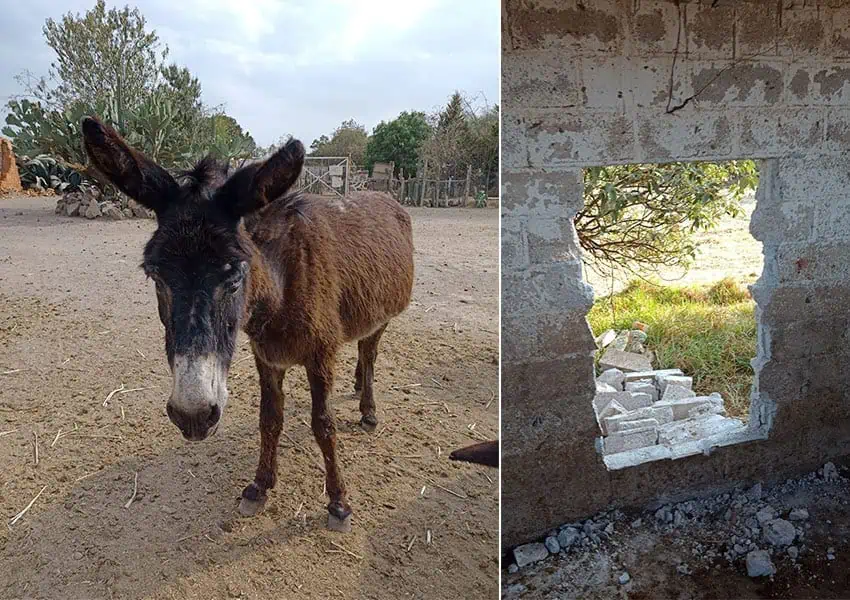
A pack animal rescue organization in México state reported the theft of several donkeys and horses on Monday.
Burrolandia México — located in Otumba, México state — published an emotional video on its Facebook page reporting that a hole was cut in a fence at the sanctuary and the culprits made away with three burros and several horses.
In the video, the park identified the missing burros as Felipe, Julieta and Canelita, while also disclosing that a horse named Spirit was among the animals taken, according to the newspaper El Financiero.
Upon arriving at 7 a.m., employees discovered the hole in the fence and immediately checked on the animals, discovering that several were missing.
The organization asked México state Governor Delfina Gómez and local authorities for help, while also asking President Claudia Sheinbaum to turn the case over to federal authorities.
“We don’t know if they took them … to butcher them or if they will care for them properly,” the video stated, adding that they found trails of blood. “We are very concerned, upset and in tears.”

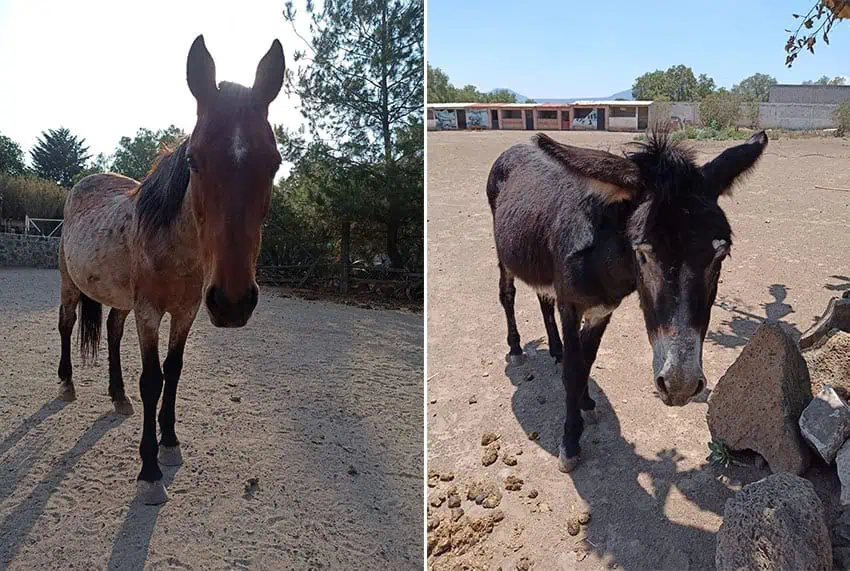
Other animal rescue organizations were quick to take up the cause, calling on the public to help return the animals to the shelter in good health.
The shelter, founded by Autonomous Metropolitan University (UAM) professor Michael Schuessler in 2006, is home to more than 80 burros and also features a theme park where visitors can help feed the animals. Many of the animals were abandoned, overworked or otherwise abused before coming to the shelter.
The Burrolandia México project was established with the idea of providing a dignified life to donkeys, an iconic pack animal in Mexico whose numbers have dwindled dramatically such that it is sometimes considered an endangered species.
About 30 years ago, there were 1.5 million burros in Mexico. Data from the national statistics agency INEGI indicates that there are only about 250,000 burros today.
Though not native to Mexico, burros — which were domesticated about 6,000 years ago by the Egyptians — were brought to the country by the Spanish soon after the Conquest.
The hardy animals became indispensable in farming, trade and mining. A burro can carry up to 90 kilograms in weight, but intensive care is required to keep animals that were previously mistreated in good health.
Burrolandia México is not alone among organizations devoted to rescuing pack animals. Cuacolandia in Puebla and Seres Libres in Mexico City are other sanctuaries committed to protecting overworked donkeys and horses.
With reports from El Financiero and La Jornada