A team of runners from Canada entered Mexico on Tuesday on the 34th day of a 4,300-kilometer ultra-marathon that follows the route of migrating monarch butterflies.
Accompanied by filmmakers and butterfly advocates, runners led by the Monarch Ultra project director Carlotta James left Peterborough, Ontario, on September 19.
The 47-day running adventure, in which about 70 runners will run a stretch of 50 or 100 kilometers each, aims to raise awareness of monarch butterflies that migrate annually to Mexico from Canada but whose populations are in decline.
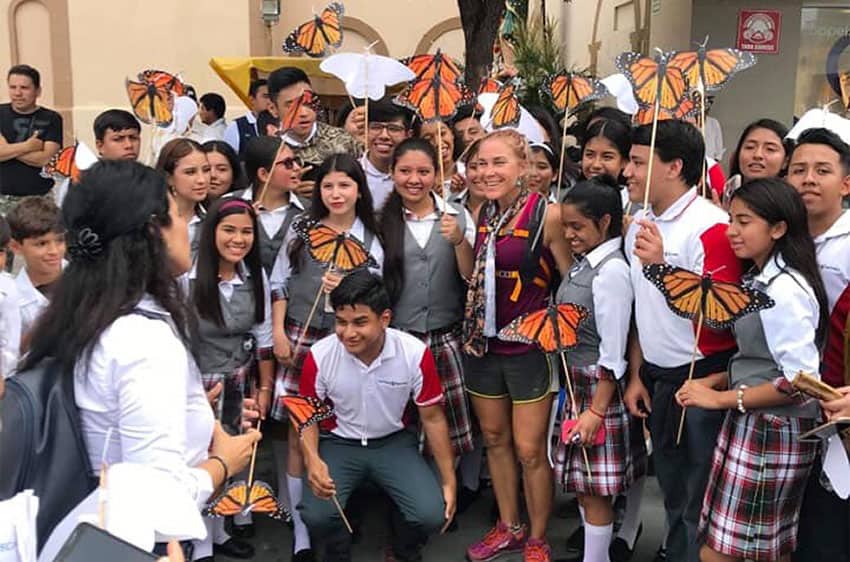
After crossing parts of Michigan, Indiana, Illinois, Missouri, Arkansas and Texas, the team crossed into Mexico at Reynosa, Tamaulipas, where they were given a warm welcome by state and municipal officials and local residents including a large contingent of school children.
“We left Canada on the same day that the butterflies did, to travel together,” James told reporters.
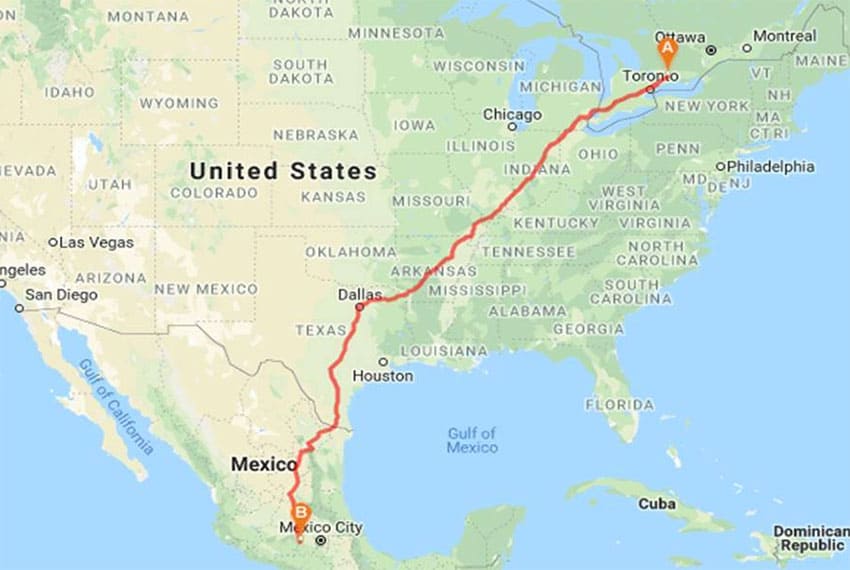
“When the butterflies reach the Sierra Mexicana, we will as well . . . We’ll meet each other in the Monarch Butterfly Sanctuary in Michoacán,” she explained.
James said that planning for the relay run to the Sierra Madre mountains began two years ago and that the aim is to hold the event every two years.

The Monarch Ultra team – which also includes cinematographer Rodney Fuentes, run director and mapping expert Clay Williams and chef Günther Schubert – is collaborating with 30 butterfly conservation organizations in Mexico, Canada and the United States to raise awareness about the plight of the monarch, she said.
Tamaulipas environment official Delia Vázquez Farías told James that the state has had a monarch butterfly conservation program in place since 2011.
Before reaching the Michoacán butterfly sanctuary on November 4, the Canadian team will travel through parts of Nuevo León, San Luis Potosí and Guanajuato.
Fuentes is leading a team that is making a documentary about the relay run, the runners, the plight and flight of monarch butterflies and conservation efforts across North America.
Donations raised by runners’ fundraising efforts will go to Monarch City USA, a non-profit organization committed to butterfly conservation in the United States. Monarch butterfly numbers have declined by 80% during the past 20 years.
“All that we’ve heard in the news in the past two, three, four years about the loss of our pollinators, I think it’s a call to action for all of us,” said run director Williams in a video promotion for the Monarch Ultra relay.
“Their populations are in steep decline,” said James, who is a co-founder of two environmental groups in her home town of Peterborough.
“In the 1980s, their numbers were in the billions and now they’re in the millions,” she said, explaining that the use of pesticides, climate change, habitat loss and disease have all contributed to the monarch’s decline.
Fuentes, a Venezuelan native who now calls Canada home, said that his aim in making the documentary about the run is “to inform people about the delicate state of pollinators and the environment and empower communities to take action to help save monarchs and other pollinators.”
More details about the Monarch Ultra relay run can be found on the event website.
Source: Debate (sp)