A controversial highway in Chiapas whose construction has been delayed for nearly 20 years has received the go-ahead after residents of five municipalities approved the project via a nonbinding referendum, the state governor announced.
On Monday morning, Governor Eduardo Ramírez Aguilar announced the results in a social media post, saying “The highway is ours! The Route of the Maya Cultures has been approved by the people!”
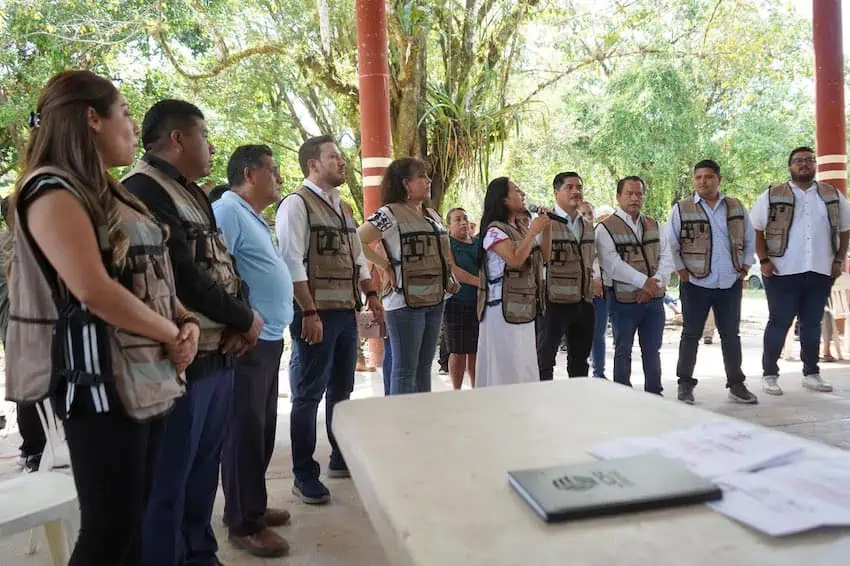
Ramírez thanked the public for their participation during “an exemplary day of voting” on Sunday, adding that the highway was approved with 39,321 votes in favor and only 919 against.
The highway will connect the former state capital, San Cristóbal de las Casas, with the town of Palenque, known as the gateway to ancient Mayan ruins. Palenque, founded in 1567 and populated primarily by Indigenous Maya communities, is also the home of former President Andrés Manuel López Obrador (2018-2024).
Residents of the municipalities of Palenque, Ocosingo, Chilón, Salto de Agua and Tumbalá took part in a public consultation organized by the state government. Approval was sought only for the section of the highway between Palenque and Ocosingo.
State officials said that ballots were provided in Spanish, as well as in the Indigenous languages of tzeltal and chol so as to “promote the full participation of all those who wish to make their voices heard.”
As stipulated by Mexico’s constitution, public consultations are required any time the government plans to take legislative or administrative measures affecting the country’s Indigenous groups and their land.

The new highway would replace Highway 199 which originates in the central highlands and traverses the jungle in the northeast part of the state. Ocosingo is only 68 kilometers south of Palenque, but Highway 199 winds its way through the jungle for 119 kilometers to reach Palenque.
The old highway also connects Ocosingo to San Cristóbal de las Casas to the southwest, but it takes roughly two and a half hours to drive the 95 kilometers.
Opponents of Chiapas highway project decry destruction of land, culture
Since the project was first presented nearly two decades ago, successive state and federal governments have defended the highway by saying it would provide economic benefits to the poorest parts of the state.
“We are fully committed to the people of Chiapas,” Governor Ramírez said in February. “We want to improve connectivity and, at the same time, help those who most need help, especially those who are most vulnerable.”
Ahead of Sunday’s public consultation, Ramírez added that the highway would remain in public hands and that there would be no private concessions granted.
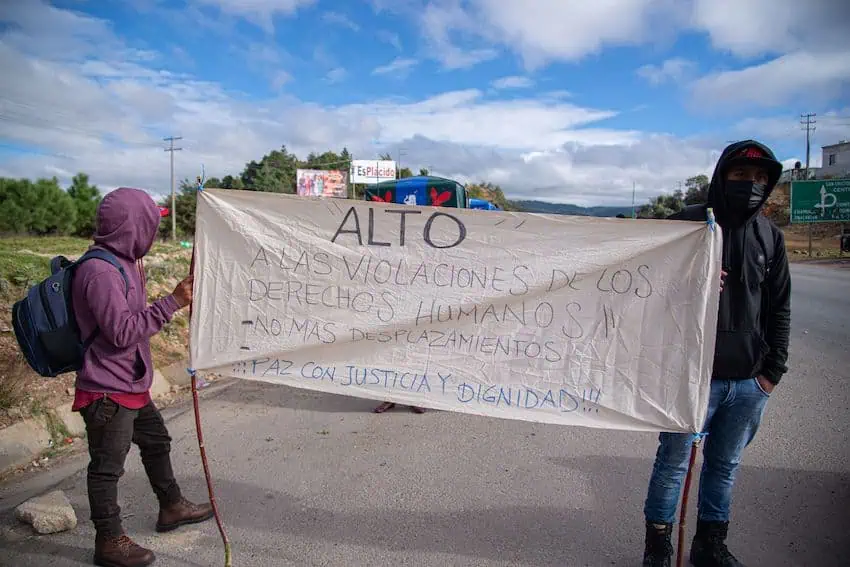
Critics of the long-delayed highway proposal argue that construction will destroy the environment and strip local residents of their land and its resources. They also claim that residents have not been fully informed about the proposal and its consequences.
Last month, the regional organization Movement in Defense of Life and Land (Modevite), which has been campaigning against the project for 12 years, published a letter it had submitted to the state government in which it described the project as another example of “colonialism and racism that favors transnational interests, extractivism, drug cartels and the government.”
Modevite said that while it was not opposed to the concept of progress, “we are against the violation of our rights; [we are] against imposition and authoritarianism that benefits the few in and harms the land that has been the source of life for our peoples.”
In contrast, the Ocosingo-based bus company Grupo Único Cotaco, voiced support for the highway project, calling it “an important step toward modernization and regional development” that would boost tourism and benefit the local economy.
With reports from La Jornada, Quadratín Chiapas, Proceso and Diario de Chiapas