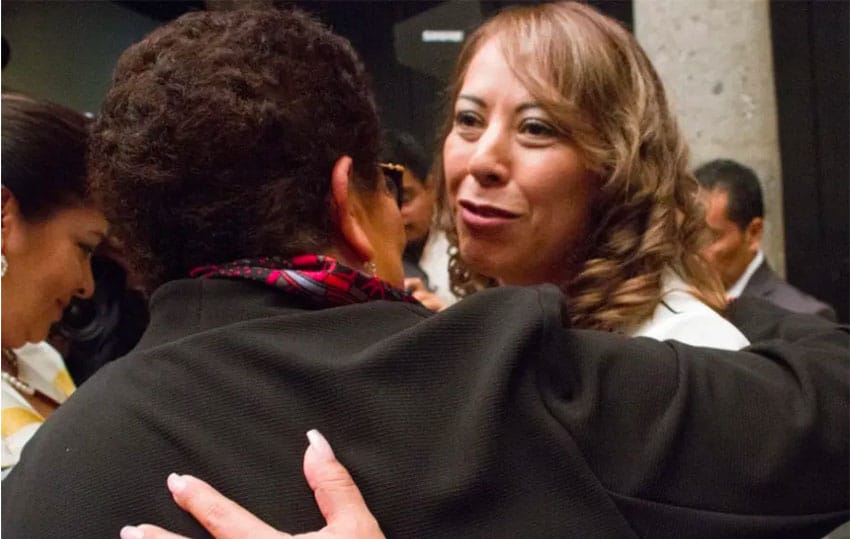
The Mexico City government offered a public apology on Thursday to a woman who was jailed for almost seven years after she was wrongfully arrested on charges of kidnapping and homicide.
Lorena González Hernández was detained in September 2008 for involvement in the abduction and murder of Fernando Martí, the 14-year-old son of businessman Alejandro Martí.
She spent six years, 10 months and 11 days in prison although she was never convicted of the crime.
The Mexico City Attorney General’s Office (PGJ), led at the time by former mayor and current senator Miguel Ángel Mancera, accused González, a Federal Police officer, of belonging to a criminal group called La Flor, which it alleged was responsible for the abduction and murder.
However, the group didn’t actually exist and was actually a fabrication by corrupt PGJ officials.
In 2009, federal authorities arrested three members of a kidnapping ring called Los Petriciolet who were charged with abducting and killing Fernando Martí. They in turn implicated a woman who subsequently confessed her guilt.
However, it wasn’t until July 15 of this year that González, who always maintained that she was innocent, was finally released from prison after a judge ruled that there was insufficient evidence to proceed with the case against her.

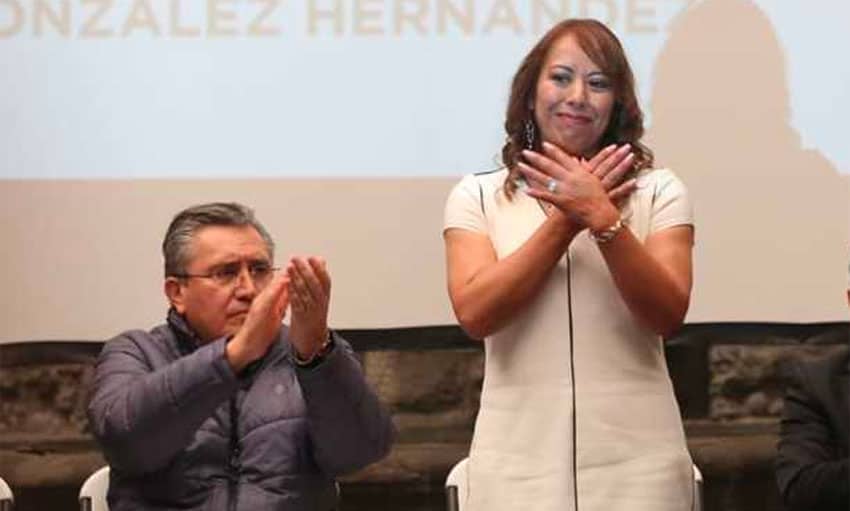
At an event in the capital yesterday, Mexico City Attorney General Ernestina Godoy issued an apology to González.
Godoy acknowledged that she was arrested illegally and that her rights to due process and presumption of innocence were violated.
The Mexico City government – led by Foreign Affairs Secretary Marcelo Ebrard at the time – fabricated evidence supposedly provided by non-existent witnesses, the attorney general said.
“The arbitrary detention of Lorena was made based on an anonymous text [sent] to the Attorney General’s Office . . .” Godoy said.
Rafael Guerra, chief justice of the Mexico City Superior Court – which had remanded González in preventative custody – also offered an apology.
“It’s my responsibility to offer a public apology and a promise, the promise to commit all the public resources within our reach to achieve a consolidation in the field of human rights,” he said.
The government apology was based on a recommendation by the National Human Rights Commission, which said that González was a victim of arbitrary detention, fabrication of guilt and inhumane treatment.
González accepted the apology from Godoy but later told reporters that she couldn’t forgive the officials responsible for her almost seven-year imprisonment.
“I accept the apology but . . . I don’t forgive the damage they caused us. I see my son, my mother and my siblings and there are consequences, there are still consequences in my life so I don’t forgive [them] . . .” she said.
Asked whether she considered then attorney general Mancera to be the main person responsible for what happened to her, González said that she doesn’t “accuse him directly.”
She also said she didn’t know whether then-mayor Ebrard was aware at the time of all the injustices she suffered.
“Those who instructed the judge [to remand me in custody], those who planted non-existent testimonies, they’re the ones who are directly responsible . . .” González said.
Source: El Financiero (sp), Milenio (sp), Excélsior (sp)