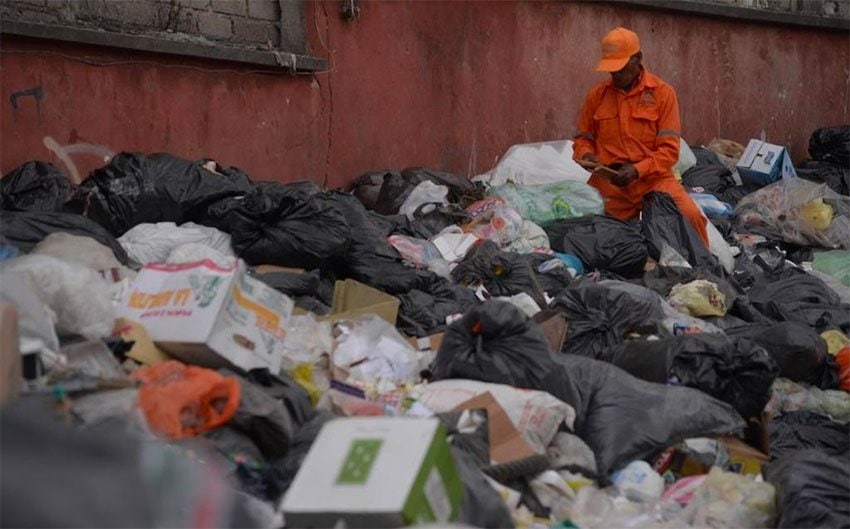
The Mexico City government will invest 3.1 billion pesos (US $162.6 million) this year in a “zero garbage” plan that aims to drastically reduce the quantity of waste that ends up in the landfill.
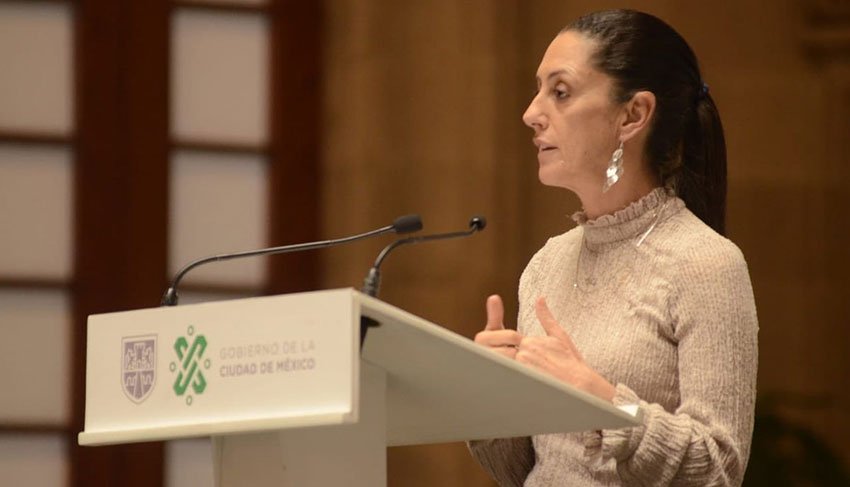
Presenting the plan yesterday, Mayor Claudia Sheinbaum explained that the capital currently produces 12,700 tonnes of solid trash per day, of which just under half is organic waste.
Sheinbaum said that a ban on single-use plastics – scheduled to come into force late next year – will reduce non-organic garbage, adding that “another fundamental part [of the plan] is to recycle more . . . plastic, glass and metal.”
Sheinbaum explained that one goal of the “zero garbage” plan is to increase the quantity of non-organic waste that is recycled from the current 1,900 tonnes per day to 3,200 tonnes in 2024, the year her six-year term will end.
She added that the private sector will collaborate with the government to work toward reaching the target.
The government will invest in two new waste separation plants and six others to process rubble generated by the construction industry.
Another goal, Sheinbaum said, is to increase the quantity of compost produced from organic waste from 1,400 tonnes per day now to 2,250 tonnes in 2024.

In addition, the waste management plan will seek to make much greater use of garbage to generate alternative fuels. Currently, 800 tonnes of waste per day are used to that end while the goal is to increase the quantity by 275% to 3,000 tonnes.
If the government meets its goals, just 2,000 tonnes of trash will end up in a landfill each day in 2024 compared to 8,600 tonnes today.
“Our wish is [to have] a zero-garbage city with a circular economy; in other words we’ll recycle, reuse and reduce [waste] so we don’t send garbage to the landfill, and so it doesn’t end up in rivers, ravines or the sea . . .” Sheinbaum said on Twitter.
Environment Secretary Marina Robles predicted that the city’s plan will generate savings of just under 8.4 billion pesos (US $440.7 million) in the six-year period.
Source: Milenio (sp)