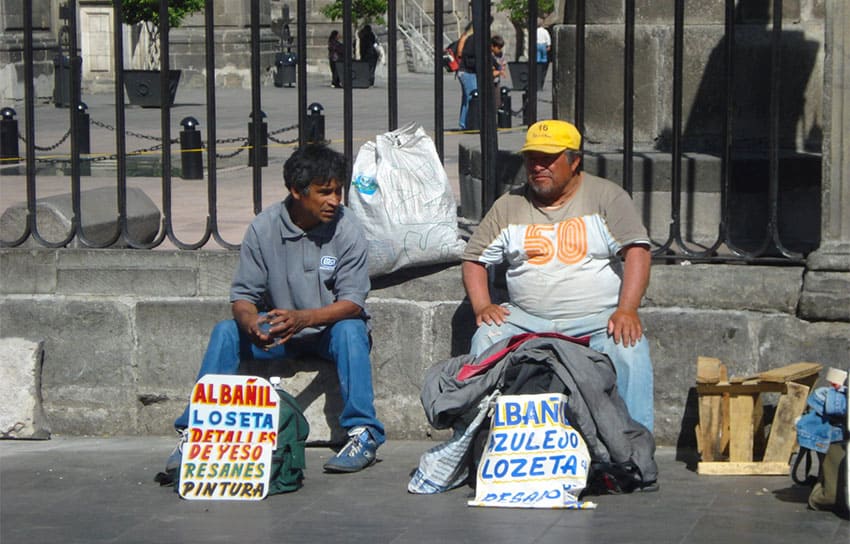
The coronavirus-induced economic crisis could push an additional 10.7 million people into poverty, according to the federal government’s social development agency.
The National Council for the Evaluation of Social Development Policy (Coneval) said that between 6.1 million and 10.7 million people could be left in situations of poverty as a result of income loss due to the sharp economic downturn caused by Covid-19 and the measures put in place to contain the disease.
The total number of people in poverty could therefore increase by between 10% and 18% over the 60 million reported by Coneval in 2019.
The percentage of working people in situations of poverty could increase to as high as 45.8%, Coneval said, an 8.5% increase over the current level.
People living in large urban areas are likely to be more affected by the economic downturn than those in rural areas and towns, the council said, although it noted that agricultural day laborers are also vulnerable. Coneval also said that women could be more prone than men to the adverse economic effects of the pandemic.
With a deep recession seen as inevitable, the agency said that the government needs to broaden and strengthen its capacity to help people in situations of poverty. The operation of social programs should be improved to ensure that they reach the people who require them, Coneval said.
It noted that even before the pandemic, job insecurity was widespread in Mexico and the economy was stagnant. The council also noted that many people have difficulties accessing essentials such as food and water, health care, education, social security and housing.

President López Obrador has said that his administration will put the nation’s poor first during the coronavirus pandemic, announcing cuts last month in order to increase spending on social programs. The government is also offering 3 million loans to poor and middle-class Mexicans to help them through the economic crisis.
But López Obrador has faced criticism for not providing more support for the private sector, which employ millions of Mexicans across the country.
The government has ordered businesses to keep paying their employees even if they are not working during the pandemic but has ruled out tax breaks and other support for large companies.
Source: La Jornada (sp)