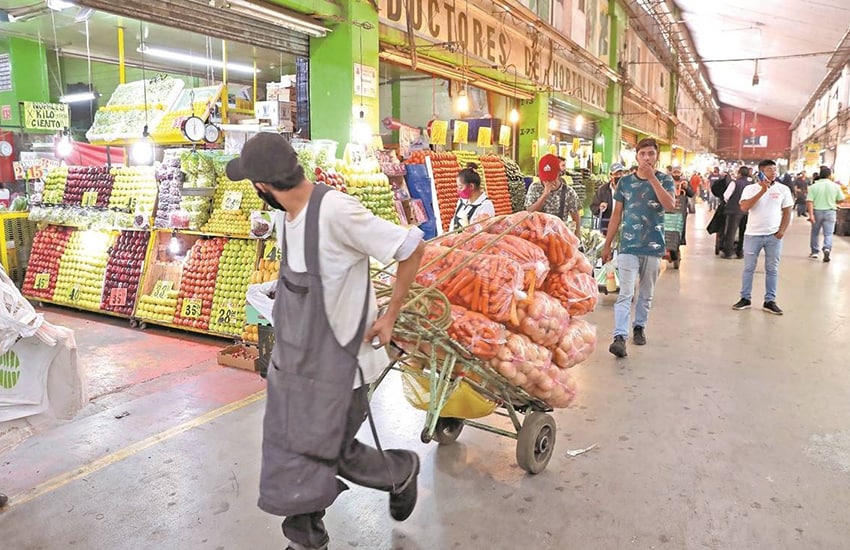
Mexicans who had no option but to keep going out to work during the coronavirus pandemic died in much greater numbers than people who were able to work from home, a new study has found.
Conducted by public health researchers at the National Autonomous University (UNAM), the study found that 94% of the more than 200,000 people who lost their lives to Covid-19 in Mexico were manual and operational workers, housewives, retirees and pensioners.
Only 6% were professionals, executives and art and performance workers, the study said.
Among the large numbers of manual and operational workers who died after contracting Covid-19 were drivers, street vendors, medical personnel, agricultural workers and factory employees. People in such jobs — with the exception of healthcare — generally have lower levels of education than citizens who are able to work from home.
“There is no doubt that Covid-19 has greatly affected the population with lower levels of education; practically half the deaths occurred among people whose highest level of education was primary school,” said the UNAM study, written by Alejandro Cortés-Meda and Guadalupe Ponciano-Rodríguez.
The study said that people who continued to work at factories, farms and essential businesses and on public transit had a greater possibility of exposure to the coronavirus due to factors such as close contact with the public and other workers.
It also noted that it was impossible for such workers to work from home. Many are not entitled to sick leave and have poor access to healthcare, the study added. Those same workers often work long shifts in order to cover their expenses and are at high risk of spreading the coronavirus to members of their family.

The study also found that 92% of Covid-19 deaths occurred in public healthcare facilities during the first year of the pandemic. More than half — 52% — occurred in Mexican Social Security Institute hospitals, 32% occurred in facilities operated by the federal Health Ministry and 8% occurred in hospitals run by the State Workers Social Security Institute.
Only 2% of deaths occurred at private hospitals, the report said. Many other people whose deaths were attributed to Covid-19 died at home, often without ever being tested for the infectious disease.
As of Sunday, Mexico had officially recorded 221,647 Covid-19 fatalities, but the government has acknowledged that the real death toll is much higher. An analysis published earlier this month by the Institute for Health Metrics and Evaluation at the University of Washington School of Medicine showed that more than 617,000 people had died from Covid-19 in Mexico.
Source: El Universal (sp)