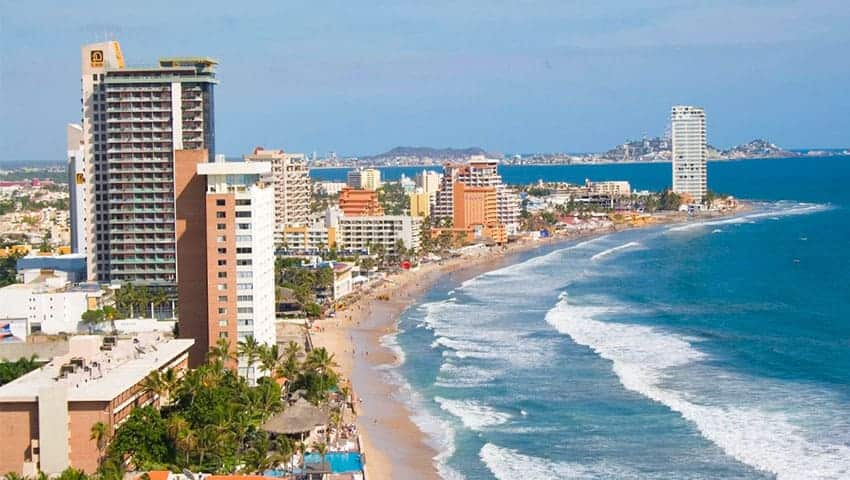
More than 1,100 hotels across Mexico have temporarily closed due to the coronavirus pandemic and the number will swell in the coming days as orders that they shut down take effect in Sinaloa and Baja California Sur.
The Mexican Hotel and Motel Association (AMHM) said that among the hotels that have closed are 645 run by small and medium-sized businesses rather than large chains. Cancún and Mexico City, where authorities ordered all hotels to shut as of Wednesday, have seen the highest number of closures.
More than 500 hotels in Sinaloa will be forced to close while around 460 in Baja California Sur have been told that they can’t remain open after April 5.
The AMHM said that occupancy levels have dropped drastically at hotels that remain open and warned that thousands of small hotels and guesthouses could go bankrupt. Without guests, they will have no income to meet their tax obligations and to pay for services such as electricity, the association said.
However, a new source of revenue for some could come from providing beds for Covid-19 patients should Mexico’s health system become overwhelmed.
The president of the National Tourism Business Council said in a radio interview that authorities had asked hotel owners and CEOs whether they were prepared to accommodate patients should the need arise.
“We told them yes, of course,” said Braulio Arsuaga, director general of the Presidente hotel group.

The tourism industry, and many other sectors, is set to lose massive amounts of revenue over the coming months as Mexico and countries around the world seek to limit the spread of Covid-19 by implementing strict social distancing measures and ordering non-essential businesses to close.
All of Mexico’s airlines have cut the number of flights they are offering with the exception of Aeromar as the demand for both domestic and international services has largely collapsed.
The federal government has declared a month-long health emergency scheduled to run through April 30 but if social distancing measures fail to substantially contain the spread of Covid-19, there is a possibility that even stricter restrictions, such as an obligatory home quarantine, will be enforced, exacerbating the impact on the economy.
If Mexico succeeds in getting the coronavirus outbreak under control, the president of the Hotel Association of Cancún and Puerto Morelos believes that tourism could begin to recover in those destinations in July.
Roberto Cintrón said in an interview that hotels on the Caribbean coast could see occupancy levels of 50% in July and August provided that Mexico doesn’t present a coronavirus infection risk to tourists.
“If we want to be back as soon as possible, we have to be healthy. … When people from other countries can travel [again], they won’t travel to a place where there is a risk of infection,” he said.