Mexico appears unlikely to join a growing list of countries that are closing their borders as part of efforts to reduce the spread of the novel coronavirus Covid-19.
Deputy Health Minister Hugo López-Gatell said Tuesday that according to the World Health Organization, there is no scientific evidence that shows that closing borders contains the spread of contagious diseases.
He added that “closing the borders is not possible without causing damage to society with unpredictable and huge consequences.”
If the movement of people is not allowed, there will be no way to access food and medical supplies, López-Gatell said.
The deputy minister also said that the government has 3.5 billion pesos (US $152 million) to purchase supplies required to respond to the coronavirus pandemic. Federal and state governments are both involved in preparations for a widespread outbreak of the disease, López-Gatell said.
While Mexico isn’t planning to close its borders, many other countries have moved to restrict the entry of foreigners.
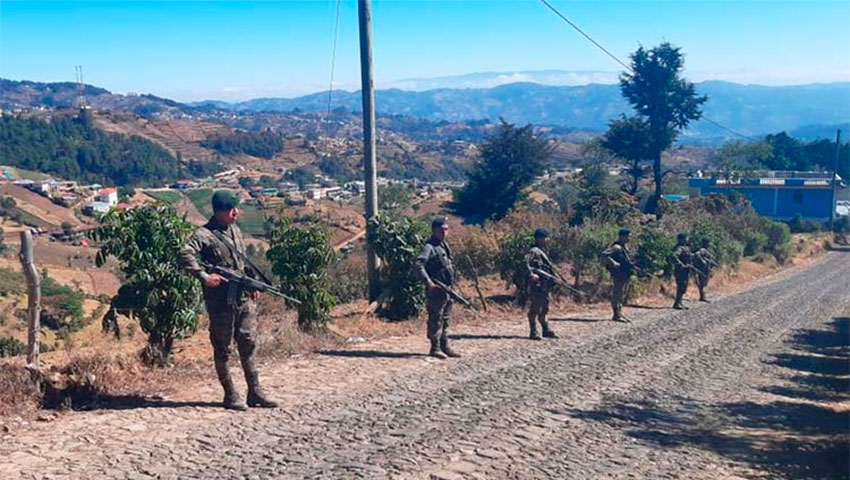
The United States has barred the entry of foreign nationals traveling from China, Iran and Europe’s Schengen Area, while Guatemala closed its land border with Mexico at midnight Tuesday and Canada is closing its borders to all foreigners except Americans from Wednesday on.

At Mexico’s southern border with Guatemala, health officials from the Central American nation told foreigners attempting to enter that the border will remain closed until March 30.
Guatemalan Health Ministry sources told the newspaper Reforma that authorities have established highway checkpoints to detect any foreigners who may have entered the country irregularly by crossing the shallow waters of the Suchiate River between Chiapas and Guatemala.
For his part, Canadian Prime Minister Justin Trudeau announced Monday that his government “will be denying entry to Canada to people who are not Canadian citizens or permanent residents” with the exception of U.S. citizens, air crews, diplomats and immediate family members of Canadian citizens.
U.S. citizens are exempt due to the high “level of integration of our two economies and the coordination that we have,” Trudeau said.
Flights from Mexico and other countries can continue to land in Canada but they will be directed to just four airports: Vancouver, Calgary, Toronto and Montreal.
Many other countries in the Americas, including Chile, Colombia and Ecuador, have announced they are closing their borders, while a number of countries in Europe, Asia, Africa and Oceania are also restricting the entry of foreigners.
But any foreigners stranded in Mexico needn’t worry about coronavirus treatment should they contract it. President López Obrador said today Mexico will treat and care for any foreign patients with Covid-19 because medical attention is “a basic right.”
Foreign citizens will have “full protection and attention. If they are infected, we will take care of them here regardless of their country of origin because that’s universal brotherhood.”
Meanwhile, the Mexican airline Interjet has announced that it will reduce the number of seats it offers on flights by 40%. The company said in a statement that it took the decision both as a health measure and in response to the expected downturn in demand for air travel.
“In the face of the public health issue that Covid-19 represents, the most important thing for Interjet is the safety of its passengers and almost 6,000 employees. For that reason, the company is strengthening its safety and hygiene protocols,” the statement said.
Interjet also said that its aircraft are equipped with high-efficiency particulate air filters that remove 99.99% of microscopic bacteria and virus particles.