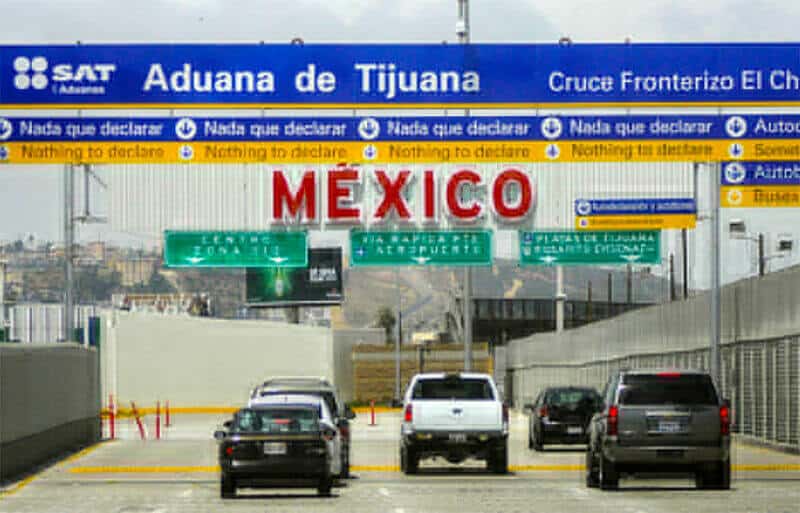
After a 19-month closure, the United States is set to reopen its land borders for nonessential travel from Mexico and Canada to fully vaccinated travelers in early November.
Vehicle, rail and ferry travel between the U.S. and Canada and Mexico has been largely restricted to essential travel since March 2020 in reaction to the COVID-19 pandemic. Those restrictions have remained in place ever since, renewed on a monthly basis, despite growing pressure from the Mexican and Canadian governments.
The move to facilitate cross border travel aligns with a September 20 announcement that air travel from 33 countries will open up in November for the fully vaccinated. In contrast to air travel, no testing will be required to enter the U.S. by land or sea, provided travelers meet the vaccination requirement. By mid-January, even essential travelers seeking to enter the U.S. by land or sea, such as truck drivers, will need to be fully vaccinated.
The U.S. will accept travelers who have been vaccinated with any of the vaccines approved for emergency use by the World Health Organization, according to officials, meaning Pfizer, Moderna, Johnson & Johnson, AstraZeneca, Sinopharm and Sinovac would all be recognized, while Sputnik and CanSino would not. However, the newspaper Reforma reported that the U.S. Centers for Disease Control and Prevention still hasn’t made a final decision on the matter.
If the Russian Sputnik and Chinese CanSino vaccines remain unrecognized some 4 million Mexicans would be unable to enter the U.S. Mexico has received 8.4 million doses of the former (a two-dose vaccine) and 100,000 of the latter (one-dose).
The move toward restoring travel comes as COVID-19 cases in the U.S. have dropped to about 85,000 per day, the lowest level since July, following a spike from the more transmissible delta variant of the virus. Per capita case rates in Canada and Mexico have been been lower in the two countries than the U.S. throughout the pandemic, which heightened frustrations about the U.S. restrictions on travel.
“These new vaccination requirements deploy the best tool we have in our arsenal to keep people safe and prevent the spread of COVID-19 and will create a consistent, stringent protocol for all foreign nationals traveling into the United States whether by land or air,” a senior U.S. administration official said.

U.S. Democrat Chuck Schumer said the move would bring relief to communities on the country’s borders. “Since the beginning of the pandemic, members of our shared cross-border community have felt the pain and economic hardship of the land border closures. That pain is about to end,” he said.
However, despite the liberalization of U.S. border policy, officials cautioned that illegal entrants would still be expelled under so-called Title 42 authority first invoked by former President Donald Trump. Title 42 has been used to expel migrants on the grounds of a public health emergency before they can apply for asylum.
One U.S official said it was continuing the policy because cramped conditions in border patrol facilities pose a COVID-19 threat. It is not clear if proof of vaccination against COVID-19 will be accepted as evidence in migrants’ favor, given their lower risk of transmission.