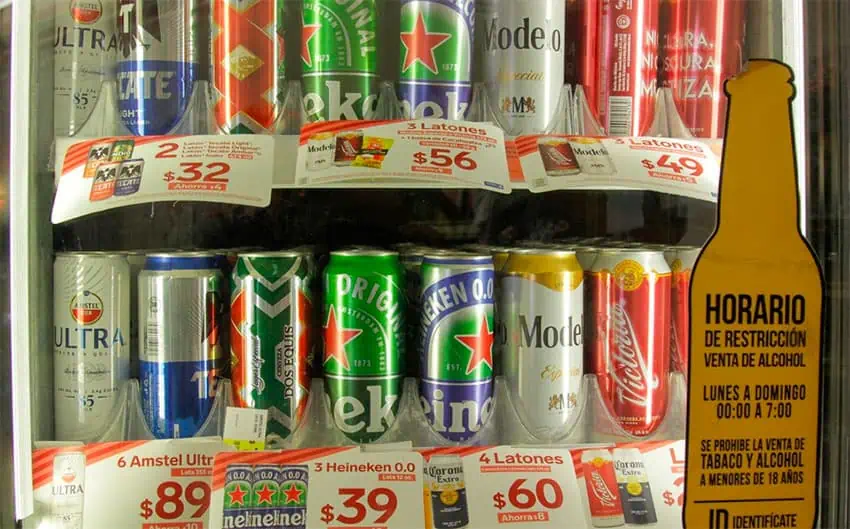
The Yucatán state government has extended its prohibition on alcohol sales until May 15 as part of its efforts to mitigate the spread of Covid-19.
State authorities explained that the decision to extend the dry law was made “with the purpose of continuing to take care of the people’s wellbeing,” especially now that the country has entered phase 3 of the pandemic.
They also cited a significant decrease in calls to 911 related to domestic violence since instating the dry law earlier this month as another reason for extending the prohibition.
Anyone found selling alcohol illegally could face up to six years in prison and/or a fine of up to 24,644 pesos (US $1,025).
Authorities in Baja California Sur, Sonora, Campeche, Quintana Roo, Tabasco, Sinaloa and Nuevo León have also enacted dry laws during the pandemic.
The role of beer in society has been a contentious issue between the public and private sectors during the pandemic. Production was halted after the federal government initially deemed beer nonessential, but manufacturers, vendors and drinkers were given a bit of hope when the federal Agricultural Ministry gave the industry the go-ahead to resume production on April 6.
The joy was short-lived, however, as deputy Health Minister Hugo López-Gatell quickly put the kibosh on the decision, announcing just days later that beer was still considered a nonessential product.

Source: Milenio (sp)