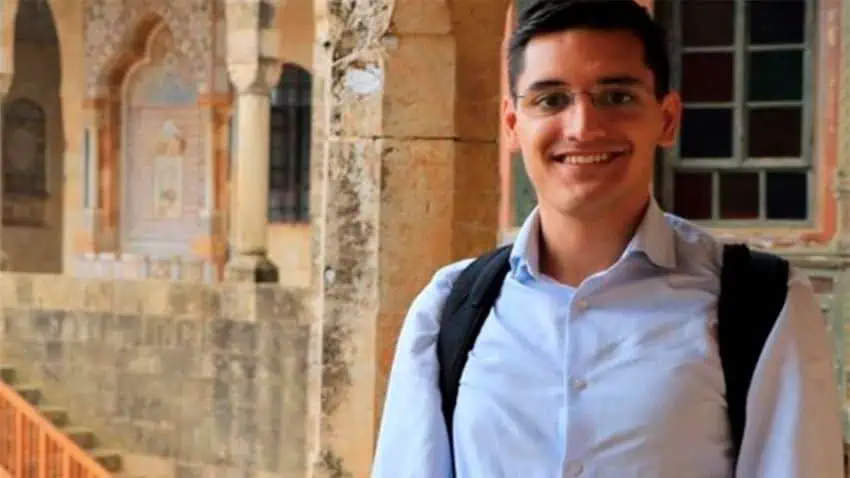
A Catholic priest was found guilty on Tuesday of the 2019 homicide of a 29-year-old deacon in Mexico City.
Francisco Javier Bautista Ávalos, former parish priest at the Cristo Salvador church in the Tlalpan borough of Mexico City where his victim, Leonardo Avendaño, was a deacon, will be sentenced on Thursday. The victim’s family is seeking the maximum penalty of 50 years in prison.
Avendaño’s brother told the newspaper Milenio on Tuesday that ample evidence against Bautista was presented in a Mexico City criminal court.
The court determined that “he was responsible for the murder, and there was also betrayal and premeditation on his part,” Josué Avendaño said.
He said security camera footage and cell phone data showed that his brother and the priest were together on the day the murder occurred.
“I felt great peace when I heard that they found him guilty. I never had any doubt that he was responsible for the death of my brother,” Avendaño said.
“I wouldn’t have been happy if there was injustice and they released someone who deprived someone of life. … The hearing today was satisfactory,” he said, adding that the guilty verdict was the culmination of a commitment he made to fight for justice in the case.

“I will ask for the maximum penalty, which is 50 years,” Avendaño said.
Bautista was arrested on June 18, 2019, in connection with the homicide a week after Avendaño’s body was found in his pickup truck. Before that, the priest officiated at the slain deacon’s funeral service and expressed hope that the murderer would be caught.
But after interviewing Bautista, police noted inconsistencies in his testimony. After reviewing messages on Avendaño’s cellphone, they discovered that the two had met the night Avendaño went missing.
A judge subsequently ordered the priest to stand trial on murder charges and remanded him in custody.
Josué Avendaño said in late June 2019 that his brother was beaten and tortured before he was killed and rejected a version of events that suggested that he was accidentally strangled to death during a sex game.
“My brother was tortured. [His injuries] weren’t from a game or anything like that. It was something that was planned in advance. My brother was tortured, and then, after that, the cause [of death] was asphyxiation,” he said, adding that his brother’s body was badly bruised, his nose was broken, his face was swollen and some of his teeth were missing.
The deacon’s family said shortly after his death that the murder was motivated by a desire to stop Avendaño from going public with certain accusations, but they didn’t offer further details.
Avendaño told Milenio that the priest was very close to his family and visited his brother at home on several occasions. He also said that his brother “loved, respected and admired” Bautista.
“Unfortunately someone so close [to him] ended his life. It’s a great disappointment that someone who dedicated himself to preaching the word of God became a murderer,” Avendaño said. “… He premeditated it and took the time to torture him [before] killing him. … It wasn’t a murder with a gunshot but rather with his own hands.”
Avendaño added that there was no reaction from the priest when the guilty verdict was delivered.
“He did absolutely nothing, he didn’t react at all,” he said.
Source: Milenio (sp)