When Tropical Storm Alberto slammed into northeastern Mexico last week, it not only filled up reservoirs and lakes, it brought floodwaters that displaced not only several people around Mexico but also apparently some intrepid crocodiles in Tampico, Tamaulipas.
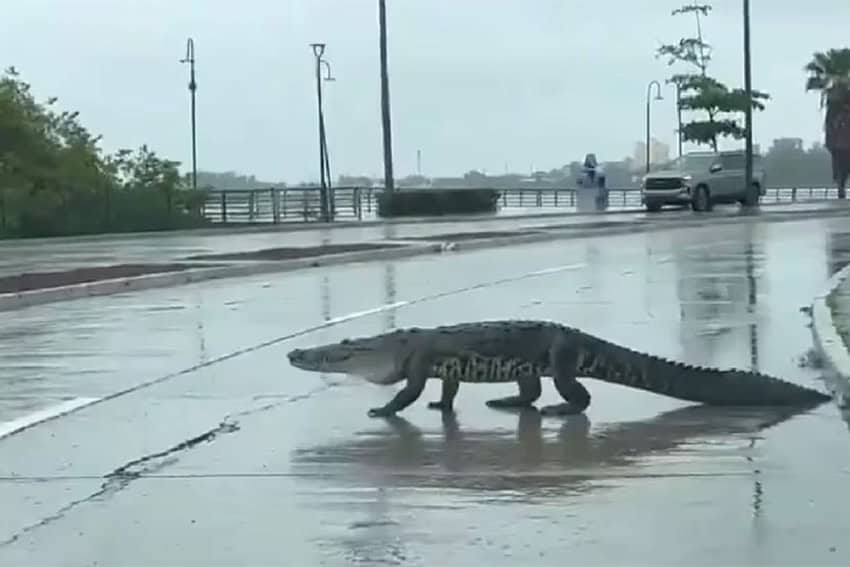
At least one escapee from an enclosed park of crocodile-populated mangroves in downtown Tampico was captured on video over the weekend, strolling city streets and impeding traffic.
▶️ Enorme cocodrilo sale de laguna de Carpintero de Tampico y detiene el tráfico
📹 Especial pic.twitter.com/lljAmHjQkN
— @telediariomty (@telediariomty) June 22, 2024
The large reptile is believed to have escaped from an enclosed park in the heart of Tampico, known as Laguna del Carpintero, a popular tourist spot.
The video, which was posted on social media, also showed how the Tampico crocodile’s journey came to an abrupt stop in the middle of a busy road, forcing passing cars to slow down and drive around the 3-meter-long reptile.

Tampico has crocodile-populated mangroves at Laguna del Carpintero, a popular park in the heart of the Gulf Coast city. The mangroves there are known to host a hundred or so crocodiles.
As rain continued to fall into the weekend, the water levels in Tampico had risen so much that at least one of the mangroves’ crocs was apparently able to climb out and wander away.
Commuters appear to have notified authorities: the organization Grupo SOS Cocodrilo was alerted, and National Guardsmen arrived to secure the area and prevent any unsuspecting pedestrians from happening upon the stray crocodile.
Three firemen were tasked with capturing the reptile and returning it to its habitat, according to the news website Sin Embargo. The men used rope and a thick fireman’s jacket to wrap up the crocodile. Once it was adequately covered up, one fireman knelt on top of the reptile while his two coworkers tied it up. They then transported it back to the Laguna del Carpintero.
Crocodile sighting in Mexico’s urban areas is not unusual. Similar experiences were reported in Chetumal at the other end of the country on the Yucatán Peninsula, as well as in the state of Sinaloa on the Pacific coast.
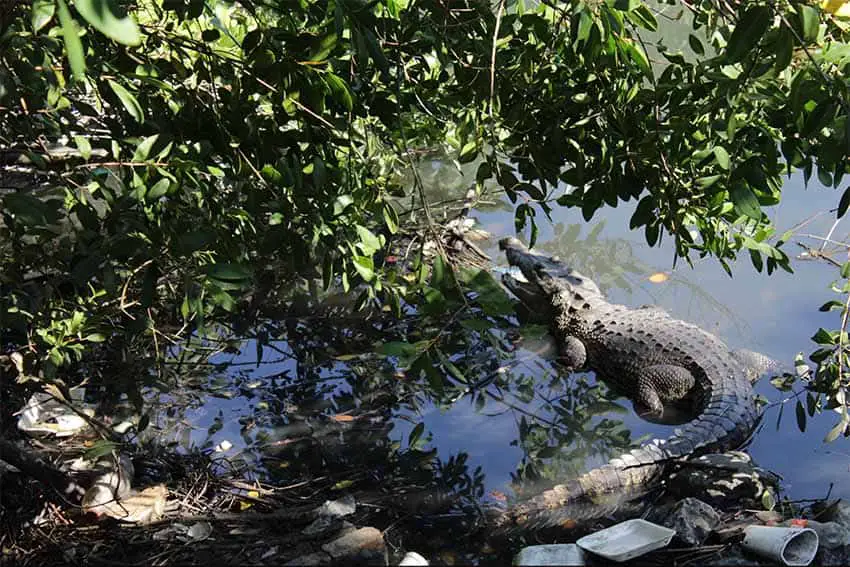
After a tropical cyclone passed over the peninsula earlier this month, residents of the Caribbean resort town reported seeing crocodiles in the city. Quintana Roo Governor Mara Lezama called on the Army to patrol the streets to protect the public. Two small crocodiles were captured and returned to their habitat in the Chac estuary.
In Sinaloa, Environmental Protection agents were patrolling rivers after receiving reports of crocodiles in public areas. Three people were killed when their car crashed after hitting a crocodile on April 24.
With reports from Infobae, Milenio and Sin Embargo