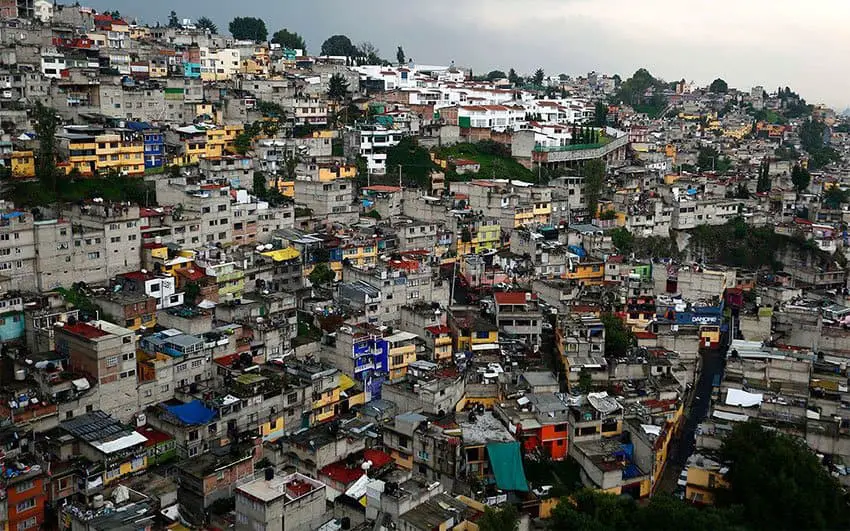
Several new municipal governments in México state will face high levels of debt, poverty and violence when they take office on January 1, according to a report by the state auditor’s office (Osfem).
Ecatepec, Naucalpan, Coacalco, Tlalnepantla and Atizapán de Zaragoza – all part of greater Mexico City – also face other problems including poor water services, educational deficiencies, bad roads and underperforming government officials.
High levels of homicides, femicides, attacks on public transit, motor vehicle theft, robberies of homes and businesses and muggings have made Ecatepec the most dangerous municipality in the country, according to the people who live there.
The most recent National Survey on Urban Public Security, released by statistics institute Inegi in October, shows that 96.3% of Ecatepec residents consider their city an unsafe place to live.
The most shocking criminal conduct reported in the municipality this year was the murder of as many as 20 women by a man dubbed the “monster of Ecatepec” and his partner, who also allegedly sold the baby of one of their victims.
Naucalpan and Tlalnepantla have public debt of 246.7 million pesos (US $12 million) and 624.2 million pesos (US $30.4 million) respectively, the state’s 2017 Public Accounts report reveals, meaning that the new governments will face the challenge of finding funds to repay it.
The Osfem assessment said that levels of transparency and institutional development in Coacalco are in a critical state and issued 181 recommendations to municipal authorities.

In its own development plan, the municipal government had committed to repaving roads but made no progress on the project, Osfem said.
For the next Atizapán de Zaragoza government, one pressing challenge will be to update the municipal development plan because no studies identifying work that needs to be done have been completed since 2003.
México state municipal governments will also inherit a collective 5-billion-peso (US $243.6-million) debt related to the supply and chlorination of water.
Municipalities that form part of the Valley of México metropolitan area, where water supply is often unreliable, have the largest outstanding bills.
The debt is payable to the México State Water Commission, which services 59 municipalities.
Source: Milenio (sp)