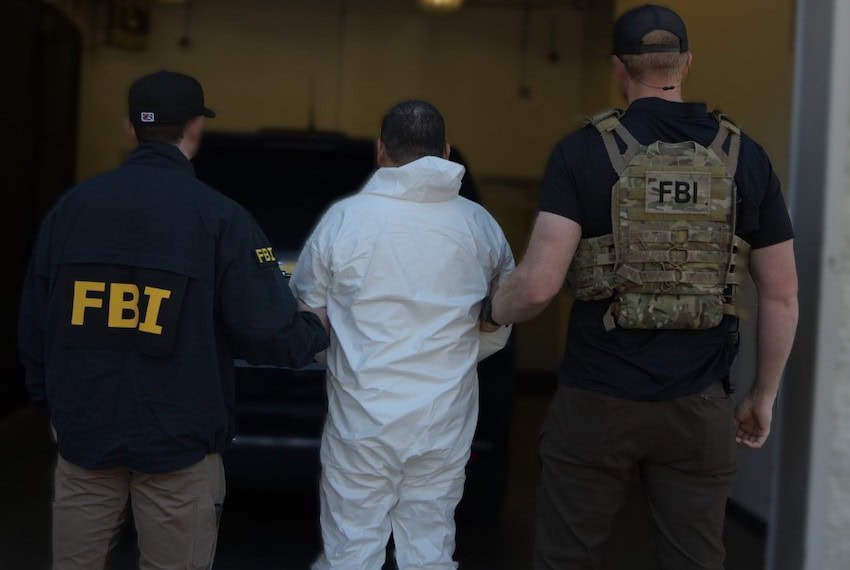
The United States has returned 13 Mexicans convicted of drug offenses in the U.S. to Mexico to complete their prison sentences.
The U.S. Department of Justice announced the repatriation on Monday, saying that the 13 unidentified inmates were sent to Mexico pursuant to the U.S.-Mexico International Prisoner Transfer Treaty.
#GanadoresyPerdedores | 🔴Estados Unidos transfirió a México a 13 connacionales que cumplían condenas en prisión por delitos relacionados con la distribución de drogas.
📺: @VictorPiz pic.twitter.com/BKzkbPmjdO— El Financiero (@ElFinanciero_Mx) April 15, 2025
The repatriated Mexican criminals were handed over by U.S. authorities at the border between El Paso, Texas, and Ciudad Juárez, Chihuahua, and subsequently transferred to Nayarit on a Mexican Air Force plane and taken to a federal prison in the state capital Tepic, according to a statement issued by Mexico’s Security Ministry.
Matthew R. Galeotti, head of the Justice Department’s Criminal Division, said that the “transfer of 13 federal inmates to correctional authorities in Mexico has saved the United States over $3 million by eliminating the need to pay incarceration costs for the 75 years remaining on their combined sentences.”
“The Justice Department’s International Prisoner Transfer Program, which is administered by the Criminal Division’s Office of International Affairs, enhances offender rehabilitation, reduces incarceration costs, and relieves overcrowding in federal prisons,” he said.

The Justice Department said in a statement that all 13 inmates sent to Mexico were serving “sentences relating to the distribution of controlled substances, including cocaine, methamphetamine, and fentanyl.”
“The inmates will complete the remainder of their sentences in Mexico pursuant to the treaty. The inmates requested to be transferred to their home country, and the governments of both the United States and Mexico approved these transfers,” the department said.
The transfer of the prisoners came six weeks after Mexico sent 29 cartel figures including notorious drug lord Rafael Caro Quintero to the United States.
The New York Times reported at the time that “the number and significance of the people sent to the United States at the same time made the event one of the most important efforts by Mexico in the modern history of the drug war.”
The U.S. Justice Department said on Monday that the repatriation of the 13 Mexican inmates to Mexico was “the 184th such transfer” since the U.S.-Mexico International Prisoner Transfer Treaty entered into force in 1977.
It’s the first transfer of prisoners from the United States to Mexico since U.S. President Donald Trump began his second term on Jan. 20.
The most recent transfer of Mexicans from U.S. prisons to Mexican jails occurred in December 2024 when nine inmates were repatriated pursuant to the 48-year-old bilateral prisoner transfer treaty.
Mexico News Daily