Election ‘dry law’ means at least one dry day in most states

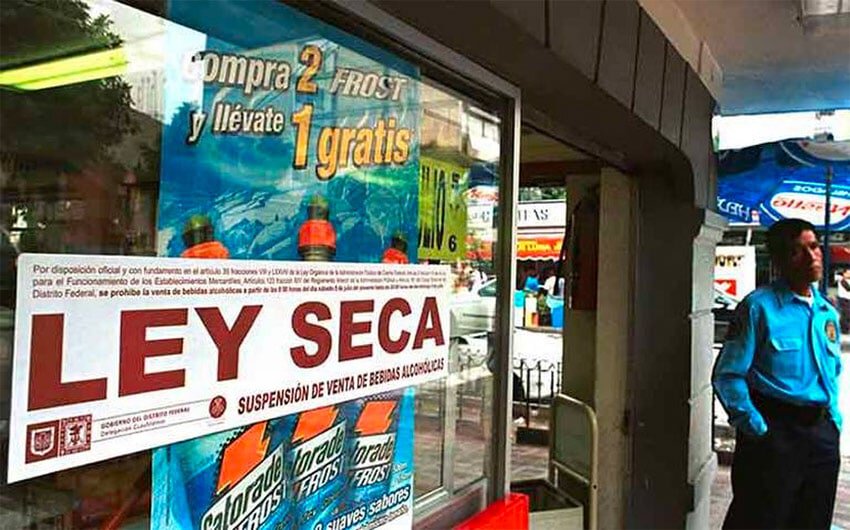
Keeping the peace on election day is the purpose of a law prohibiting the sale of alcoholic beverages, and most states have chosen to implement it.

The federally-mandated ley seca, or dry law, as it is known, allows for a prohibition of up to 72 hours, but this year no one will have to go for more than 59 hours without a drink (should they neglect to stock up beforehand).

The states with the shortest alcohol-free period — 24 hours starting July 1 at 12:00am — are Aguascalientes, Coahuila, Mexico City, Michoacán, Morelos, Nuevo León, Quintana Roo, Sonora and Veracruz.

Those with somewhat longer prohibitions are Guanajuato, 26 hours beginning tomorrow night at 10:00pm; Guerrero, 30 hours from 6:00pm on tomorrow; Chiapas, 38 hours, also at 6:00pm Saturday; Sinaloa, 39 hours from 6:00pm on tomorrow; and Chihuahua, 46 hours starting at 9:00am tomorrow.

Most states will go with a punishing 48-hour ley seca, starting tomorrow at 12:00am. They are Campeche, Colima, Durango, Hidalgo, México, Nayarit, Oaxaca, Puebla, San Luis Potosí, Tamaulipas, Tlaxcala and Zacatecas.

Three states take an even dimmer view of election boozing. In Tabasco the law will apply for 49 hours starting bright and early tomorrow at 6:30am, in Baja California Sur for 57 hours starting tonight at midnight and in Yucatán, which tops the list at 59, the law also takes effect tonight at midnight.

Those who can drink and vote freely are the citizens of Baja California, Jalisco and Querétaro, where there will be no ley seca.

There is, however, some relief in some states and and in some municipalities that can adopt their own regulations.

Some states allow for the sale of alcoholic beverages along with meals, while others tolerate their sale in tourist areas or in city centers during daylight hours.

Restaurant and bar owners are rarely pleased with the dry law, and voice their opposition every time it is imposed. A business leader in Toluca, state of México, observed this week that there was no dry law for the elections three years ago, and nothing happened.

Source: El Sol de México (sp)

Have something to say? Paid Subscribers get all access to make & read comments.
Manzanillo, Colima, México, 13 de marzo de 2026. La doctora Claudia Sheinbaum Pardo, presidenta Constitucional de los Estados Unidos Mexicanos en conferencia de prensa matutina, “Conferencia del Pueblo” desde Colima. La acompañan Indira Vizcaíno Silva, gobernadora Constitucional del Estado de Colima; Omar García Harfuch, secretario de Seguridad y Protección Ciudadana (SSPC); Raymundo Pedro Morales Ángeles, secretario de Marina (Semar); Bulmaro Juárez Pérez, divulgador de lenguas originarias, presentador de la sección “Suave Patria”; Ricardo Trevilla Trejo, secretario de la Defensa Nacional (Sedena); Jesús Antonio Esteva Medina, secretario de Infraestructura, Comunicaciones y Transportes; Bryant Alejandro García Ramírez, fiscal general del Estado de Colima; Fabián Ricardo Gómez Calcáneo; Rocío Bárcena Molina, subsecretaria de Desarrollo Democrático, Participación Social y Asuntos Religiosos de la Secretaría de Gobernación; Efraín Morales López, director general de la Comisión Nacional del Agua (Conagua); Marcela Figueroa Franco, secretaria ejecutiva del Sistema Nacional de Seguridad Pública (SESNSP) y Guillermo Briseño Lobera, comandante de la Guardia Nacional (GN). Foto: Saúl López / Presidencia

Mexico’s week in review: Congress deals Sheinbaum her first legislative defeat

1
The week of March 9 in Mexico was marked by standoffs between allies in Congress and adversaries at the airport. Here's what you missed.
A soldier displays seized handguns

The US and Mexico, growing together and growing apart: A perspective from our CEO

1
From a historic drop in homicides to opposite bets on electric vehicles, Mexico News Daily's CEO breaks down where the U.S. and Mexico are converging — and where they're not.
Veracruz Gov.

Veracruz governor blames private vessel for 200-kilometer Gulf Coast oil spill

1
The spill, which has spread to over 200 kilometers of Mexico's Gulf Coast beaches, has been traced to a private oil tanker off the coast of Tabasco.
BETA Version - Powered by Perplexity