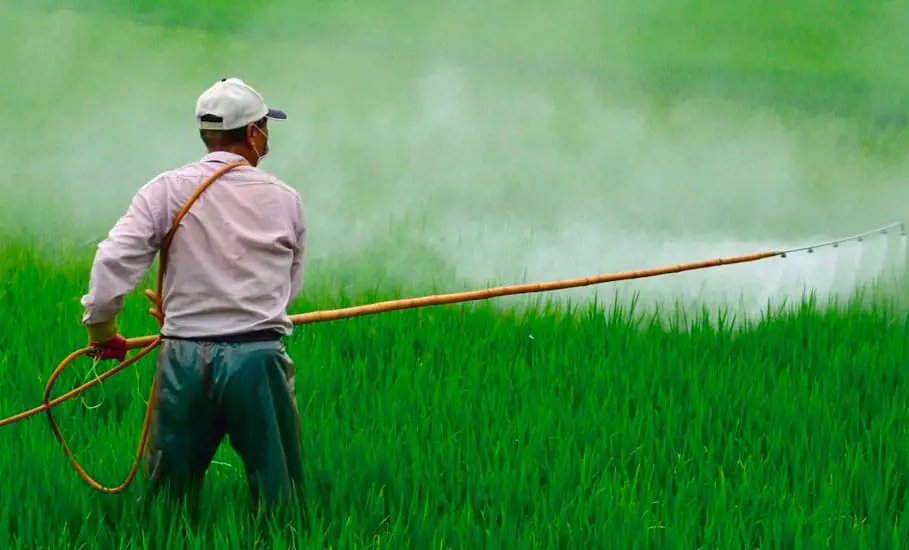
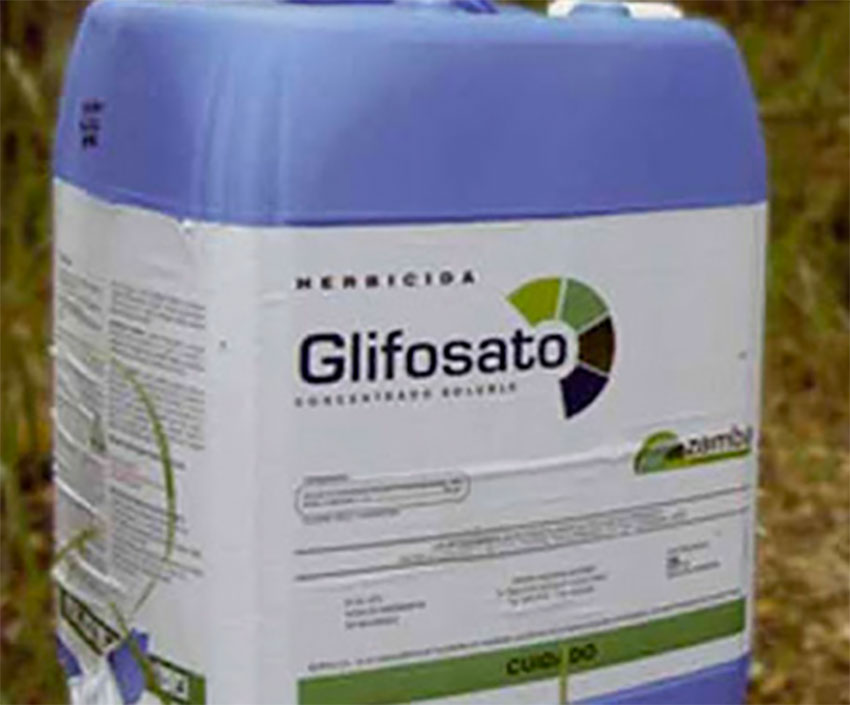
The federal Environment Ministry (Semarnat) is pushing for a presidential decree that would ban the use of the herbicide glyphosate although the Ministry of Agriculture may have a different view.
Environment Minister Víctor Manuel Toledo told a virtual forum Tuesday that he was hopeful that President López Obrador would issue a decree against glyphosate, the active ingredient in the Monsanto herbicide Roundup, whose effect on human health is hotly contested.
He said the aim is to completely eliminate the use of glyphosate by 2024.
The environment minister said Semarnat is seeking a ban on a total of 80 herbicides and pesticides due to the harm they cause human health and/or the environment.
Toledo said the Environment Ministry is currently working to clean up six highly-contaminated waterways where children have become sick due to exposure to glyphosate.
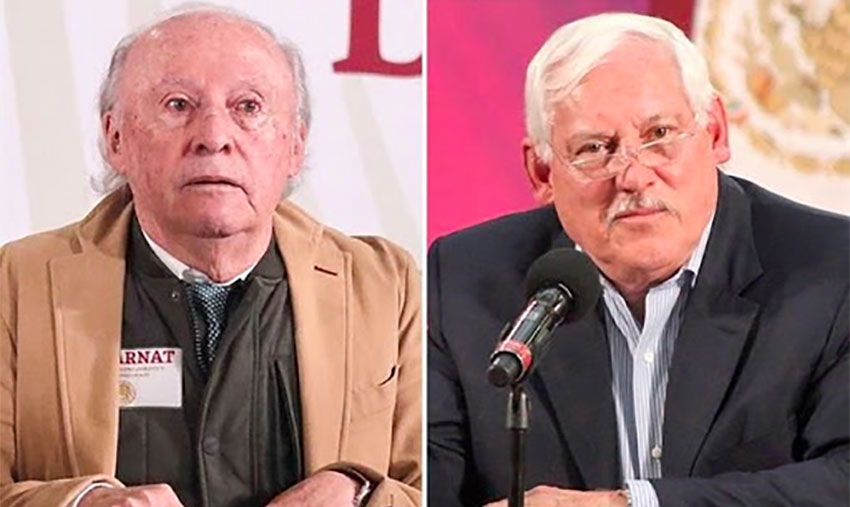
Semarnat, led by Toledo since May 2019, began banning the importation of the controversial herbicide last November, invoking the “precautionary principle” enshrined in national and international law. To date, the ministry has stopped the importation of some 67,000 tonnes, Reforma reported.
Toledo reiterated in May that action toward a total ban on the use of the herbicide was urgently needed.

He said at the time there was clear evidence that glyphosate – mainly used in Mexico’s south and southeast – has caused damage to people’s health and the country’s biodiversity.
In June, Semarnat and the Ministry of Agriculture and Rural Development (Sader) agreed to form a working group to establish a plan to phase out its use over the next four years and to assess the risk the product poses.
Sader on Tuesday sent a draft plan to the National Commission for Regulatory Improvement (Conamer) that said the ministry, along with Semarnat and the National Council of Science, would carry out the necessary technical studies to assess the safety of glyphosate. If it is deemed to be unsafe, new technology will be developed to manufacture a substitute, it said.
In its proposal, the Agriculture Ministry said the safety studies would be carried out over a period of four years whereas Semarnat wants glyphosate to be completely banned within the same time frame.
As a result, Toledo lashed out at Sader, asserting that the draft plan it sent to Conamer went against López Obrador’s instructions.
ANEC, a national agricultural association opposed to the use of glyphosate, also rejected Sader’s proposal, charging that Agriculture Minister Víctor Villalobos acted unilaterally in its formulation and agreeing with Toledo that it contravened the president’s instructions.
It called on López Obrador to ensure compliance with the agreements reached for the use of glyphosate to be phased out.
ANEC said that a joint strategy toward a new agri-food model in which toxic agricultural products are not used is urgently needed.
“The government … set out the urgent need to rescue the countryside and guide the country toward [agricultural] self-sufficiency and food sovereignty. In this sense, it’s clear that the corporate industrial agriculture model … has not been able to nor will it be able to create alternatives” that allow Mexican farms to thrive while protecting people’s health and the environment.
Source: Reforma (sp)