An average of three children were killed in traffic accidents every day in the 10-year period between 2010 and 2019, according to the national statistics agency, Inegi.
Official data shows that 11,155 children aged 14 and under were killed during the period, making traffic accidents the leading cause of death among minors, ahead of choking incidents and drownings.
One-third of the children who died in vehicle accidents — 3,703 — were run over, while the remainder were passengers in cars, buses and trucks that crashed or were involved in motorcycle accidents. Of those hit by cars, 1,740, or 47% of the total, were aged 4 or younger; 27% were aged 5–9 and 26% were 10–14.
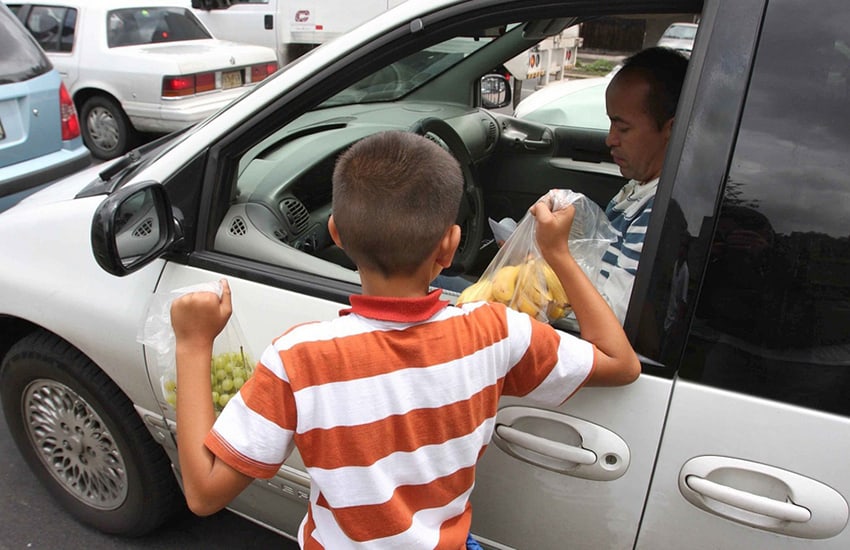
Walking to and from school poses a risk to children in Mexico, especially to those who live in urban areas with a lot of traffic.
According to a 2018 report by the United Nations Children’s Fund (UNICEF), 60% of children in Mexico City walk to school, the majority of whom belong to low-income families.
“The link between child poverty and road traffic injury is seen clearly in Mexico’s urban centers, where child pedestrians are most vulnerable,” the report said. UNICEF claimed that the “policy response” to the dangers children face has been “lacking.”
The report mentioned Mexico City as well as Guadalajara, and Zapopan in Jalisco as particularly dangerous urban zones for child pedestrians. In Guadalajara and Zapopan between 2008 and 2010, it said, 71% of the children 17 and under who died in traffic accidents were pedestrians.

Most children who died in crashes between 2010 and 2019 were passengers in cars, but 426 were killed in motorcycle accidents. Jalisco recorded the highest number of motorcycle accident fatalities among children, followed by Tabasco, Veracruz and Chiapas.
In its report, Streets for Life: Safe and healthy journeys for the children of Latin America and the Caribbean, UNICEF noted that younger children on motorcycles rarely use authorized helmets, in part because there are no authorized helmets for children under 3 years old, but also because they are not regulated or enforced.
Just over 39% of the children killed in traffic accidents during the decade, or 4,380, were aged 4 or younger. About 7%, or 765, had not yet turned a year old. Among children aged 5–9, there were 2,867 deaths, or 26% of the total. Among those aged 10–14, there were 3,908 fatalities, or 35% of the total.
One possible reason why there were more fatalities among those aged 0–4 is that many of the youngsters who died were likely not seated in appropriate infant car seats.
Inegi data shows that México state — the country’s most populous — recorded the highest number of deaths of children in traffic accidents with a total of 1,039. Jalisco was second with 1,010 fatalities, followed by Guanajuato (775), Puebla (620), Chihuahua (569) and Sinaloa (511). More than 40% of all the deaths occurred in those six states.
Source: Milenio (sp)