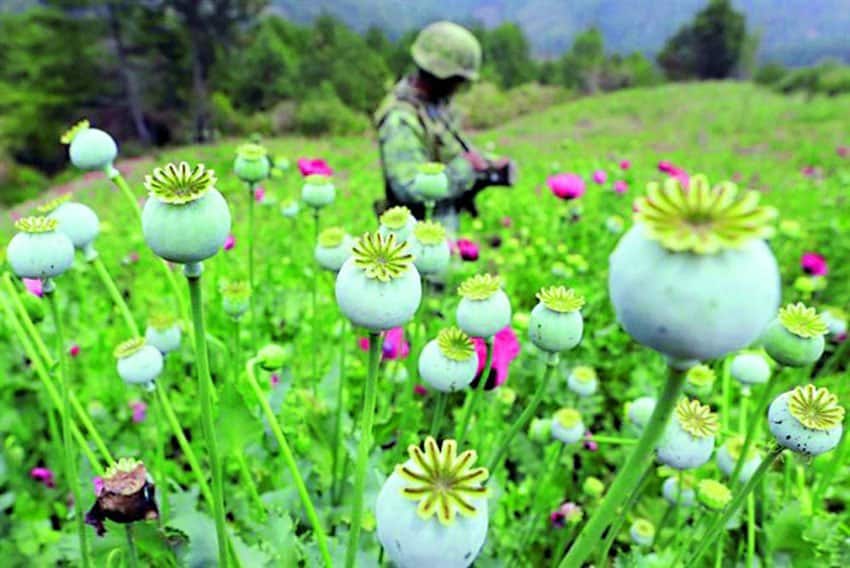
Residents of 33 communities in Guerrero have pledged that they will not allow the military to destroy their opium poppy plantations.
Townsfolk from the municipalities of Helidoro Castillo and San Miguel Totolapan who say that cultivating poppies provides them with their only source of income signed a document in early June in which they committed to defending their plants in the face of destruction by the army, which routinely burns fields of the illicit crop.
At a meeting in Helidoro Castillo on Sunday, leaders from the 33 communities agreed that if they don’t receive a commitment from federal authorities that their poppies will be respected, they will block highways in Guerrero.
In video footage of the meeting, one of the town commissioners proposes blocking the Acapulco-Zihuatanejo highway and the one linking Chilpancingo and Iguala.
Another town commissioner said municipal, state and federal authorities have failed to fulfill promises in the areas of education, health and construction of roads. “The truth is we’re forgotten,” he said.
According to a report by the newspaper Reforma, the community leaders warned that if something untoward happens to a military fumigation helicopter or to military personnel deployed to destroy poppies, it will not be their fault but rather that of the federal government.
In the June document, the residents pledge to defend their “work” until the government provides them with financial assistance that allows them to maintain their families.

“We are determined to prevent our poppy plantations from being destroyed whether it is by air or land,” the document said.
Reforma reported that the protest tactics of farmers from the Sierra region of Guerrero, some of whom have been growing opium poppies for decades, have become more radical, noting that residents of one Helidoro Castillo community detained a group of 40 soldiers in April last year to demand that they halt operations to destroy poppies.
Farmers from the Sierra region have also detained soldiers and police to demand that the government distribute free fertilizer.
Farmers say they use state-supplied fertilizer for crops such as corn, beans and squash. But federal and state authorities have detected that most farmers use the fertilizer for illicit crops, including opium.
Source: Reforma (sp)