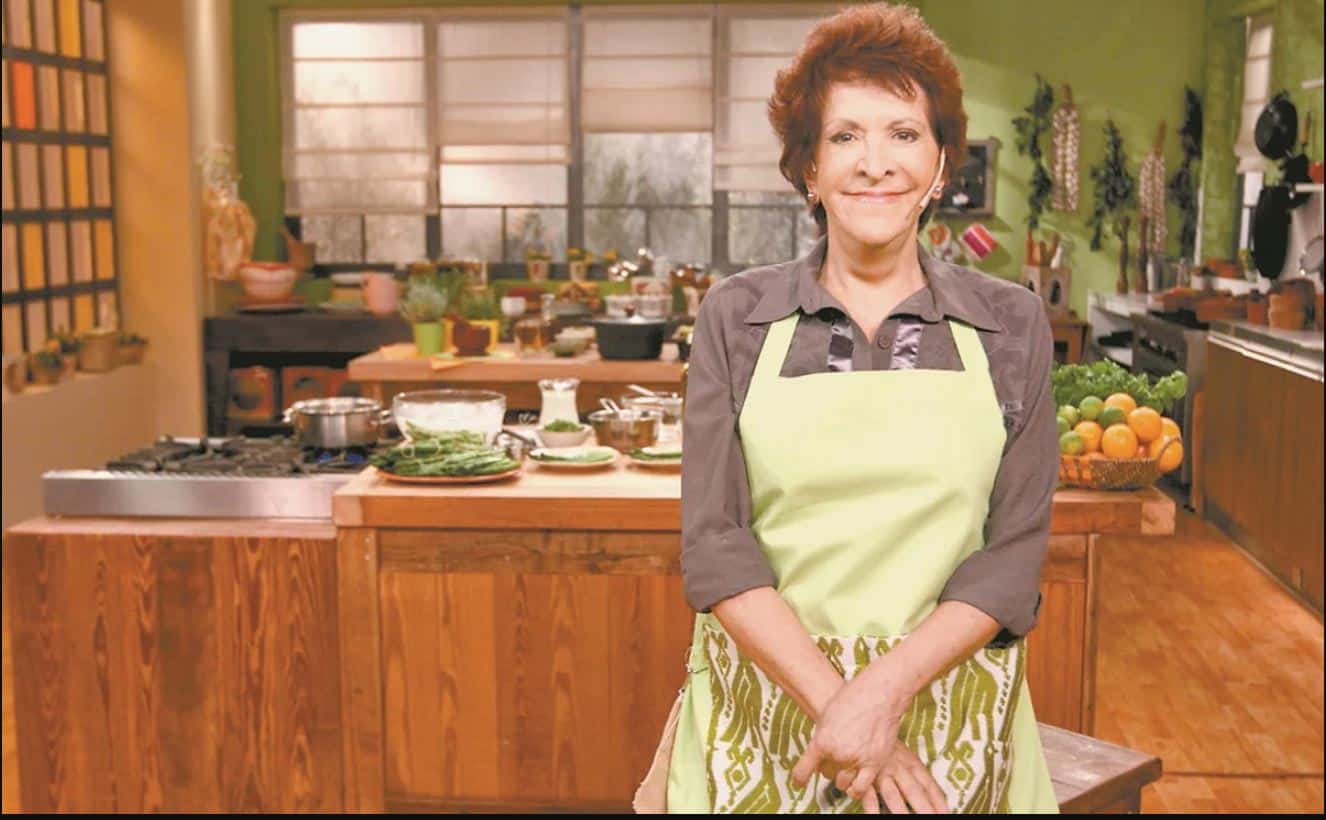
Chepina Peralta, a Mexican icon who was the first woman in Latin America to host a television cooking show, died in Querétaro on Saturday at the age of 90.
Her son-in-law announced her passing, saying that she died of natural causes.
Lucía Josefina Sánchez Quintanar, Peralta’s real name, was born in Mexico City in 1930 and first gained prominence when she was selected as the host of a cooking show in 1967.
She landed the job despite not being a chef and never having studied cooking.
“A woman had the idea of doing it [the show] and they were looking for a person, a woman more or less of my age at that time – thirtysomething – who had a way with words. … They wanted a woman who was an authentic housewife and who could speak well,” Peralta said in a 2019 interview with the newspaper El Universal.
“I didn’t know how to cook, nor did I like to. … I had to cook at home because there were five kids and my husband in the family, but I didn’t like it. I didn’t say that in the [job] interview, and they gave me the job.”
Although she said on numerous occasions that she didn’t like to cook, Peralta became a talented amateur chef and would go on to host numerous well-known cooking shows including La Cocina de Chepina (Chepina’s Kitchen) and Sal y Pimienta (Salt and Pepper).

All told, she appeared on television more than 7,000 times and broadcast 9,000 radio cooking shows, El Universal said. She also wrote 13 books and countless magazine articles and hosted a popular cooking and nutrition program on YouTube later in life.
On television, Peralta’s simple language, impeccable culinary technique and mouthwatering dishes appealed to a wide audience and she became a household name in Mexico, where talking about food — and eating — is a national passion.
“Money isn’t the secret of eating well; the secret is knowing how to combine ingredients. Eating well is the privilege of intelligent people, not rich people,” she once said on Sal y Pimienta.
One of her many fans was the well-known chef Édgar Núñez, who recalls watching Peralta on television when he was just 8 years old.

“If things are complicated for women now, 40 years ago when she started out, it was worse. … I believe that she empowered women [by appearing on television],” he said.
“She popularized cooking on television; she helped a lot of people with their recipes,” Núñez added.
Peralta was also a powerful advocate for healthy eating, frequently steering her audience away from food of little nutritional value.
“I realized the opportunity I had [to encourage healthy eating] with a daily half-hour program,” she said in an interview after noting that many people in Mexico are overweight or suffer from obesity.
Peralta said in a 1979 interview that she always tried not just to teach her television viewers and radio listeners about cooking and nutrition but also entertain them and encourage them to better themselves.
“I’ve given them happiness, optimism, an interest in reading and learning new things,” she said.
“When I make a recipe, I try to give [viewers and listeners] a little history and make mention of famous anecdotes, and the women listening to me become interested in improving themselves. Messages that reach you with happiness and good humor are the ones that stick in your mind the most. That’s what I’ve tried to do with my audience,” Peralta said.
Source: El Universal (sp)