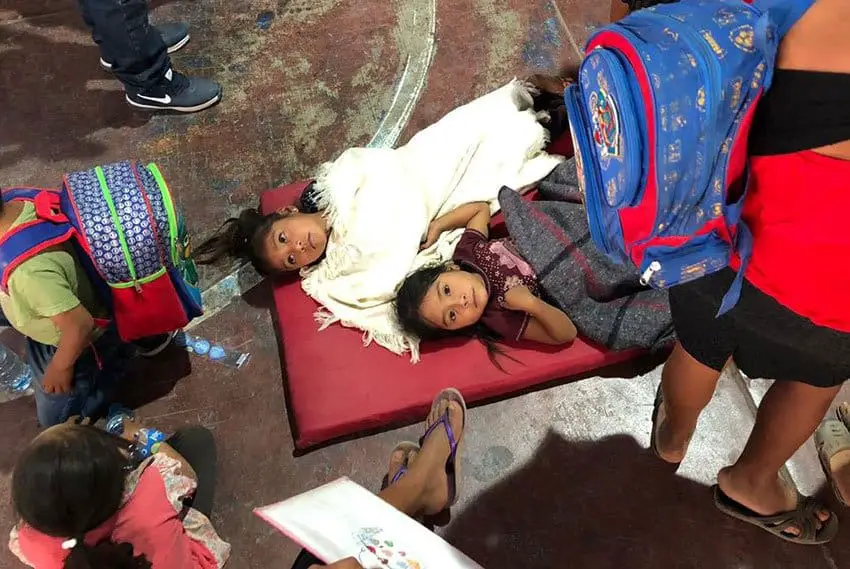
Children’s Day left a bitter aftertaste for more than 600 youngsters who came down with food poisoning during the day’s festivities in various states, principally Veracruz and Guerrero.
Guerrero Health Secretary Carlos de la Peña Pintos said authorities learned of two separate cases in which a total of 408 children and 15 adults contracted food poisoning.
One occurred at a school in Acapulco where students and teachers sat down to a full lunch of beef barbacoa, spaghetti and cake. Later, 317 children were admitted to hospital for treatment; 269 have since been discharged.
In another case, 200 kindergarten students in Mezcalcingo in the municipality of Chilapa fell ill after eating pozole (hominy stew) with pork. Several children were taken to a local hospital emergency ward but authorities reported that their condition had been stabilized.
In a third incident in Zongolica, Veracruz, 100 children were hospitalized with symptoms that included dizziness, vomiting and diarrhea after they were served a special lunch by World Vision, a non-profit humanitarian aid organization.
The children were initially taken to a local public hospital but were later transferred to Orizaba when the number of children requiring urgent care proved to be too great for the IMSS hospital to handle.
Source: Infobae (sp)