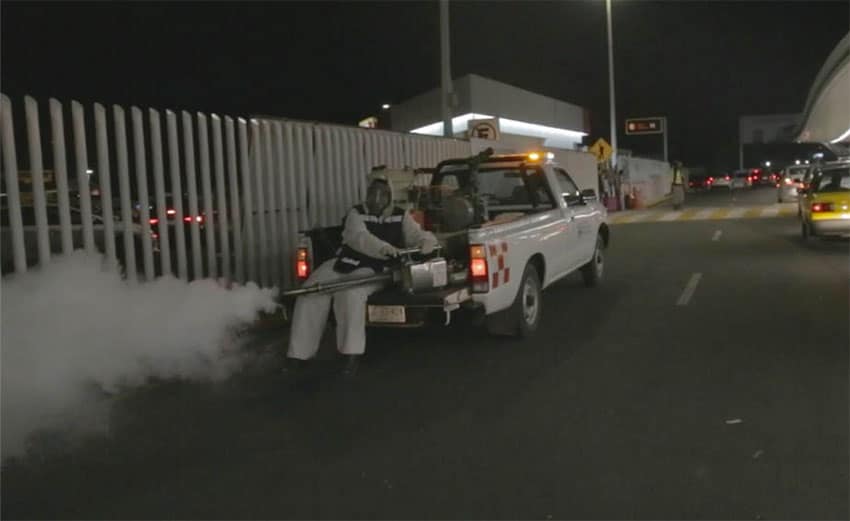
The Guadalajara airport appears to be winning its longstanding battle against mosquitoes.
Airport authorities say they have managed to reduce the mosquito population to about 95% of what it was, when bathrooms, waiting rooms, baggage carousels, runways and even aircraft were invaded by the insects.
Aurora Adame of Grupo Aeroportuario del Pacífico (GAP) said the large numbers of mosquitoes are due to the presence of nearby bodies of water but it is not clear why they invaded the airport.
To find out, GAP will finance a biological study by the Monterrey Institute of Technology to determine the best way to permanently eliminate the insects.
Héctor Barrios Piña, a researcher at the university, said that study should be concluded by the end of October.
In the meantime, GAP will continue to carry out preventative actions, which include spraying larvicide in possible breeding grounds around the terminal, regularly clearing drainage pipes and placing ultraviolet lights around the terminal area.
Authorities have insisted that the mosquitoes do not represent a health risk to the public. Health Secretary Fernando Petersen Aranguren said the species is not known to be a carrier of transmittable diseases like dengue or zika.

Meanwhile, users have continued to complain on social media of the large mosquito presence, despite the airport’s apparent success in reducing their numbers.
As of July last year, the airport had spent 15 million pesos over the previous five years to try to eradicate the problem.
Source: El Economista (sp)