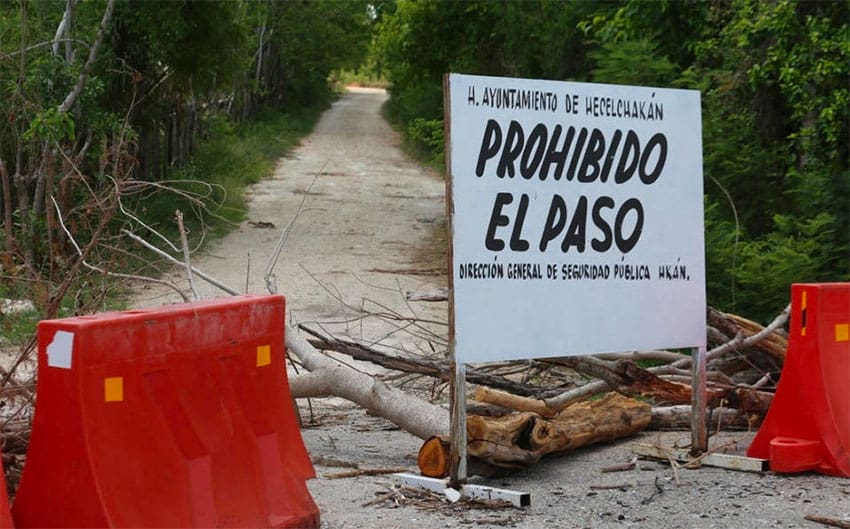
The coronavirus lockdown is a serious affair in many communities in Campeche and Yucatán: no outsiders are allowed in and almost no locals leave.
Residents of about 200 communities in the two southeastern states have blocked access roads for almost two months using whatever they could find – rocks, tree branches and trunks, traffic cones, plastic barricades and even tarps and pipes.
With a lack of healthcare facilities that are capable of treating seriously ill coronavirus patients, the residents of communities located along the Campeche-Mérida highway are determined to stop the invasion of Covid-19 at any cost.
According to a report by the newspaper Milenio, no outsiders are allowed into the cordoned-off communities, not even distributors of food to local stores.
Instead, small groups of people, mainly men, periodically leave their communities to buy groceries and other essential items for all local residents. The designated shoppers scour markets, supermarkets and stores in order to tick off every item on their lists before returning to their communities.
Upon arrival, their vehicle is disinfected and each and every product purchased is painstakingly cleaned before delivery to local families, Milenio said. The shoppers themselves are required to shower before coming into contact with their families.
One person who has witnessed just how serious the residents are taking the coronavirus preventative measures is 35-year-old albañil, or mason, José Ictec.

He told Milenio that he was allowed into one community to collect his tools from a construction site but has been blocked from all others even when he was attempting to collect payments he is owed.
“That’s the way it is everywhere: Calkiní, Carmen, Champotón, Hecelchakán, Hopelchén, Palizada, Tenabo, Escárcega, Calakmul and Candelaria,” Ictec said, referring to 10 of the 11 municipalities in Campeche.
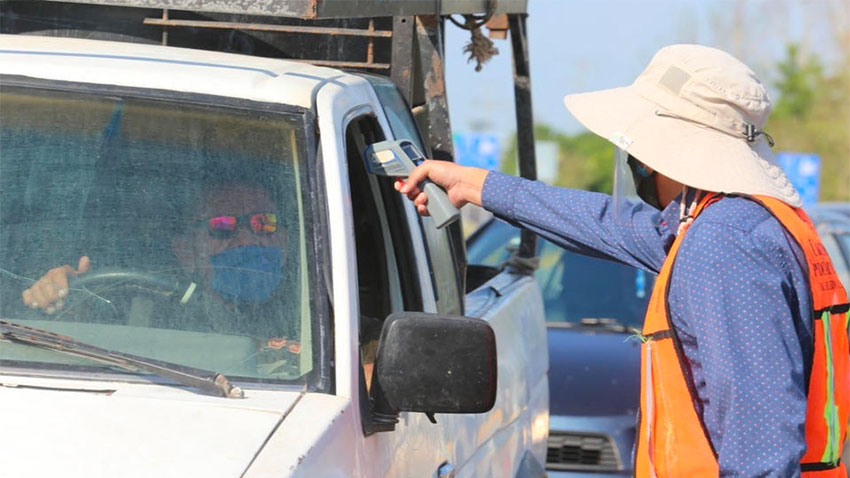
With so many communities blocked off and authorities continuing to urge people to stay at home, highway traffic is virtually nonexistent in Campeche but motorists who do venture out face temperature checks at checkpoints set up by state authorities.
Despite the efforts to keep the coronavirus at bay, only one Campeche municipality – Escárcega – is coronavirus-free, according to a federal government map, but two others, Tenabo and Hopelchén, have only recorded one case each.
The Gulf coast state has recorded a total of 328 Covid-19 cases since the start of the pandemic, with the highest number – 173 – detected in the municipality of Carmen. There have been 48 coronavirus-related fatalities in Campeche, the eighth lowest death toll among Mexico’s 32 states.
There are several coronavirus-free municipalities in Yucatán but the state has the ninth highest number of cases in the country.
Rural parts of the state are faring much better than the state capital Mérida, where almost 60% of Yucatán’s 1,244 cases have been detected. A total of 97 people have been confirmed to have lost their lives to Covid-19 in the state, a figure that accounts for just 1.6% of Mexico’s 6,090 coronavirus-related fatalities.
Source: Milenio (sp)