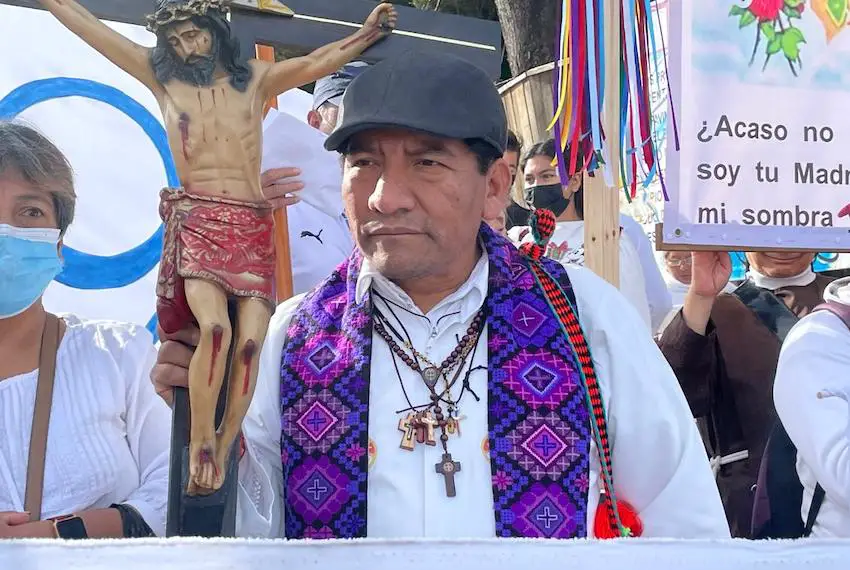
Father Marcelo Pérez Pérez, a Catholic priest in Chiapas known for his social activism and work in Indigenous communities, was killed by gunshot on Sunday morning after leading Mass in San Cristóbal de Las Casas.
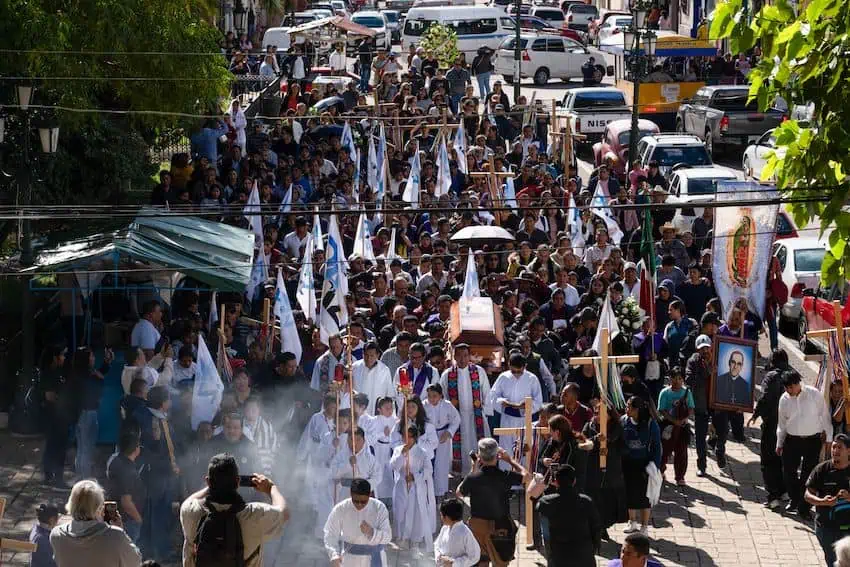
Less than six weeks earlier, Pérez had led a peace march with other priests to demand an end to drug trafficking and its ties to politicians, forced disappearances and displacement of residents.
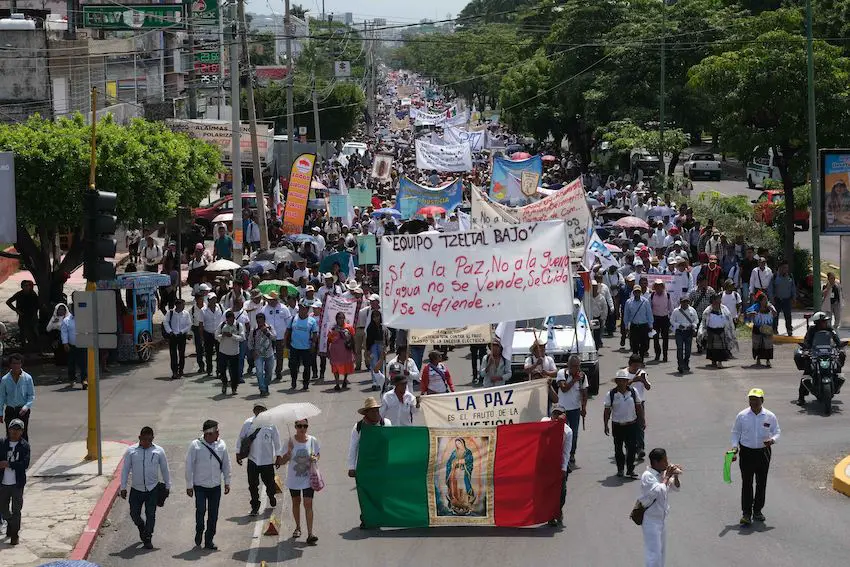
That march occurred in Tuxtla Gutiérrez, the capital of the southern state of Chiapas, and was but one example of Pérez’s longtime activism. For years, he had served as a mediator in conflicts involving Indigenous communities and was known for his outspoken stance against organized crime.
In recent years, the Sinaloa and Jalisco New Generation cartels, along with other sub-groups, have fought for control over territories in Chiapas near the Guatemala border that are optimal for drug trafficking and smuggling.
State authorities have launched an investigation into Pérez’s killing, though no suspects have been named. President Sheinbaum said during her Monday morning press conference that federal authorities are involved and that the case might be taken up by the federal Attorney General’s Office as the investigation proceeds.
Pérez, who had previously reported receiving death threats, was reportedly without security when he left Mass on Sunday in his pickup truck. He was said to be departing from a church in the Cuxtitali neighborhood of San Cristóbal to lead Mass at a church in another section of town, Guadalupe.
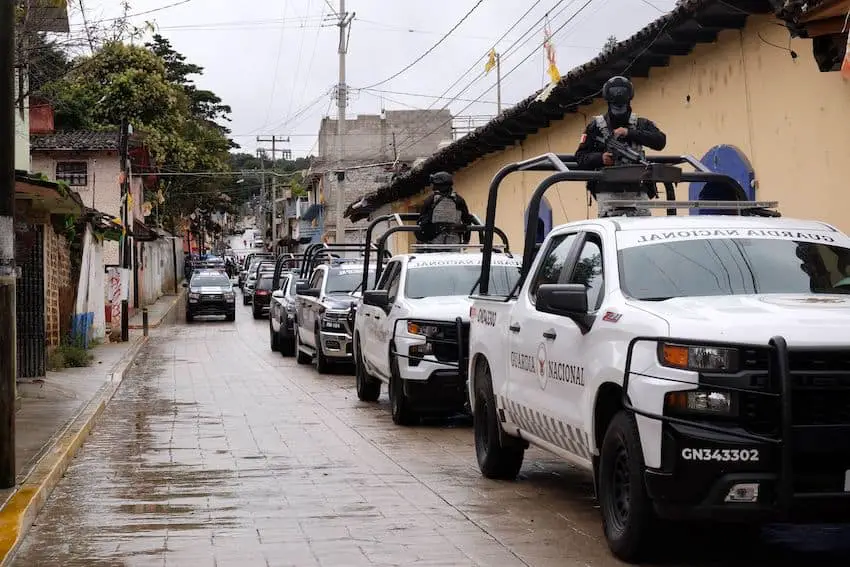
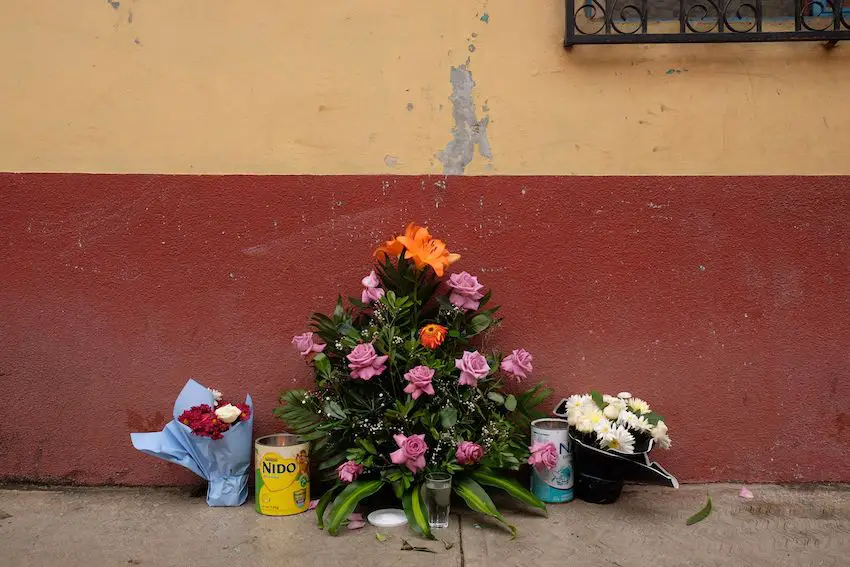
Driving alone, he was approached by two gunmen on motorcycle who opened fire and hit him several times, killing him on the spot, local media reported with confirmation from Bishop Rodrigo Aguilar Martínez of the Diocese of San Cristóbal.

Pérez was a member of the Tzotzil Indigenous people. He was 50 years old, according to the Diocese.
His death cast a spotlight on the instability in one of Mexico’s most violent regions.
“The cowardly assassination of Father Marcelo Pérez will not go unpunished,” Chiapas Governor Rutilio Escandón said on social media, echoing calls from civil society and church leaders for justice.
“We reject any effort to minimize this deed as an isolated case,” the Jesuit Order in Mexico said in a statement. “Organized crime has caused fear and pain in various parts of the country, and Chiapas is no exception. The violence in this region reflects a structural problem that demands an integral and urgent response from the state. We urgently call on the authorities to respond firmly and restore order and the rule of law.”
During the Sept. 13 Pilgrimage for Peace in Tuxtla Gutiérrez, Pérez highlighted the escalating cartel violence that has led to the evacuation of many villages in towns in Chiapas, leaving some of them virtually empty.
In July, for example, over 500 villagers fearing for their lives fled to Guatemala from the town of San José de los Pozos. A similar mass exodus involving 5,000 people occurred the previous month.
“Chiapas is a time bomb,” he told the online news outlet Aristegui Noticias last month.
Pérez also fought against drug addiction and alcoholism, issues that disproportionately affect Indigenous communities in the region.
The Inter-American Commission on Human Rights had granted Pérez precautionary security measures following the death threats against him, but he was said to be alone on Sunday.
Priests in Mexico are often targeted due to their involvement in mediating conflicts between criminal groups and local communities. Pérez had previously said there was a price tag on his head.
Days before his murder, Pérez gave an interview about the rampant violence in many areas of rural Chiapas. “There are many dead, many displaced people. There are uprisings; there are people taking refuge in the hills. This is worrying. Young people are recruited by organized crime and young people are in danger,” he was quoted as saying.
“The truth is not in a palace; it is not behind a desk. The truth is in Pantelhó, the truth is in Chicomuselo. The federal government should go [to those rural communities], but we know that if they don’t do it with the National Guard, their lives are at risk.”
With reports from El País, El Sol de México, El Norte, Los Angeles Times and Associated Press