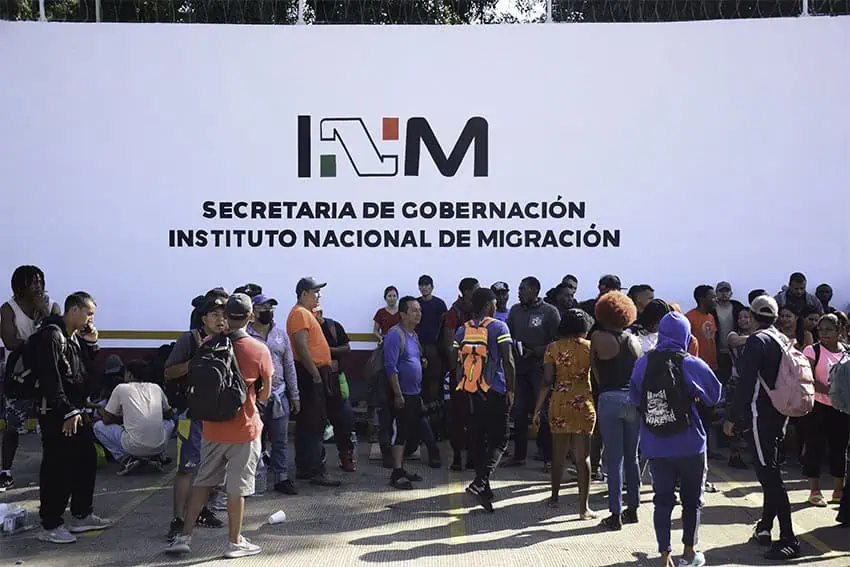
Since taking office on Jan. 20, U.S. President Donald Trump has continued to threaten mass deportations as efforts to round up undocumented migrants continue apace, forcing Mexico’s government to redirect funds to agencies that handle migrants and refugees.
The newspaper El Universal reported on Monday that the Finance Ministry (Hacienda) has increased the National Migration Institute (INM) budget by 489% as compared to a year ago, shuffling funds from emblematic public works projects such as the Maya Train.

Although President Claudia Sheinbaum had insisted in December that her government was prepared to handle the mass deportations promised by Trump, El Universal said she had quietly been taking action to prioritize attention to migrants and refugees.
Hacienda’s fourth-quarter report indicates that the INM budget was hiked from 1.9 billion pesos (US $92 million) at the outset of 2024 to 11 billion pesos (US $532 million) by December 2024 and that Sheinbaum had overseen an injection of 4 billion pesos (US $193 million) in the fourth quarter alone.
The budget for the Mexican Commission for Refugee Assistance (COMAR) also more than doubled over the course of 2024, its funding increasing from an initial allotment of 51.2 million pesos (US $2.5 million) to 107.6 million pesos (US $5.2 million) by the end of the year.
Among other things, the extra money has gone toward funding the México te Abraza program (“Mexico embraces you”) which comprises 10 welcome centers across the six states bordering the United States, each having the capacity to harbor 2,500 people.
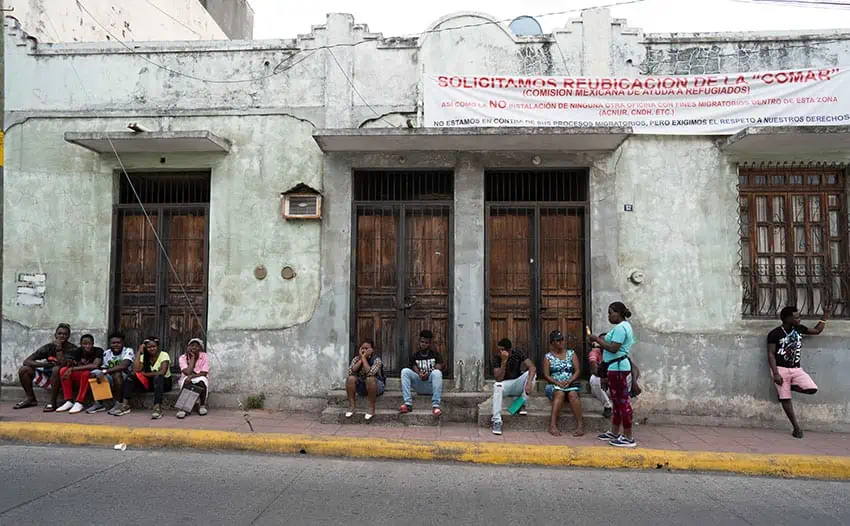
On Jan. 15, the INM advertised a 179 million-peso contract (US $8.6 million) to provide food for foreign and national migrants who are deported from the United States to Mexico.

The budget increase comes as little surprise after two Mexican government sources involved in the early planning around possible deportations voiced concerns in December about the country’s preparedness.
“We are not going to have much room to maneuver to deal with such a large flow [of migrants] with such a reduced budget,” one of the officials, who spoke on condition of anonymity, told the news agency Reuters.
In recent years, Mexico has received upwards of 200,000 Mexicans a year deported from the U.S., Reuters reported.
Sheinbaum, who took office on Oct. 1, 2024, inherited a budget deficit of nearly 6%, the highest since the 1980s, and had vowed to bring public finances under control.
In December, the president dismissed the notion that the INM would require a bigger budget, saying it only required administrative reorganization to carry out its functions.
With reports from El Universal, Vanguardia and Reuters