Authorities are investigating whether the derailment of the Maya Train on Monday was “intentional,” President Andrés Manuel López Obrador said Tuesday.
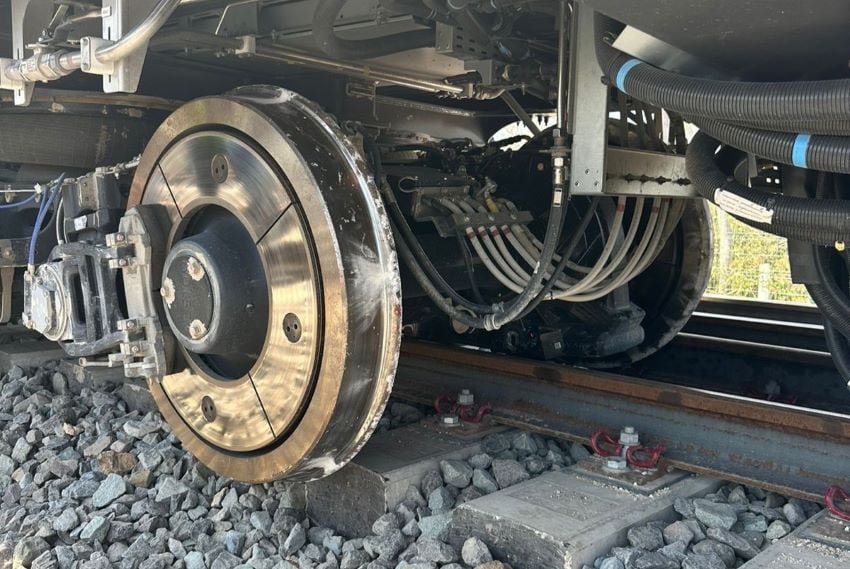
The final car of a train traveling to Cancún from Campeche derailed on Monday morning near a junction close to the Tixkokob station in the state of Yucatán. No one was injured and the train — which was traveling at just 10 kilometers per hour — wasn’t damaged. However, the service to Cancún had to be suspended.
López Obrador described the derailment as “strange” at his morning press conference.
“An investigation is being carried out because it is strange. There was a human error at the station, there was no change of tracks, and they’re looking at whether it was something intentional or a mistake of those responsible for the management of the tracks,” he said.
The Maya Train railroad is one of the signature infrastructure projects built by the current federal government. An “intentional” derailment could conceivably be an attempt to damage the president and his government in the lead-up to the June 2 elections.
López Obrador is constitutionally barred from seeking re-election, but the ruling Morena party’s presidential candidate, Claudia Sheinbaum, is a close ally of the president and is seeking to continue the so-called “fourth transformation” of Mexico he started.
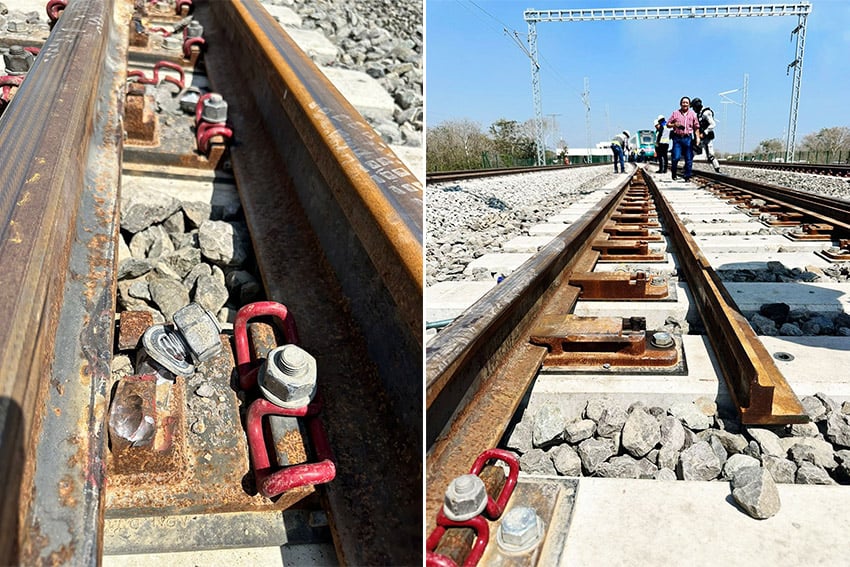
López Obrador told reporters that the derailment “fortunately” occurred “practically at the station” in Tixkokob and that the train’s protection system “worked, and that’s why fortunately there were no injured passengers or terrible tragedy.”

“An investigation is being done and we’re going to see what happened,” he added.
The incident occurred 100 days after the Maya Train railroad began operations on three of its seven sections.
The 1,554-kilometer-long railroad runs through the Yucatán Peninsula states of Quintana Roo, Yucatán and Campeche as well as Tabasco and Chiapas. It was originally projected to cost US $7.5 billion, but the government predicts the final price tag will be above $28 billion.