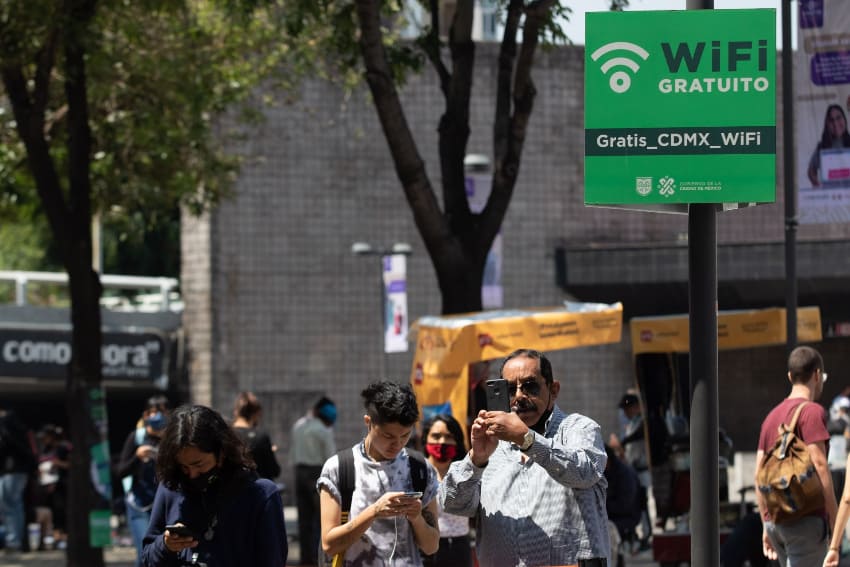
Mexico City’s government has submitted two bills to the local legislature seeking to guarantee free access to internet as a human right and to increase digital inclusion in marginalized areas.
The head of the government’s Digital Agency for Public Innovation (ADIP), José Antonio Peña Merino, told El Universal newspaper that the goal is to ensure free internet access is maintained even after the current administration leaves office. Since 2013, access to the internet has been constitutionally protected in Mexico as part of citizens’ rights to information.
According to Peña, the legislative proposal seeks an amendment to the city constitution to specify that connectivity is a right that can’t be removed.

The proposal prioritizes connectivity in healthcare centers, educational centers, government offices, community centers, public transportation systems, parks, and classrooms.
In 2020, the city’s free Wi-Fi project was recognized as the world’s best connectivity initiative by the UN-sponsored World Summit on the Information Society (WSIS) and last year, the metropolis was recognized as the most connected city on Earth by Guinness World Records. There are 29,255 access points today and Peña Merino said the goal is to reach 33,000 by the end of the current administration’s term in 2024.
To provide free Wi-Fi to both visitors and residents, the municipal government pays telecommunications provider Telmex approximately US $35.8 million annually.
Moscow is a rival for the most connected city, with over 24,000 free hot spots. However, in Moscow, users must provide personal data to log in, while the Mexican government has insisted it does not collect user data.

With reports from El Universal and Infobae