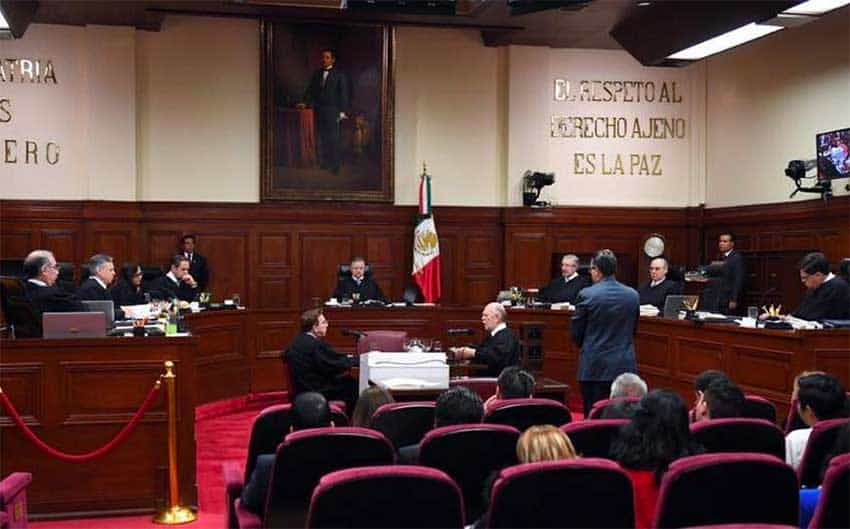
The Supreme Court (SCJN) yesterday published eight precedents on the recreational use of marijuana which determined that prohibition of the drug is unconstitutional.
Publication of the precedents in the court’s weekly gazette means that as of Monday it will be mandatory for all federal judges to grant amparos or injunctions to people who wish to use marijuana recreationally and seek legal protection to do so.
The eight precedents are based on five amparos already granted to complainants, allowing the possession and personal use of cannabis.
Three of the amparos were issued between 2015 and 2017 while another two were granted in October last year.
Under Mexican law, five similar rulings on a matter establish a standard that applies more broadly.
Judges ruled that the complete prohibition of marijuana – as stipulated by the General Health Law – is not a proportional measure to protect people’s health and public order and that criminalization of the drug violates the right to free development of personality.
“Absolute prohibition of the recreational use of marijuana . . . persecutes constitutionally validated objectives,” the SCJN said.

The court’s resolution does not compel judges to provide legal protection to people who wish to grow and/or sell marijuana.
On February 13, the SCJN notified both houses of Congress that it had approved the precedents, opening up a 90-day window within which lawmakers have the opportunity to legislate to legalize the recreational use of marijuana.
After the Supreme Court’s October rulings, Mexico United Against Crime, a group that opposes the prohibition of drugs, urged lawmakers to legalize marijuana.
“The Supreme Court has done its job . . . The responsibility for issuing the corresponding regulation falls on Congress,” the group’s director general, Lisa Sánchez, said in a statement.
Interior Secretary Olga Sánchez Cordero, a former Supreme Court judge, said in July that then president-elect López Obrador had given her a “blank check” to explore the possibility of legalizing drugs as well as any other measures that could help restore peace to Mexico.
Source: Milenio (sp)