Mexico’s national university and a U.S. NGO comprising water management experts have agreed to jointly develop a digital platform with information on the water resources that the two neighboring countries share.
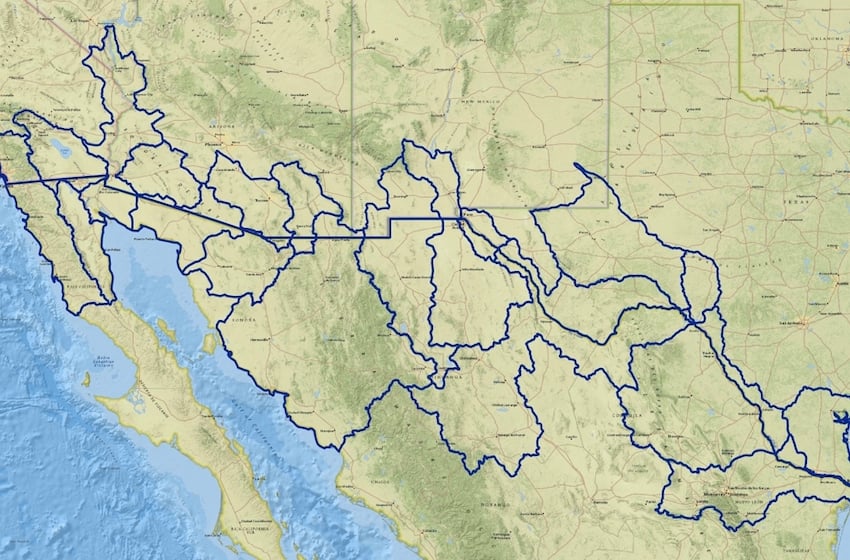
The National Autonomous University of Mexico (UNAM)’s Institute of Geography will work with the Permanent Forum on Binational Waters (PFBW) to create and run the platform that will include scientific data, maps and other key information in Spanish and English about the shared water sources in the border region, most prominently the Río Bravo (Rio Grande on the U.S. side), the Colorado River and the Tijuana River basin.
The aim is to provide access to reliable information on transboundary water resources to governments and universities in both countries, as well as the general public, in order to support integrated water management for long-term planning and for drought and flood response.
The UNAM Institute of Geography’s International Laboratory for Space Technology and Research (iSTAR) will develop the binational geoportal, while the PFBW will support research and development.
“This agreement strengthens scientific cooperation between Mexico and the United States and allows initiatives such as the data platform of the One Coast, One Community project to be hosted within this infrastructure,” said PFBW’s director, Rosario Sánchez. “We are laying the foundations for open, sustainable, useful and accessible science for all.”
The agreement spans five years, with the potential for renewal, and includes joint actions in research, technological development, specialist training and public dissemination of data on water and the environment.
Mexico and the United States share water from the two main rivers in the southwestern United States and northern Mexico, with the allocation of resources having been outlined in the 1944 Treaty on Utilization of Waters.

After eight decades of cooperation, the accord turned rocky this year. In March, for the first time since the treaty was signed, the U.S. denied a request by Mexico for water delivery, blaming recent shortfalls in Mexico’s water deliveries.
The hope is that establishing a jointly run platform with up-to-date information about the shared water sources will support better resource management and cooperation moving forward.
Mexico News Daily