Mexico is at “very high risk” of corruption in its defense and security sectors, according to a global anti-corruption coalition.
The defense and security division of Transparency International published its 2020 Government Defense Integrity Index (GDI) this week. It shows that nearly two-thirds of the countries studied face a high to critical risk of corruption in their defense and security sectors.
Mexico, along with countries such as Nigeria, Turkey and China, is in the second worst “very high risk” category. The GDI assesses and scores 86 countries across five risk areas – financial, operational, personnel, political and procurement – before assigning an overall score.
Mexico scored 36 in financial risk, 0 in operational, 43 in personnel, 42 in political and 31 in procurement for an overall score of 30 out of 100.
“Countries that score poorly in the GDI have weak or non-existent safeguards against defense sector corruption and are more likely to experience conflict, instability, and human rights abuses,” Transparency International Defense & Security (D & S) said.
“The results come as global military spending has increased to some [US] $2 trillion annually, fueling the scale and opportunity for corruption.”
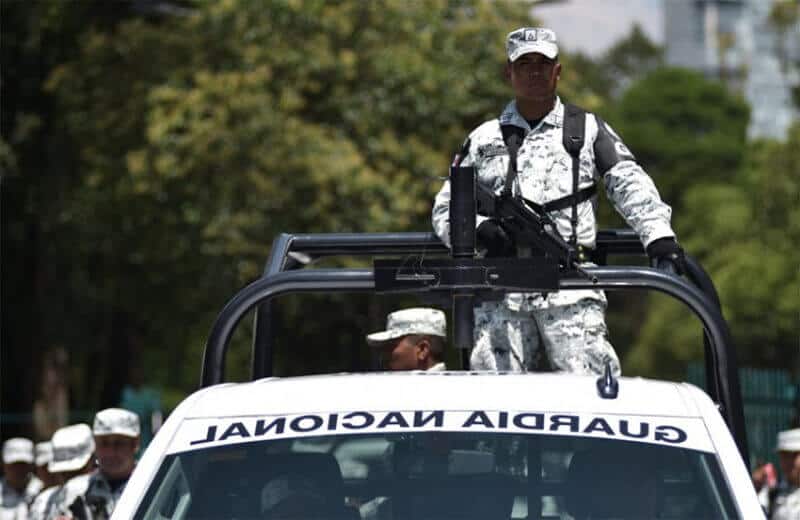
In Mexico, the current federal government has relied on the armed forces for a range of non-traditional tasks, including public security, infrastructure construction and vaccine distribution. Numerous analysts and organizations have criticized the increasing militarization of the country, a situation that places more public funds in the military’s hands and increases the opportunities for corruption.

In its Mexico brief, D & S said the military is one of the least transparent state institutions and benefits from a privileged position that exempts it from standard reporting, disclosure and transparency requirements.
“The defense budget, though published annually, is not detailed and lacks significant information related to arms acquisitions and does not contain any explanations or justifications for expenditure,” it said.
D & S also said that the “significant expansion” of the armed forces’ activities has led to widespread human rights abuses.
“Between 2014 and 2019, the National Human Rights Commission received nearly 3,000 complaints regarding military abuses. The militarization of public security, including the creation of the National Guard to replace the Federal Police as the government’s main law enforcement body echoes previous government approaches that contributed to serious cover-ups of human rights abuses, including enforced disappearances, torture and extrajudicial killings,” it said.
“Abuses of power are a particularly pressing risk when anti-corruption safeguards for personnel are weak. For instance, the code of conduct for military personnel does not provide specific guidance in relation to bribery, gifts, conflicts of interest and post-separation activities. There is also no record of how the code is enforced as the [Ministry] of National Defense does not keep records of this.”
In the operations section of its brief, D & S noted that public security and counter-organized crime operations involve “significant corruption risks” because they bring Mexican troops into close contact with “strong illicit economies and powerful organized crime actors.”
Despite that, “anti-corruption safeguards for operations are virtually non-existent,” D & S said.
“Mexico does not have a military doctrine that addresses corruption as a strategic issue during deployments and there is no evidence that corruption issues are taken into account in the forward planning of operations. Anti-corruption training also appears limited,” it said.
With regard to defense procurement, D & S said Mexico’s spending has risen considerably over the past five years but the increase has not been matched by a strengthening of governance processes for arms acquisitions.
The full Mexico brief can be downloaded as a PDF file on the Transparency International website.
New Zealand is the only country with a very low risk of corruption in its defense and security sectors, according to the GDI, while Germany and the United Kingdom are among eight countries with a low risk. Among the 18 countries with a critical risk are Algeria, Myanmar and Venezuela.
Mexico News Daily