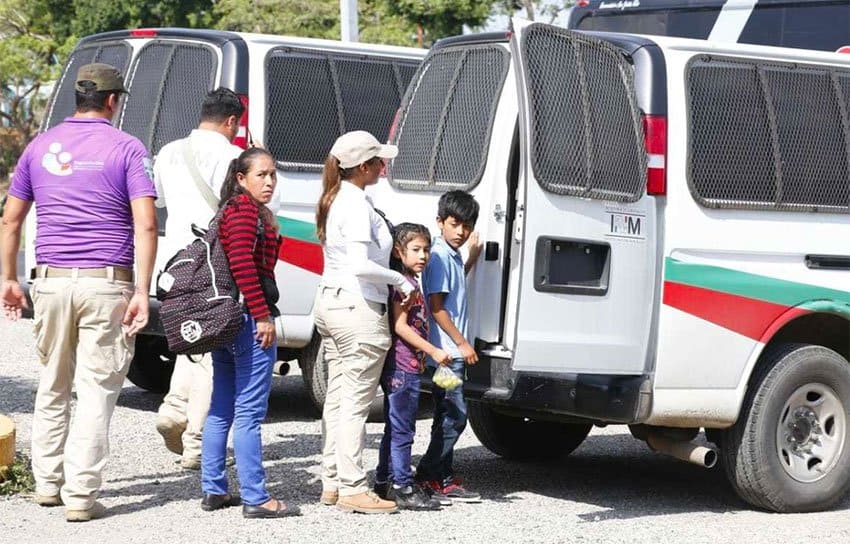
Deportations hit a 13-year high in June, according to preliminary government statistics showing that 33% more migrants were sent home last month compared to May.
Preliminary data from the National Immigration Institute shows that 21,912 migrants were deported last month compared to 16,507 the month before.
The figure is the highest since March 2006 when the government of Vicente Fox returned 23,529 people to their country of origin.
Arrests of migrants were also up last month to more than 29,000, a 23% increase on May numbers.
The increases came after United States President Donald Trump threatened in May to impose tariffs on all Mexican imports if the country didn’t do more to stop illegal immigration into the U.S.
As part of an agreement reached by the two countries on June 7 that ended the tariff threat, Mexico agreed to send 6,000 National Guard troops to the southern border, and subsequently sent almost 15,000 federal troops to the northern border.
Mexico’s progress in stemming migration will be evaluated 45 days after the deal was signed, and if the United States decides that the desired results are not being achieved, the government will “take all necessary steps” to implement a safe third country agreement, according to a supplementary agreement to the June 7 pact.

In December, the new government’s first month in office, just 6,373 foreigners were deported while in January more than 10,000 humanitarian visas were issued to migrants.
However, amid increasing pressure from the United States to stop the flow of migrants from Central America, the government started implementing stricter immigration policies that have hardened further in recent weeks.
All told, 82,132 people were deported in the first half of this year, 22,000 more than in the same period last year even though President López Obrador pledged to adopt a kinder approach in dealing with migrants.
Most of those deported are from the Northern Triangle Central American countries of Honduras, El Salvador and Guatemala.
However, increasing numbers of migrants from Africa and Caribbean countries such as Cuba and Haiti have entered Mexico in recent months, and 81 Haitians were deported on Saturday.
Mexico’s stricter enforcement against undocumented migrants will force migrants to “take more risks to avoid authorities,” according to Claudia Masferrer, a migration expert at the College of Mexico.
Migrants could be tempted to use human traffickers or seek to take more dangerous, more remote routes to the border with the United States.
Despite the increase in the number of deportations and detentions last month, Masferrer said it is “difficult to know if the statistics are going to keep the United States happy.”
However, for the Mexican government, the signs are promising.
Trump said Monday that Mexico is doing a “great job” after which López Obrador remarked that he was glad that the U.S. president “recognizes that we’re making an effort to live up to our commitment to apply our laws and, without violating human rights, reduce the flow of migrants.”
Kevin McAleenan, acting head of the United States Department of Homeland Security, said Friday that the arrests of migrants at the southern U.S. border was expected to drop by 25% in June after more than 144,000 illegal border-crossers – a 13-year high – were detained in May.
Source: El País (sp)