Under pressure from the United States and manufacturers on both sides of the border, the Mexican government announced on Friday that it would reopen automotive factories which it had previously deemed unessential businesses.
Mexico’s Foreign Affairs Ministry assured that the reopening would come with strict safeguards to protect the health of workers. “The Mexican government will be emphatic about health protection and will ensure that the reopening will be orderly, gradual and cautious,” it said in a statement.
The automotive industry accounts for 17.6% of the country’s manufacturing sector and, as of July 2019, employed some 977,000 people.
The move comes after the United States ambassador to Mexico posted a message on Twitter on Tuesday to persuade the government to get automakers back to work out of concern for the North American free trade zone’s supply chain.
“There are risks everywhere, but we don’t all stay at home for fear we are going to get in a car accident,” Ambassador Christopher Landau tweeted. “The destruction of the economy is also a health threat.”
Landau’s remarks echoed the concern of U.S. Under Secretary of Defense for Acquisition and Sustainment Ellen Lord, “we are seeing impacts on the industrial base by several pockets of closure internationally. Particularly of note is Mexico, where we have a group of companies that are impacting many of our major primes,” she said.
Economic pressure could mean that Mexico’s maquiladora sector, which also makes electronics and aerospace goods, could also reopen on a staggered schedule and with somewhat limited capacity.

However, dozens of maquiladoras deemed non-essential continue to operate in violation of the government’s order anyway. Lear, an automotive seat plant in Ciudad Juárez, finally closed down operations on April 1 after 16 of its workers died from the coronavirus.
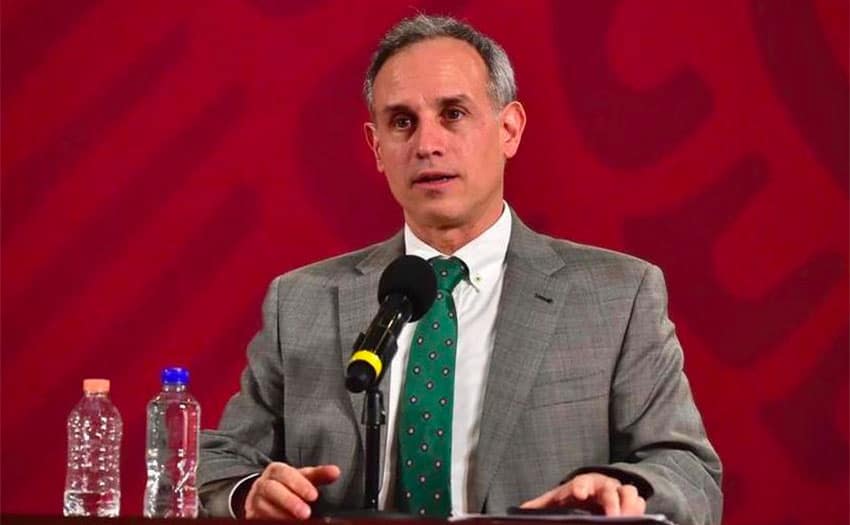
Mexico’s Deputy Minister of Health underscored the need for most businesses, big and small, to obey quarantine regulations and remain shuttered, arguing that business owners, managers and shareholders need to abide by measures “that have a constitutional basis to protect one of the most important assets, people’s lives.”
Hugo López Gatell said Friday evening that businesses continue to defy the order to cease operations, warning that they are impeding the process of slowing the spread of the virus.
The reopening of factories would come at a time when Mexico has yet to see peak pandemic numbers. Currently, the country has 12,872 confirmed cases and has seen 1,221 deaths, although the Health Ministry estimates the actual rate of infection may be eight times that due to insufficient testing.
Source: Associated Press (en), ABC News (en), Milenio (sp)