Civilians in the Tierra Caliente region of Michoacán are paid by narcos to attack police, according to the state security minister.
Israel Patrón Reyes told the newspaper Milenio that residents of communities such as Pizándaro, Cenobio Moreno and Las Colonias – all of which are located in the municipality of Apatzingán – are on the payroll of the Viagras crime gang.
The security minister charged that residents are manipulated by a cell of the Viagras to carry out attacks on state and federal security forces.
“Unfortunately, the records we have [indicate] that they [the residents] receive an amount of money, it might be 300 pesos [US $15] a day or 1,500 or 2,000 pesos [US $70 to $100] a week, to belong to this crime group,” Patrón said.
He added that authorities have information that residents are paid 2,000 pesos for each vehicle they set alight when the Viagras call for a highway blockade to be erected to thwart police operations.
Patrón said that members of the “Los Viagra” cell of the Viagras gang convince Tierra Caliente residents to support them by making them believe that there is a resurgence of the Jalisco New Generation Cartel in the region.
“We have identified the cell that is manipulating these people [men, women and children],” he said, adding that the real turf war is between “Los Viagra” and another Viagras cell known as “Los Blancos de Troya.”

The two cells have made their dispute public on social media, Patrón said. The security minister asserted that the recent increase in violence in the Tierra Caliente region is related to the dispute between criminals and not a resurgence of self-defense groups.
Unlike 2013 when self-defense forces formed to fight the Caballeros Templarios cartel because people were fed up with the failure of the government to respond to high levels of homicides, kidnapping and extortion, state and federal authorities are now addressing the crime problem, Patrón said.
“Today it’s very different, society does have a response from the government,” he said, explaining that state police, the army and the National Guard are permanently deployed in the Tierra Caliente region and collaborating closely.
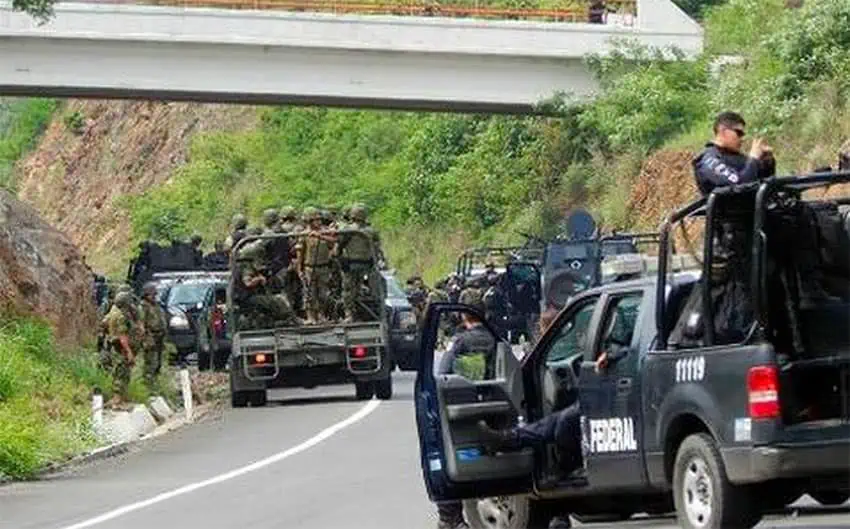
However, in recent months, “there have been attacks related to highway blockades – the burning of vehicles so that the [government] institutions don’t move forward,” Patrón said.
“Mainly women and children, … [as well as] some men, come out … with sticks, stones and machetes, trying to get the government … [forces] to leave the area.”
The Tierra Caliente region of Michoacán has long been notorious for violent crime. Much of the violence in recent years has been caused by the turf war between the Viagras and the Jalisco New Generation Cartel.
Source: Milenio (sp)