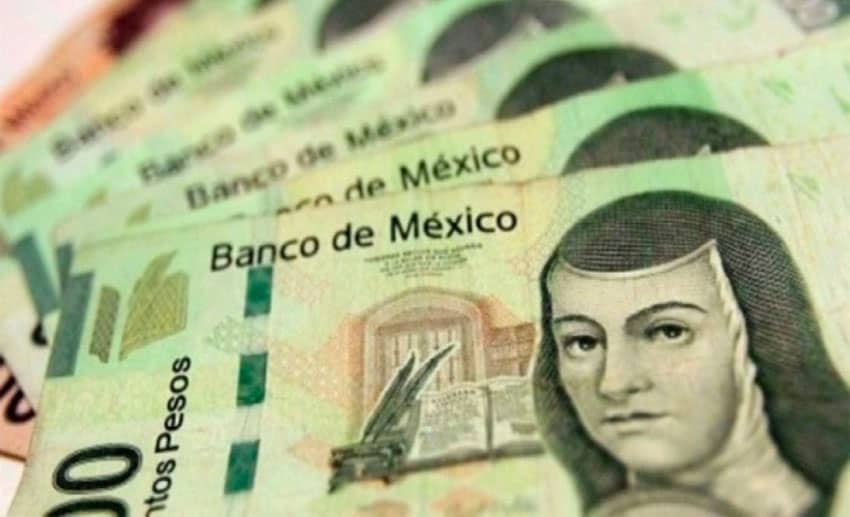
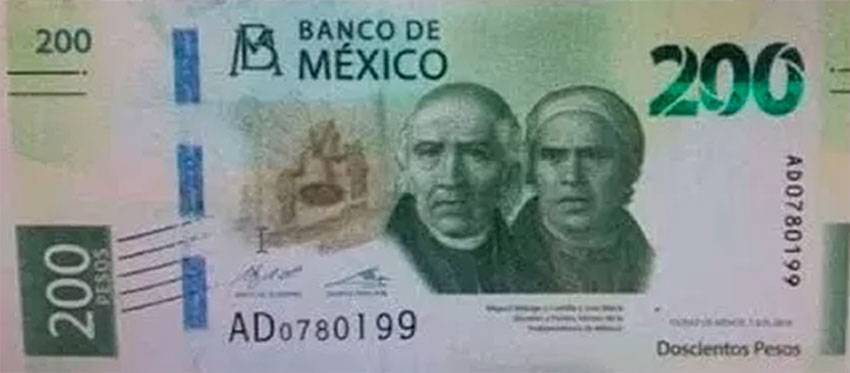
Feminist poet and nun Sister Juana Inés de la Cruz will no longer adorn Mexico’s 200-peso notes once new bills go into circulation in September.
The Bank of México (Banxico) has announced that the new bills will feature the countenances of Mexican independence icons Miguel Hidalgo and José María Morelos.
The bill’s reverse side will feature an image of the El Pinacate y Gran Desierto de Altar Biosphere Reserve, a protected ecoregion in the Sonoran Desert.
Banxico’s Alejandro Alegre told the newspaper Milenio that bills are changed for three reasons: to apply more elements that will prevent counterfeits; to make them out of more durable, longer-lasting materials; and to incorporate features that aid the visually impaired and money counting machines in identifying them.
The 200-peso note is the second denomination to undergo a design change.
Last year, Banxico issued the new 500-peso bill, which replaced the faces of painters Frida Kahlo and Diego Rivera with that of former president Benito Juárez. The change, along with that of the bill’s color to blue, has caused confusion because it resembles the 20-peso note.
But the latter will gradually be taken out of circulation and replaced by a coin.

“The 20-peso bill costs less to manufacture, but lasts 40 months in circulation,” said Alegre. “Whereas the coin costs more than printing a bill, but lasts more than 30 years in circulation, so [the change] makes better use of public resources.”
One feature of Mexican currency that will not change, and for which it stands apart internationally, is the difference in the sizes of the denominations. This is another feature that helps the visually impaired identify the bills.