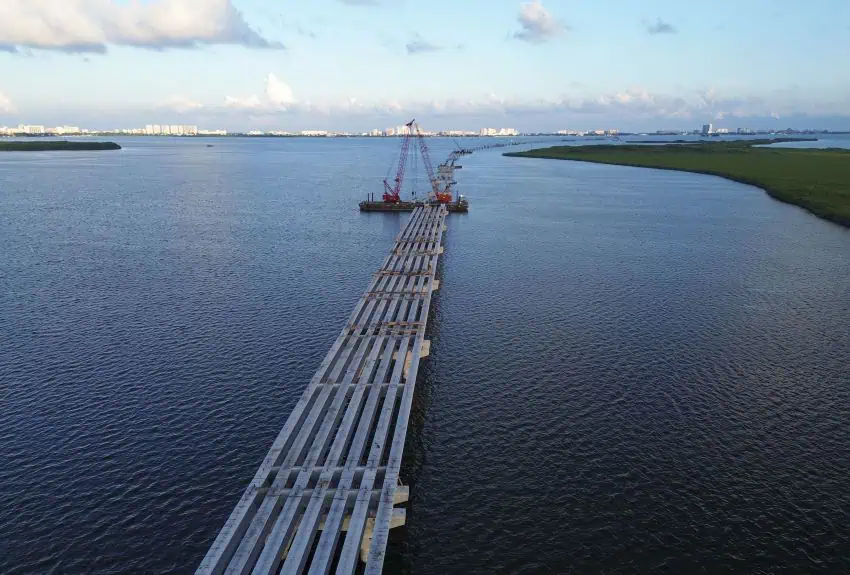
The 11.2-kilometer-long Nichupté Vehicular Bridge — a critical infrastructure project connecting downtown Cancún and its bustling hotel zone — will open in December, four months later than expected.
The long-delayed project is expected to benefit 1.3 million residents of the resort city, save commuters up to 45 minutes in travel time and serve as an important evacuation route during hurricane season.
José Antonio Esteva, minister of Infrastructure, Communications and Transportation (SICT), provided an update on the project during President Claudia Sheinbaum’s Wednesday morning press conference.
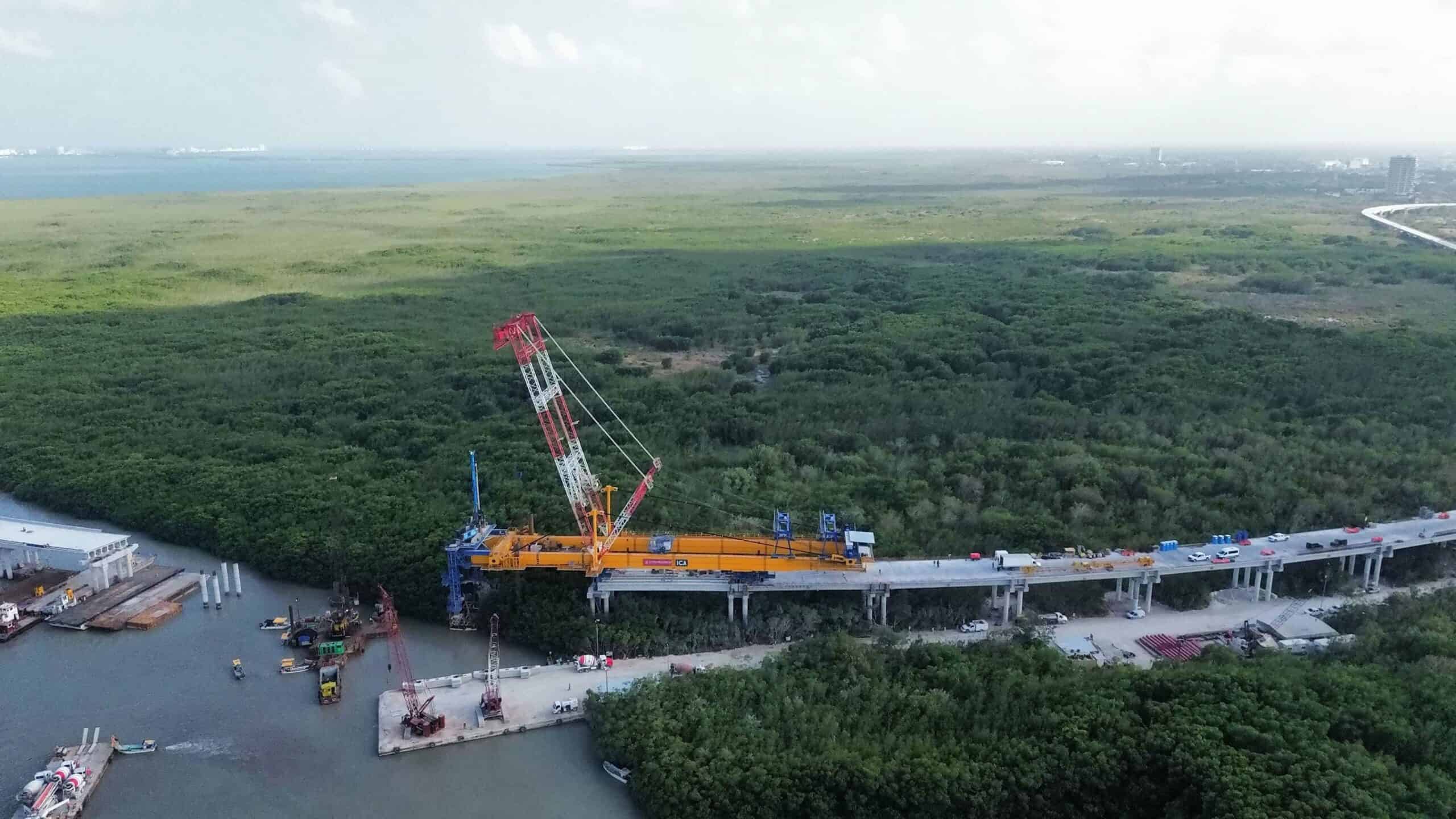
Esteva said there are currently 714 workers and 123 machines operating at five active work sites. He also confirmed a budget overrun of nearly 2.9 billion pesos (US $145 million).
“We expect to spend 2.1 billion pesos (US $108 million) this year to complete the bridge,” Esteva said.
This will bring the total cost of the bridge to 8.6 billion pesos (US $440.5 million). Construction company ICA originally budgeted 5.6 billion pesos (US $286 million) for the project.
The 14.9-km-long project features an 8.8 km, three-lane span over the Nichupté Lagoon and will benefit 1.3 million residents as well as the millions of tourists who visit the Caribbean resort.

Most of the bridge will be elevated above the lagoon on stilts. It will also feature a 103-meter metal suspension bridge section.
Sheinbaum visited the site with Quintana Roo Gov. Mara Lezama and ICA CEO Guadalupe Phillips in April. At the time, with the bridge 78% completed, Sheinbaum said it would be operational by November.
Originally expected to be completed late last year, the SICT had targeted an August inauguration after design modifications were required in January. The alterations became necessary when several maritime zone permits were denied on environmental grounds.
Additional delays were caused by the addition of a metal arch section to provide extra support, upgrades to storm drainage systems to prevent lagoon contamination, and the installation of an Intelligent Transportation System to manage traffic flow more efficiently.
Once operational, the bridge’s direct, elevated route over the Nichupté Lagoon will ease the burden on current roads and sharply reduce travel times for residents heading to work and tourists heading to resorts or nearby attractions.
With reports from The Cancún Sun, Reportur and Por Esto!