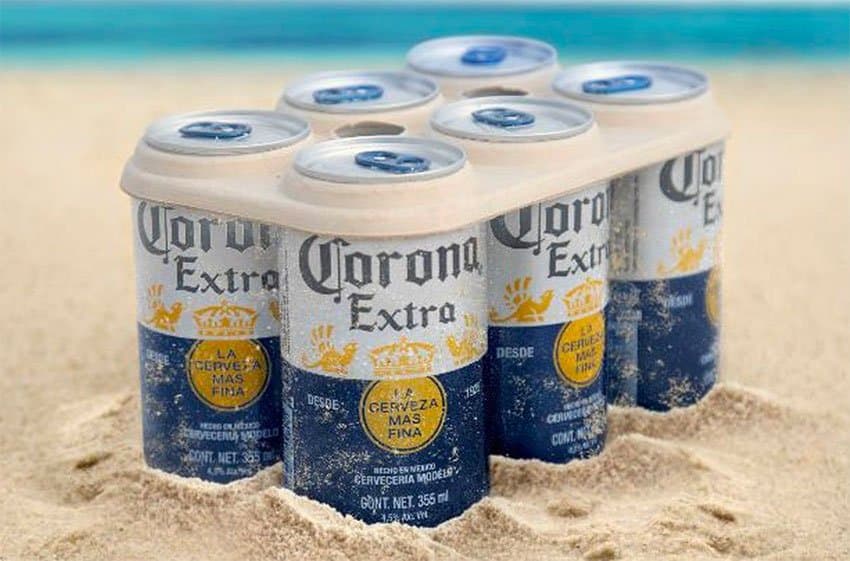
Plastic six-pack rings in which Corona beer is sold will be replaced with a biodegradable product in a pilot program in Tulum, Quintana Roo.
In collaboration with the environmental organization Parley for the Oceans, Corona brewer Grupo Modelo will replace the plastic rings with a product made from vegetable waste left by food and beverage processing.
The pilot program is aimed at “addressing the necessity to reduce the environmental impact of plastic on the beaches . . . This project shows [Grupo Modelo’s] commitment with the environment, with sustainability and with responsible consumption,” said the company in a statement.
“Our oceans are at risk . . . We share the goal of eliminating plastic forever, because we cannot allow the toxic impact it is causing,” said Parley founder and CEO Cyrill Gutsch.
The brewer intends to eliminate the use of plastic in seven years.
Environmental concerns were first raised about the six-pack rings in the 1970s but since 1989 all have been manufactured to be 100% photo-degradable, meaning the plastic begins to disintegrate within a few weeks. They are now a relatively minor contributor to marine litter and wildlife fatalities, according to information on Wikipedia.
Source: Milenio (sp)