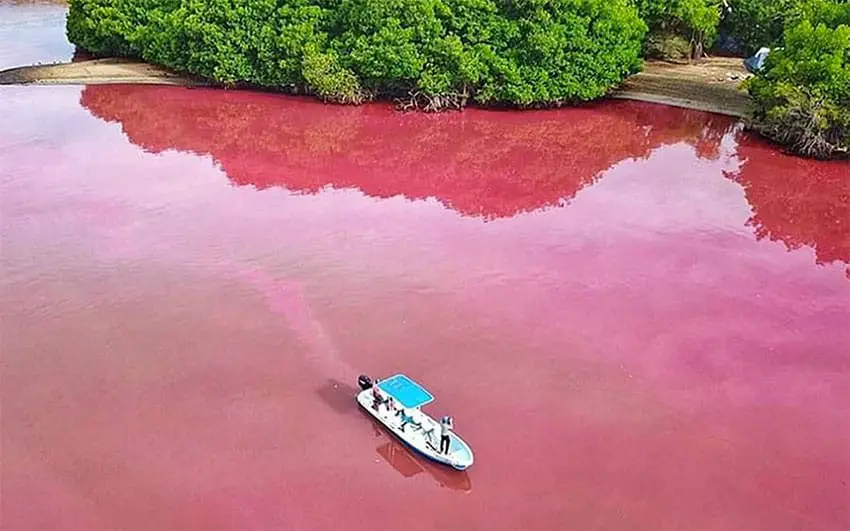
The water in a Oaxaca lagoon that is famous for its bioluminescence started changing color on Tuesday and is now a deep shade of pink.
Scientists are not sure about the cause of the color change at Manialtepec lagoon, which is located about 15 minutes away from the coastal city of Puerto Escondido, but suspect it is related to a change in the microorganism population in the water.
The lagoon is known for its glowing bioluminescence, which is caused by the decomposition of certain algae. According to biologist Alejandra Torres Ariño, the color change is probably related to a change in the composition of organisms present in the lagoon, which itself could be caused by a change in salinity or fertilizer runoff from recent rains in the state.
Torres, who teaches at the Universidad del Mar, said she is waiting for results to come back on tests to determine what organisms are present.
“At first glance, it doesn’t seem toxic, but we need to make sure . . .” she said.
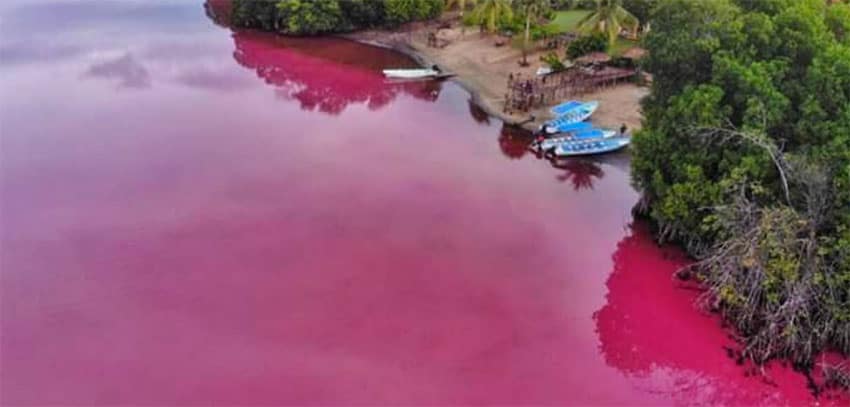
However, Torres noted that although the phenomenon is probably not a threat to human health, it is destructive to the ecosystem because it means the lagoon is being invaded by organisms that are not native to the region. The high nutrient load makes it hospitable to invasive species, she said.
The phenomenon is similar to another event that occurred in Bajos de Coyula, Oaxaca, in 2016, when a biological reaction caused lagoons to turn red and purple. Torres said that the cases appear similar, but could be caused by totally different phenomena.

Source: NVI Noticias (sp), El Sol de Puebla (sp)