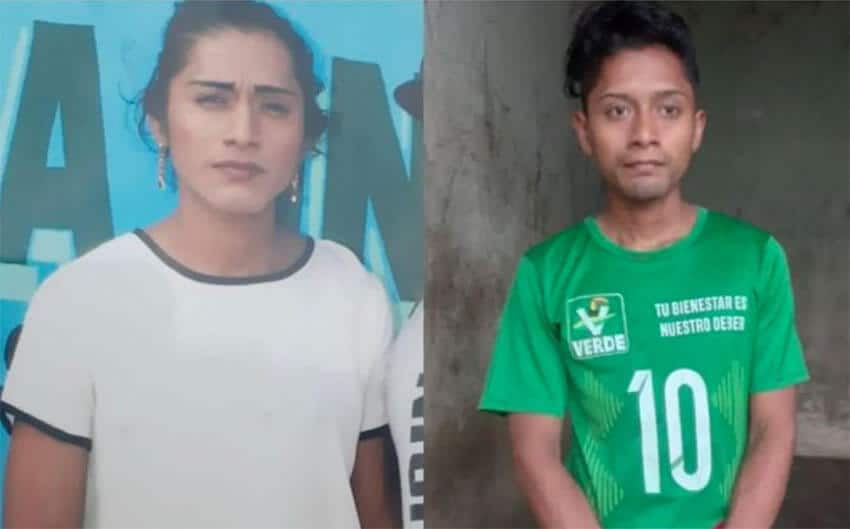
A 24-year-old indigenous trans woman in the coastal region of Oaxaca was teased, harassed and humiliated by members of a local police force, who cut her hair and dressed her as a man while making her do community work filling potholes, outraged activists are contending.
Lizeth, who is of Mixtec origin, was arrested in San Juan Colorado, Jamiltepec, on June 27 and held behind bars for six days, supposedly for a robbery, although media reports are now calling it administrative error because no complaint was ever filed and she was released.
While in custody, “They put me to work, they insulted me, they yelled at me, they made me cry,” Lizeth said.
San Juan Colorado police commander Agustín López and another top municipal official, Agustina Lorenzo, were the ones who ordered the police to cut Lizeth’s hair and dress her in pants and a T-shirt, according to trans activist Humberta Marcelo Vásquez.

The news of all this hit social media on Wednesday, sending LGBTQ and trans activists into a fury. “These acts of transphobia and discrimination that they did to Lizeth deserve severe punishment,” said Marcelo, who added that if it was not for her intervention and social pressure, Lizeth would still be imprisoned.
Lizeth is from the municipality of San Pedro Siniyuvi, which is just 155 kilometers from San Juan Colorado though it takes 4½ hours to drive there through the mountains. She works as a housekeeper, a waitress and a cashier to make ends meet. “Her sin is recognizing herself as a trans woman, and this is really unfortunate, because it is our own authorities who discriminate against us when they should be the ones to protect us,” Marcelo said. But enacting sexual diversity policies “does not happen here, in these communities on the Oaxaca coast.”
In a Facebook post, the LGBTQ and trans activist group Colectivo Juntxs X Oaxaca demanded that those responsible are punished, writing that San Juan Colorado officials “behaved in an inhumane and irresponsible way. … In a country where violence against the [LGBTQ] community is on the rise, we can not allow or tolerate justice and elected officials to act in such a way.”

The post also included a letter to President López Obrador, Oaxaca Governor Alejandro Murat Hinojosa and other public officials. It said the police “completely undressed [Lizeth] and forced her to wear men’s clothing, repeatedly alluding that she was a man, and had to dress as such and behave as such.” It added that the police used obscene words to her face, and that the police chief López “cut her nails and hair in front of the police so that they would make fun of her.”
The National Council to Prevent Discrimination (Conapred) condemned the incident and demanded an investigation, as well as compensation for damages.
Oaxaca’s Ombudsman for Human Rights (DDHPO) said an investigation into the incidents had begun and assured that Lizeth was being looked after and interviewed. DDHPO also stressed that between 2015 and April 2022, it initiated 34 inquiries for various acts of discrimination against people from the LGBTQ community.
With reports from El Imparcial, Istmo Press and Vanguardia