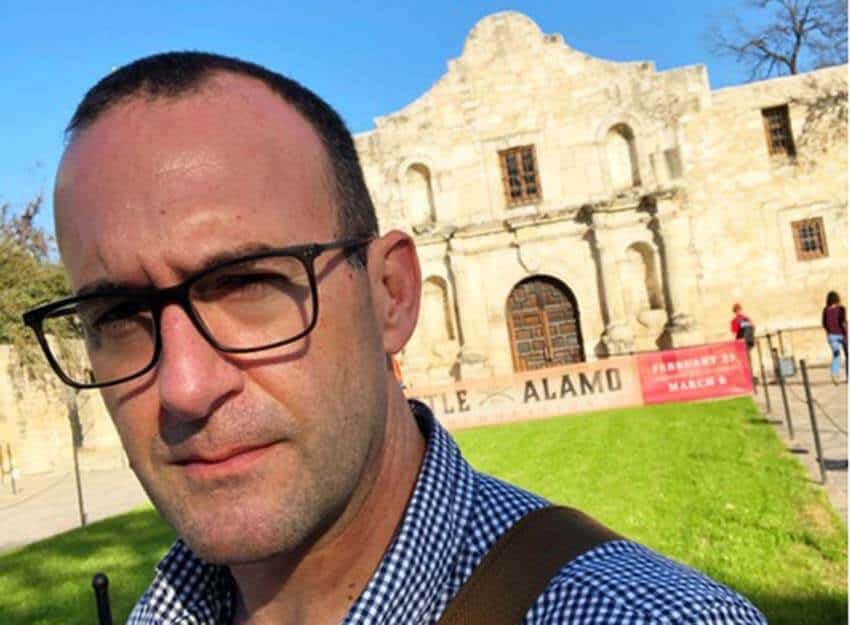
The Battle of the Alamo, between the armies of separatist Texas and of Mexico during the Texas Revolution, is considered by some a nearly sacred event in the state’s history and American history, emblematic of Texas grit. A new nonfiction book is issuing what some say is a long-overdue challenge to the mythology surrounding the battle, in which General Antonio López de Santa Anna retook control of San Antonio’s Alamo Mission for Mexico in 1836.
Forget the Alamo: The Rise and Fall of an American Myth by Bryan Burrough, Chris Tomlinson and Jason Stanford lays out an unsettling and myth-busting picture of the historical event, one full of backstabbing and skullduggery.
On October 17, the San Miguel Literary Sala will interview two of these authors about the Alamo in an online event open to the public as part of its Distinguished Speakers Series.
The live, interactive interview at 6 p.m. CDT will take place on Zoom, meaning that viewers will be able to interact with the guests during a question-and-answer period. Tickets are on a pay-what-you-wish scale — ranging from US $5–$50.
Brad Rockwell, an environmental attorney and the author of The Life and Times of Alberto G. Garcia: Physician, Mexican Revolutionary, Texas Journalist, Yogi, will interview Tomlinson and Stanford about the popular Alamo narrative and what really happened. Among other topics, they’ll discuss how John Wayne’s passion-project movie The Alamo (1960) and the Daughters of the Republic of Texas both played key roles during the 20th century to influence people in the United States’ beliefs about the historical event.
While some in the U.S. today see Texas’s fight to separate from Mexico as having been about freedom and democracy, in reality, say the book’s authors, money and the hope of making Texas a slave state were important factors in why people like Davy Crockett, James Bowie and William B. Travis fought. Others who died at the Alamo were mostly adventurers and criminals.
Tomlinson, who has reported from more than 30 countries and nine wars for the Associated Press, is currently a columnist for the Houston Chronicle and the San Antonio Express-News. He is the author of the New York Times bestselling book, Tomlinson Hill, about his family’s history of slave ownership in Texas.

Stanford has written for the Los Angeles Times, MSNBC.com and Texas Monthly. A former communications director for the mayor of Austin, Steve Adler, he previously worked as a political consultant and now publishes a weekly newsletter called The Experiment.
For more information or to register, visit the San Miguel Literary Sala website.
Mexico News Daily