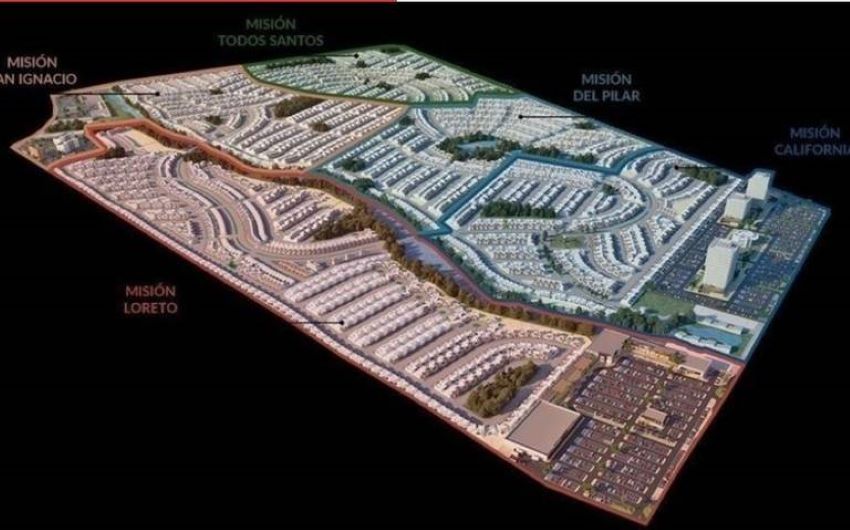
A citizens group in La Paz, Baja California Sur, has launched a campaign against the construction of a 4,600-home development in the north of the city after the municipal council granted a change of land use that paves the way for the project to go ahead.
The organization Cómo Vamos La Paz, which claims that the Misión Punta Norte project will exacerbate water shortage problems in the city, launched an online petition on change.org against the development in order to pressure the local government to reconsider its decision.
The petition, which had been signed by more than 1,700 people as of 5:00 p.m. Friday, says the 203-hectare project is 6.5 times larger than the combined size of La Paz’s two largest malls.
It also states that the La Paz council doesn’t have the authority to approve a change of land use, as it did on Thursday last week.
The petition says there are two types of land use assigned to the property where the development is proposed, and neither is compatible with the project.

“The city has serious water problems … with a deficit of 7.8 million cubic meters of water annually,” the petition says, adding that supplying water to 4,600 additional houses, two new shopping centers and other businesses will negatively impact supply to existing homes, including those in neighborhoods where there are already shortages.
The newspaper El Sudcaliforniano reported that the project could consume up to 2 million cubic meters of water per year.

Cómo Vamos La Paz also raised concerns about the pressure the new development will place on public services, including garbage collection and public transit.
The petition urges La Paz Mayor Rubén Gregorio Muñoz Álvarez and councilors to act in accordance with the law and reconsider the approval they granted in order to prevent a negative impact on “those of us who live in the city and future generations.”
Alma Lidia Cota Ojeda, a director of Cómo Vamos La Paz, said the organization is aware that legal action against the project might be necessary. She explained that the petition is designed to raise awareness about the development and its negative impacts.
“The objective of this initiative is to keep the issue on the public agenda,” she said.
The news website Peninsular Digital reported that one of the real estate companies involved in the project, Century 21, has links to Mayor Muñoz, who voted in favor of the development.
It also reported that his government placed three conditions on the change of land use granted: the developer of the project must build a desalination plant and a wastewater treatment plant, and the development must establish its own system for providing services such as garbage collection and street lighting.
Arturo Rubio Ruiz, a lawyer, questioned whether the council will maintain its commitment to those conditions and shared the citizens group’s view that the project is illegal.
He said 80% of the proposed construction site lies within an ecological reserve where construction is illegal. Rubio also agreed that the development will place significant additional pressure on La Paz’s limited water supply. He added that a desalination plant at the site would cause contamination and the plan to outsource the provision of public services is unviable.
“Are they serious? The majority of municipal services can’t be offloaded to private companies. Firefighting services, public security … garbage [collection], wastewater treatment plants … What did they smoke at that session?” he asked, referring to the council meeting at which the change of land use application was approved.
Source: El Sudcaliforniano (sp), El Independiente (sp), Peninsular Digital (sp)