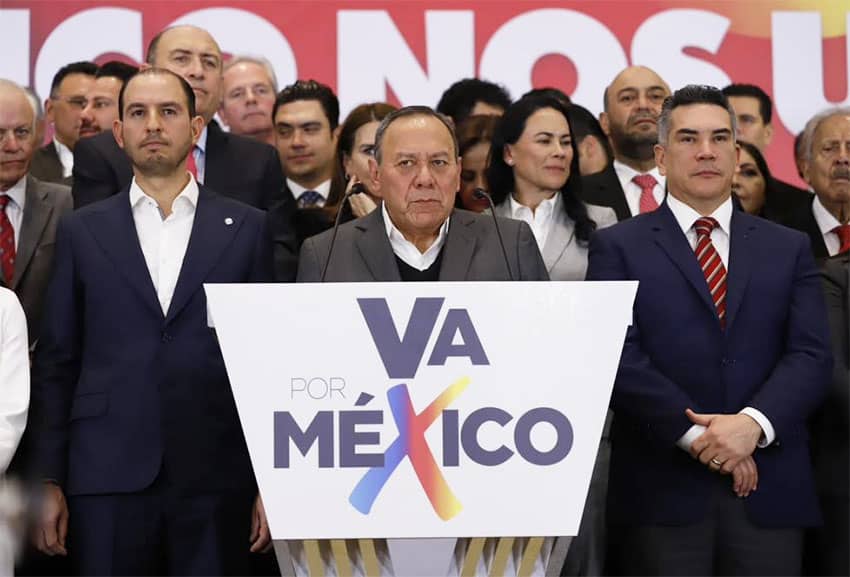
Mexico’s main opposition parties have announced they will field a common candidate at next year’s presidential election.
The Va por México alliance — made up of the National Action Party (PAN), the Institutional Revolutionary Party (PRI) and the Democratic Revolution Party (PRD) — was thought to be on the verge of breaking up in late 2022 after a PRI lawmaker presented a constitutional bill that sought to authorize the use of the military for public security tasks until 2028.
But the coalition survived the saga, and its leaders confirmed Thursday that the three parties will contest the 2024 presidential election, as well as the Mexico City mayoral race, on a joint ticket.
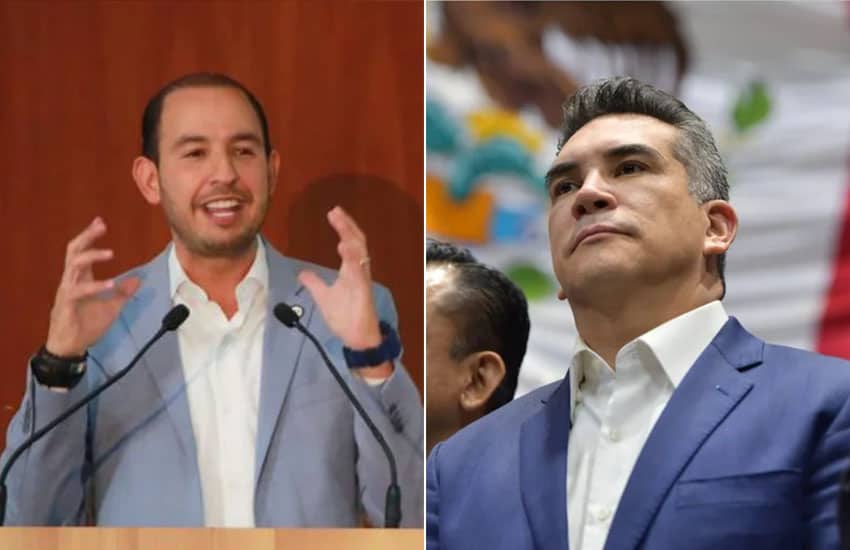
The PAN will be responsible for the selection process to find common candidates for those elections, said Marko Cortés, the party’s national leader. He told a press conference that the process will have “clear rules” and be open to all potential candidates that aspire to represent Va por México at the elections, including members of civil society.
Cortés also said that Va por México was open to having more parties join its alliance. There was speculation that the Citizens Movement party would join the coalition, but its national leader Dante Delgado said last month that wouldn’t be the case.
Cortés and PRD president Jesús Zambrano said last September that their relationship with PRI national president Alejandro Moreno was over because of his support for the militarization bill, but they appeared alongside him at Thursday’s Va por México “relaunch” press conference.
Moreno said that the coalition’s differences had been dealt with, and that it is now a solid opposition force.

However, a new internal rift has appeared. Zambrano said after Thursday’s press conference that the PAN and the PRI reached an agreement about the selection of candidates for next year’s presidential and mayoral elections without the involvement of the PRD. While the PAN will run the selection process to find candidates for those elections, the PRI was given responsibility for choosing Va por México candidates for gubernatorial elections in México state and Coahuila later this year.
The PAN-PRI agreement was struck bilaterally, and “we don’t agree with that,” Zambrano said.
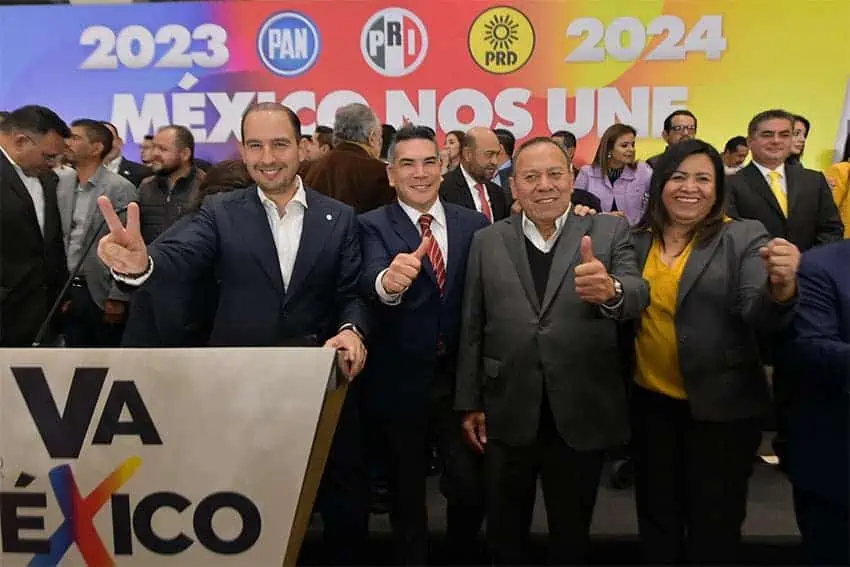
At the joint press conference, the PRD leader proposed the formation of a citizens’ committee to conduct the Va por México candidate selection processes in a transparent way.
“We’re a coalition of three political forces, but a coalition that must have the support of civil society,” he said later on Thursday.
“That’s the only way we will be able to win, if we don’t take that route we’ll be announcing a defeat.”
Mexico City Mayor Claudia Sheinbaum and Foreign Affairs Minister Marcelo Ebrard are seen as the top contenders to secure the ruling Morena party’s candidacy at the 2024 presidential election.
There is far less clarity about who will represent the PAN, PRI and PRD. In that context, President López Obrador offered his own (very) long-list of possible opposition candidates in October, saying that a total of 43 people have either expressed interest in vying for the presidency or have been mentioned as potential contenders.
With reports from Milenio, El Universal and El País